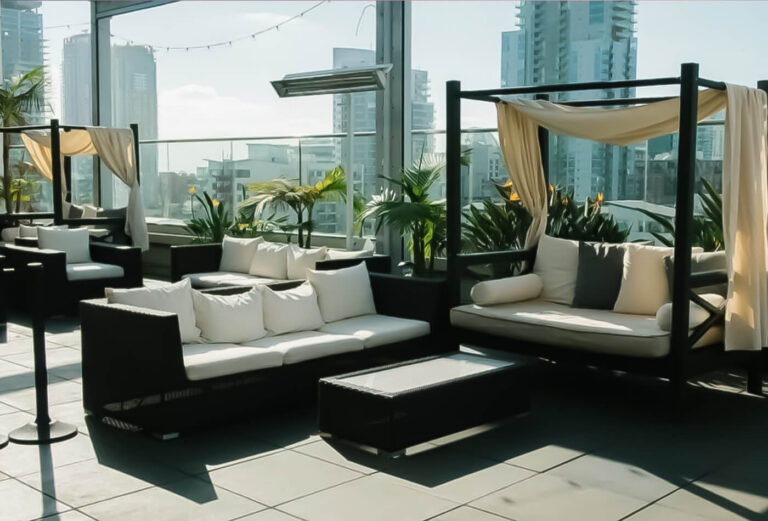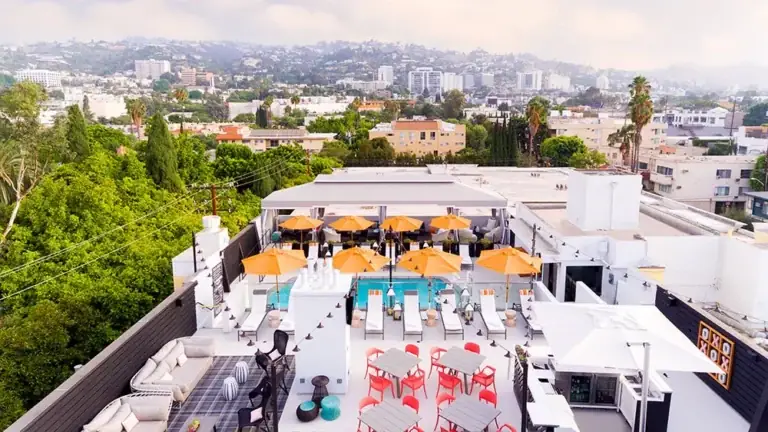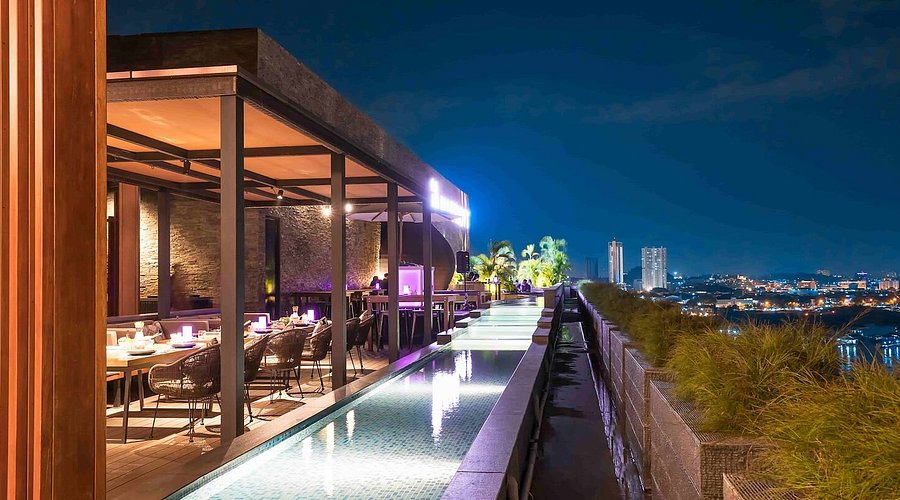
Rooftop Hotel Reservation Options: A Definitive Editorial Analysis
The hospitality industry has undergone a radical vertical shift over the last decade, transforming rooftops from dead architectural space into high-yield assets. This evolution has birthed a complex and often opaque ecosystem of access. Securing a position at the summit of a luxury hotel is no longer as simple as walking into an elevator; it is a transactional dance involving digital gatekeeping, tiered loyalty status, and the strategic deployment of capital. As the demand for “skyline experiences” grows, the mechanisms governing entry have become more sophisticated, mirroring the yield-management strategies of airlines and global stock exchanges.
For the modern traveler or event planner, the challenge lies in decoding the “entry architecture” of these venues. A rooftop is a finite resource—a physical container with a strict legal capacity. Consequently, hotels use a variety of reservation instruments to ensure maximum revenue per square foot while maintaining an aura of exclusivity. These instruments range from “Guest-Only” mandates to “Pre-Paid Table Minimums,” each carrying its own set of logistical constraints and psychological levers. Understanding the nuances of these systems is essential for anyone seeking to guarantee a vantage point in a saturated urban market.
This analysis serves as an editorial masterclass in the logistics of elevated booking. We move beyond the surface-level convenience of a “Reserve” button to examine the underlying economic and operational logic that dictates who gets the corner table and who is left in the lobby. By analyzing the various rooftop hotel reservation options, we provide a framework for navigating the “High-Altitude Marketplace” with precision, ensuring that the cost of entry aligns with the value of the experience.
Understanding “rooftop hotel reservation options”
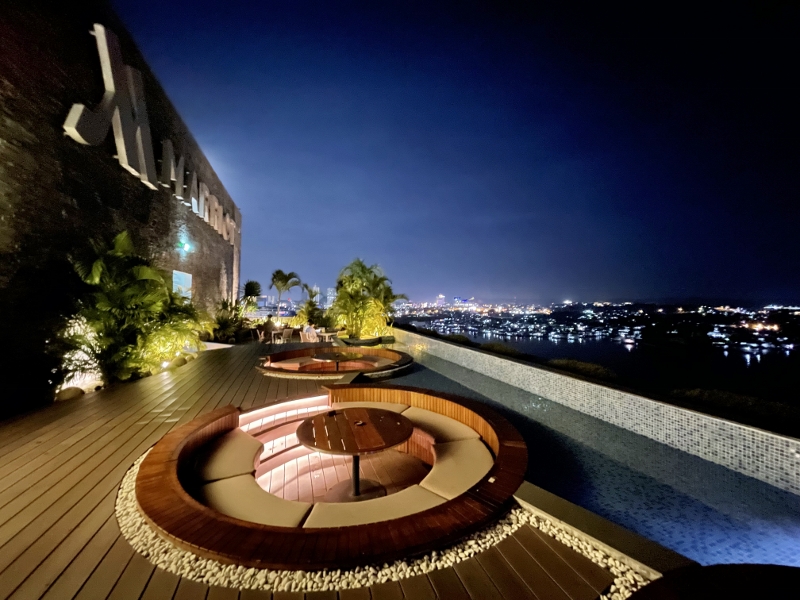
To rigorously define rooftop hotel reservation options, one must view them through the lens of “Capacity Control.” Unlike a ground-floor restaurant that can often expand into a sidewalk or patio, a rooftop is a rigid box. If the fire marshal certifies a roof for 100 people, the 101st person represents a legal liability. Therefore, a reservation on a rooftop is not just a promise of a table; it is a “Spot Purchase” in a high-demand, low-supply environment.
A common misunderstanding among guests is the belief that a hotel room booking automatically grants “all-access” to the rooftop. In reality, modern hospitality often separates these assets. A guest might have a room on the 15th floor but still find themselves barred from a “Full Capacity” lounge on the 40th. The “Option” in this context refers to the specific contract a guest enters with the venue—whether it is a “Dining Reservation,” a “Day Pass,” or a “Bottle Service Commitment.” Each option carries different weights in the venue’s priority queue.
Oversimplification frequently occurs when visitors assume all booking platforms are created equal. Many rooftops hold back their “Prime Asset” tables (those with unobstructed 270-degree views) from third-party booking apps, reserving them for direct phone inquiries or high-tier loyalty members. To truly master the available options, one must understand the “Shadow Inventory”—the tables that never appear on a digital map but are available for those who understand the venue’s internal hierarchy.
The Systemic Evolution of Elevated Access
Historically, hotel rooftops were the exclusive domain of houseguests and the local social elite. The “Reservation Option” of the 1950s was essentially a phone call to the maître d’. This was a high-trust, low-volume system. The primary goal was social curation; the venue wanted the “right people” rather than the highest-paying people.
The 2010s saw the “Digital Democratization” of the roof. As Instagram transformed the “Skyline View” into a global currency, demand spiked to levels that traditional pen-and-paper booking could not handle. This led to the adoption of “Dynamic Pricing” and “Pre-Payment Models.” Today, we are in the era of “Algorithmic Access.” Venues use software to predict “No-Show” rates and “Dwell Times,” often overbooking their physical capacity under the assumption that a percentage of guests will leave early. This systemic shift has made the “Option” a more clinical, financially-driven transaction.
Conceptual Frameworks for Vertical Booking
To analyze reservation strategies with editorial depth, we apply three primary mental models.
The “Yield Per Hour” Framework
This model treats the rooftop table as a depreciating asset. A table sitting empty for 20 minutes between reservations is lost revenue that can never be recovered. When evaluating rooftop hotel reservation options, the venue will always favor the “Option” that guarantees the longest, highest-spend duration. A “Dinner Reservation” (high spend, high dwell) will always trump a “Drink-Only Reservation” (low spend, variable dwell).
The “Guest-Centric Halo” Model
This framework assesses the tension between “External Revenue” and “Internal Loyalty.” A hotel must decide whether to save a table for a guest staying in a $1,000-a-night suite or sell it to a local resident willing to pay a $500 bottle minimum. The “Option” here is often a “Silent Hold”—a set of tables kept off the books until the last possible moment to satisfy high-value house guests.
The “Atmospheric Scarcity” Matrix
This evaluates the “Prime Window” (usually 30 minutes before sunset to 30 minutes after). During this 60-minute window, the value of a reservation increases by 200–300%. Sophisticated travelers use the “Shoulder Window” strategy—booking 90 minutes before sunset to “squat” on the asset during its peak value period, often at a lower entry price.
Taxonomy of Reservation Categories and Trade-offs
Navigating the various rooftop hotel reservation options requires a categorization based on “Barrier to Entry.”
| Category | Typical Requirement | Primary Benefit | Strategic Trade-off |
| Dining/Full Service | Multi-course meal commitment. | Guaranteed seating; best views. | High cost; rigid time limit. |
| Bottle Service | High pre-paid minimum spend. | Exclusive “VIP” area; skip the line. | Very expensive; can feel isolated. |
| The “Walk-In” Queue | Physical time spent in line. | No financial commitment. | High risk of rejection; poor table location. |
| Guest-Key Access | Proof of room stay. | Low/No cost; flexible timing. | No guaranteed table; “standing room” only. |
| Pre-Paid Entry/Cover | Ticket purchase ($20–$100). | Confirmed entry to the space. | Does not guarantee a seat or a view. |
| The Private Buyout | Contractual total venue takeover. | Total privacy; custom programming. | Extreme cost; requires months of planning. |
| Realistic decision logic involves assessing the “Value of the Gaze.” If the objective is a single photograph, the “Walk-In” is the rational choice. If the objective is a four-hour business negotiation, the “Dining Reservation” is the only viable instrument. |
Detailed Real-World Scenarios in Booking Logic
Scenario A: The “Sunset Bottleneck”
A popular rooftop in a city like Bangkok or New York faces a 500% spike in demand at 6:00 PM.
-
The Option: The venue offers “Sunset Tier” tickets.
-
The Logic: By monetizing the specific time-slot, the venue filters for guests who value the view over the food.
-
Failure Mode: A guest books a “Standard” table for 7:30 PM, arriving at 6:00 PM expecting early entry. The venue denies access because the “Sunset Asset” has already been sold to another guest.
Scenario B: The “Cloud Cover” Clause
A guest books a $500 minimum-spend table on an open-air terrace.
-
The Constraint: It begins to rain 10 minutes after arrival.
-
The Second-Order Effect: Most rooftop “Options” include a “Force Majeure” or weather clause. If the terrace has no retractable roof, the reservation is often moved to a windowless lobby bar.
-
Decision Point: Always check if the “Reservation Option” includes an “Indoor Contingency” at the same elevation.
Planning, Cost, and Resource Dynamics
Managing the “Cost of Height” requires a granular look at direct and indirect expenses.
| Item | “Standard” Path | “Strategic” Path | Variance Logic |
| Booking Fee | $0 (App-based) | $50 (Non-refundable deposit) | High-demand venues use deposits to reduce “No-Shows.” |
| Table Minimum | $0 (A la carte) | $150 per person | Guarantees the venue a baseline profit per chair. |
| Gratuity/Service | 18–20% | 22–25% (Mandatory) | Rooftops often have higher labor costs (vertical transport). |
| Opportunity Cost | 2 hours in a queue | $30 “Fast Pass” | Time vs. Capital trade-off. |
| Variability in these costs is driven by “Vertical Prestige.” A rooftop on the 5th floor of a boutique hotel will have a different pricing architecture than a 100th-floor observation deck lounge. |
Tools, Strategies, and Support Systems
To navigate rooftop hotel reservation options with authority, utilize these strategic levers:
-
Direct-to-Concierge Communication: For high-end properties, an email to the “Chef Concierge” is more effective than any digital app. They manage the “Shadow Inventory.”
-
The “Early Bird” Anchor: Booking the first available slot of the day. Venues are often more lenient with table placement when the floor is empty.
-
“Member-Only” Portals: Many hotel groups (Marriott, Hilton, Accor) reserve specific rooftop slots for their top-tier loyalty members that are “invisible” to the public.
-
Visual Reconnaissance: Use recent social media “Location Tags” to identify which table numbers have the best views, then request those specific tables in the reservation notes.
-
The “Bar-Seating” Pivot: If table reservations are full, ask for “Unreserved Bar Seating.” Many venues leave the bar stools as a “First-Come” buffer.
-
Off-Peak Arbitrage: Booking on a Monday or Tuesday night when minimum spends are often waived or reduced.
Risk Landscape and Failure Modes
-
The “Ghost Reservation”: A digital platform confirms your spot, but the venue has a “Private Event” buyout that wasn’t synced. The venue will almost always favor the buyout, leaving you with a canceled booking at the door.
-
The “Dress Code” Rejection: Even with a pre-paid $1,000 table, many rooftops reserve the right to refuse entry based on attire. This is a “Non-Refundable” failure mode.
-
The “Vertical Logistics” Lag: Expecting a “7:00 PM” table to be ready at 7:00 PM. Rooftops often have “Logistical Friction”—elevators are slow, and previous guests linger. A 15–20 minute delay is systemic, not accidental.
Governance and Long-Term Adaptation
Rooftop reservation policies are not static; they are “Adaptive Systems.” A venue might change from “Free Entry” to “Ticketed Entry” overnight based on a viral TikTok video or a change in local noise ordinances.
-
Monitoring: Review the venue’s official Instagram “Stories” 24 hours before your visit for announcements of “Partial Closures.”
-
Review Cycles: Re-verify “Minimum Spend” requirements every season. Winter “Heated Igloo” options often have different financial structures than Summer “Terrace” options.
Common Misconceptions and Strategic Oversights
-
“A reservation means I can stay as long as I want”: Most rooftops have a “Turn Time” (usually 90–120 minutes) during peak hours.
-
“I can just buy a drink at the bar and find a table”: Most high-end roofs have “Seating Police” who verify reservation tags before allowing you to sit.
-
“The ‘Best’ view is the highest floor”: Often, a 10th-floor roof offers a better “Urban Intimacy” than a 100th-floor roof where the city looks like a map.
-
“Third-party apps show all availability”: They rarely do. They show the “Distressed Inventory” the hotel wants to unload.
-
“The deposit goes toward the bill”: Usually yes, but always check if it is an “Access Fee” (sunk cost) or a “Credit” (spendable).
-
“If I’m a hotel guest, they have to fit me in”: In modern hospitality, the Rooftop is often a separate P&L. The Front Desk has zero power over the Rooftop Manager.
Conclusion
Navigating rooftop hotel reservation options is an exercise in “Strategic Intent.” It requires the visitor to balance the desire for spontaneity with the cold reality of urban logistics. The skyline is the city’s most coveted stage, and like any high-stakes theater, the “Front Row” belongs to those who understand the booking system. Whether you choose the certainty of a pre-paid table or the gamble of the walk-in queue, success depends on recognizing that on a rooftop, space is the ultimate luxury. By applying the frameworks of yield management and atmospheric scarcity, you can ensure that your ascent to the summit is met with a seat, a glass, and an unobstructed view of the horizon.