Top Desert Rooftop Hotels in America: A Strategic Editorial Analysis
The American Southwest has historically been defined by a “Subterranean” or “Ground-Level” architectural philosophy. From the ancient pueblo dwellings carved into canyon walls to the mid-century modern “Desert Modernism” of Palm Springs, the goal was almost always to huddle against the earth to escape the oppressive solar gain of the Mojave or Sonoran deserts. However, a significant architectural pivot has occurred within the luxury hospitality sector. We are currently witnessing the rise of the “Arid Sky-Asset”—a sophisticated class of property that moves the social and residential core of the hotel from the shaded valley floor to the exposed rooftop.
This transition toward the vertical represents a fundamental shift in how we consume the desert landscape. To occupy one of the top desert rooftop hotels in america is to engage in a paradoxical form of luxury: it is an attempt to achieve “Atmospheric Comfort” in an environment designed to strip it away. These rooftops are not merely viewing decks; they are complex thermal regulators. They must manage 40-degree diurnal temperature swings, mitigate the “Scouring” effect of abrasive desert winds, and provide a curated interface with the celestial environment. The engineering required to maintain a luxury poolside experience at 110 degrees Fahrenheit, without succumbing to the “Radiator Effect” of the building’s own roof, is a feat of modern material science.
This editorial reference examines the systemic requirements that define these properties. We move beyond the descriptive lists of travel influencers to investigate the “Structural Logic” of desert elevation. By deconstructing the “Thermal Paradox”—the need to be open to the stars while protected from the sun—we provide a roadmap for understanding how these assets are developed and maintained as long-term authority pillars in the American luxury landscape.
Understanding “top desert rooftop hotels in america”
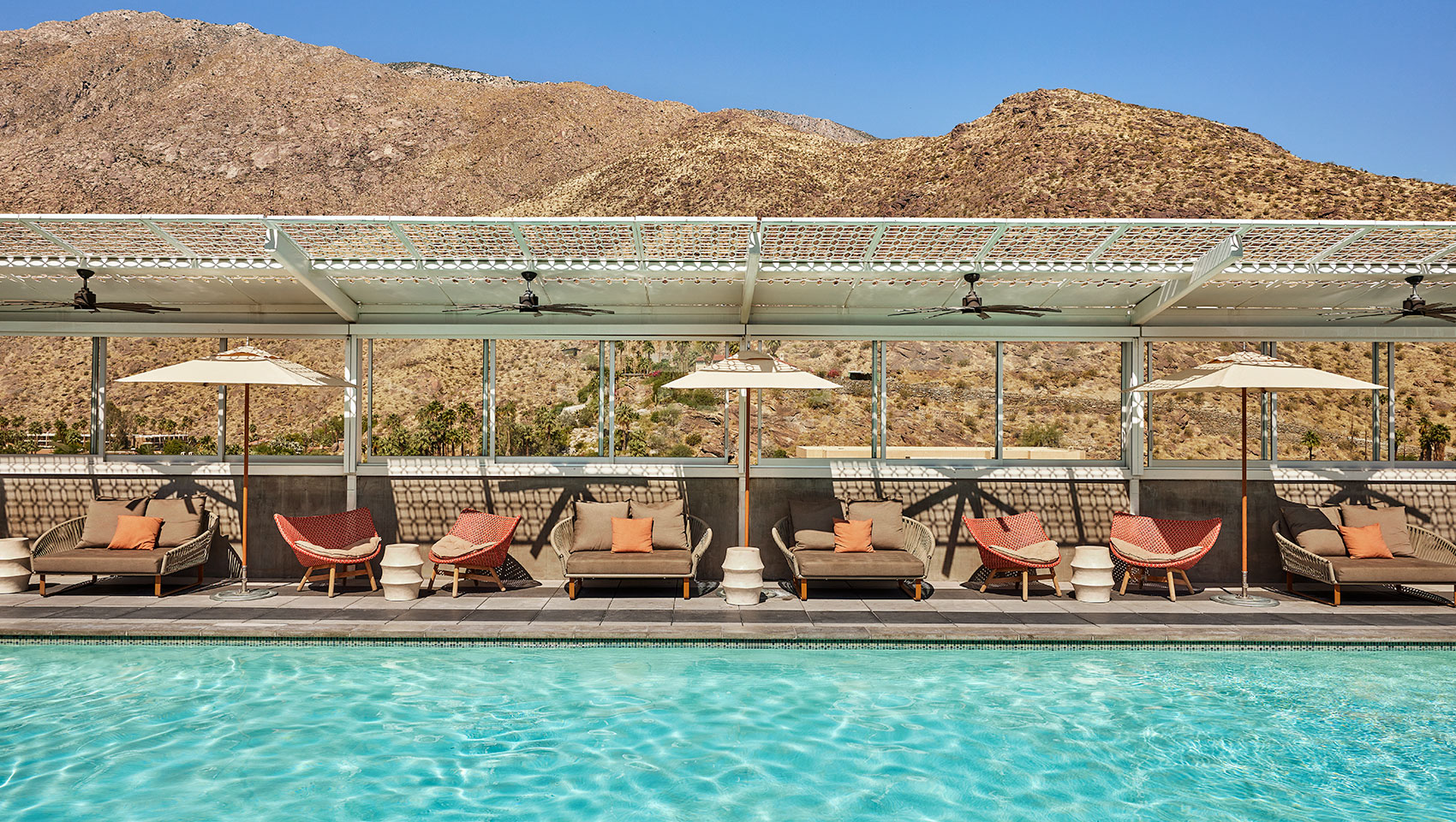
To rigorously define top desert rooftop hotels in america, one must first decouple “Height” from “Vantage.” A common misunderstanding in the hospitality industry is that any hotel in Arizona or Nevada with a roof deck qualifies for this elite category. In reality, a true desert rooftop asset is defined by its “Celestial and Topographical Sovereignty.” This means the roof is engineered specifically to facilitate a “Dialogue with the Horizon.” It is not a secondary space for HVAC overflow; it is a primary “Programmatic Anchor” that provides visual access to geological features—buttes, mesas, and canyons—that are invisible from ground-level cabanas.
Oversimplification frequently occurs when the “Desert Vibe” is treated as a monolithic aesthetic. In the professional editorial sense, a rooftop in the high-altitude desert of Santa Fe requires entirely different “Environmental Governance” than a rooftop in the low-elevation heat of Scottsdale. The high-altitude site must manage “Thin-Air UV Exposure,” while the low-elevation site must combat the “Urban Heat Island” effect. The properties that truly define this category are those that have solved the “Hydration Gap”—creating lush, biophilic rooftop environments that feel like oases without placing an unsustainable strain on local water tables.
Another critical perspective involves “Optical Clarity.” The desert is one of the few environments in America where the “Visual Reach” can extend for over 100 miles. A rooftop suite or lounge is evaluated by its “Particulate Management.” High-desert winds carry fine silts that can “Frost” glass balustrades within hours. The venues that command the highest premiums are those that integrate “Self-Cleaning Nanotechnology” in their glass and “Wind-Tunnel Validated” furniture layouts, ensuring that the “Luxury” is not compromised by the “Landscape.”
Contextual Background: The Evolution of the Desert Skyline
Historically, the “Desert Roof” was a flat, mud-plastered surface used for drying crops or sleeping during the hottest summer nights—a utilitarian space of survival. The transition to the “Social Roof” began with the “Resort Boom” of the 1950s, but even then, roofs were largely avoided in favor of the “Pool Courtyard” model, which used the building itself to block the sun. The contemporary era of the “Arid Summit” was triggered by the “Astro-Tourism” movement of the early 2000s. Guests began demanding “Dark Sky” access without having to leave the hotel property.
This demand forced a structural evolution. Architects began designing hotels with “Thermal Breaks” between the top floor and the roof, allowing the roof to stay cool even when the sun was at its zenith. This was followed by the “Pool-Weight Revolution,” where new concrete formulations allowed for massive infinity pools to be placed atop timber-framed desert structures. Today, the desert rooftop is the hotel’s “Primary Economic Engine,” often generating a higher RevPAR (Revenue Per Available Room) than the rooms located directly beneath it.
Conceptual Frameworks for Arid-Zone Verticality
To analyze these assets with editorial depth, we apply four primary mental models.
The “Diurnal Delta” Framework
This model assesses the value of a rooftop based on its “Adaptability.” A desert rooftop is a “Failed Asset” if it is only usable at night. We evaluate a venue by its “Thermal Agility”—the ability to transition from a 110-degree sun-drenched pool deck to a 60-degree fire-pit lounge within a 4-hour window.
The “Astro-Illumination” Matrix
This framework analyzes the “Light Governance” of the roof. Unlike an urban rooftop that thrives on neon and glare, a desert rooftop must “Respect the Void.” The best venues use “Sub-Parapet Lighting”—illuminating the floor rather than the air—to ensure that the guest’s “Night Vision” is never compromised, allowing for a 1:1 connection with the Milky Way.
The “Mirage-to-Matter” Ratio
This assesses the “Material Sincerity” of the roof. The desert sun is a “Molecular Destroyer.” This model looks at how the hotel uses “Inert Materials”—stone, weathered steel, and high-density concrete—that gain character from solar exposure rather than degrading.
The “Anemometer-Comfort” Model
This evaluates the “Wind-Shadow” design. Desert winds are not just air; they are “Heat Conveyors.” This framework analyzes how the architecture uses “Physical Baffling” to create pockets of “Static Air,” allowing for a luxury experience even during “Monsoon Season” gusts.
Taxonomy of Desert Rooftop Categories and Strategic Trade-offs
Navigating the top desert rooftop hotels in america requires a categorization based on “Environmental Context.”
Realistic decision logic involves the “Sun-Path” trade-off. A “Canyon-Rim” roof provides the best sunset, but may be “Blinded” by solar glare for five hours a day, whereas a “Palm-Canopy” roof provides mid-day comfort at the expense of the late-afternoon “Golden Hour.”
Detailed Real-World Scenarios in Desert Management
Scenario A: The “Thermal Sink” Failure
A luxury hotel in Palm Springs installs a dark-slate rooftop lounge.
-
The Conflict: By 11:00 AM, the slate reaches 160 degrees, radiating heat “Upward” into the guests’ faces.
-
The Logic: Top-tier venues use “High-Albedo” (reflective) stone or “Ventilated Sub-Floors” that allow air to circulate beneath the deck, keeping the surface cool to the touch.
-
Failure Mode: A mid-tier property relies on misting fans, which simply increases humidity and makes the “Radiant Heat” feel more oppressive.
Scenario B: The “Sand-Silt” Abrasive Event
A rooftop bar in Scottsdale faces a “Haboob” (dust storm).
-
The Constraint: Fine dust enters the mechanical systems of the rooftop “Retractable Roof.”
-
The Second-Order Effect: The roof jams halfway, exposing the luxury interior to rain or dust.
-
The Professional Solution: Search for venues with “Hermetically Sealed” track systems and “Redundant Manual Overrides” designed for high-grit environments.
Scenario C: The “Evaporative Cooling” Economics
A hotel in Sedona wants to maintain a lush rooftop garden.
-
The Constraint: The local water utility places a “Surcharge” on rooftop irrigation due to high evaporation rates.
-
The Mitigation: The best properties utilize “Atmospheric Water Generators” (extracting humidity from the air) or “Sub-Surface Drip” systems that deliver water directly to the roots, preventing surface evaporation.
Planning, Cost, and Resource Dynamics
The economic reality of desert verticality is defined by “The Arid Surcharge.”
“Opportunity Cost” in the desert is often “Water-Based.” If a hotel allocates its “Water Budget” to a massive rooftop fountain, it may have to sacrifice ground-level landscaping. The top desert rooftop hotels in america are those that achieve a “Net-Zero Aesthetic”—using “Xeriscape” principles on the roof to ensure the water budget is spent where it has the most “Guest Impact.”
Tools, Strategies, and Support Systems
To maintain the authority of these assets, operators utilize a specific suite of “Arid-Zone Tools”:
-
Infrared-Reflective (IR) Glazing: Glass that lets in light but “Rejects” 95% of the sun’s heat.
-
Directional “Cool-Mist” Arrays: High-pressure (1,000 PSI) mist that evaporates instantly, dropping the temperature by 20 degrees without getting guests “Wet.”
-
“Bury-and-Rise” Umbrella Systems: Heavy-duty shading that retracts into the floor to maintain “Clean Lines” during the night.
-
“Dark-Sky” Compliant LED Strips: 2700K (warm) lighting that points “Downward” to protect the astronomical horizon.
-
Electro-Static Dust Repulsion: Experimental coatings on solar panels and glass that “Push” dust off the surface using a low-voltage charge.
-
Thermal-Shock Resistant Concrete: Specialized mixes that don’t crack when the temperature drops from 100 to 50 degrees in six hours.
Risk Landscape and Failure Modes
-
“The Dehydration Blind-Spot”: Guests on a rooftop feel the “Breeze” and don’t realize they are losing moisture at an accelerated rate. Top venues integrate “Hydration Stations” as an architectural feature.
-
“The Flash-Flood Drainage Gap”: Desert roofs are designed for dryness, but “Monsoon Rains” can drop 2 inches in 20 minutes. If the “Scuppers” (drains) are sized for average rain, the roof will flood.
-
“The UV-Degradation Trap”: Modern “Smart-Glass” can lose its “Tinting Speed” after 5 years of intense Arizona sun. Governance requires a “UV-Audit” every 24 months.
Governance, Maintenance, and Long-Term Adaptation
A desert rooftop is a “Stressed Asset” that requires a specific governance cycle.
-
Monitoring “Seal Integrity”: The intense heat causes caulking and seals to “Dry-Rot.” Daily visual inspections are required to prevent leaks.
-
Review Cycles: Every 12 months, the “Thermal Performance” of the roof should be audited. Is the building using more energy to cool the top floor than it did last year?
-
Adaptive Planting: Desert rooftop plants (cacti/succulents) grow slowly but are sensitive to “Root-Cook.” Soil temperature monitoring is more important than air temperature monitoring.
Common Misconceptions and Strategic Oversights
-
“The View is the Only Amenity”: False. In the desert, “Shade” is the ultimate amenity. A view without shade is a “Heat Trap.”
-
“Mist Always Helps”: In high-humidity monsoons, misting fans just make the air “Soggy.” True luxury venues switch to “High-Velocity Dry Air.”
-
“Any Outdoor Fabric Works”: “Outdoor” fabric meant for Florida will “Sun-Bleach” in Vegas in 3 months. “Solution-Dyed Acrylics” are the only editorial-standard choice.
-
“Cacti are Low-Maintenance”: Rooftop cacti are subject to “Wind-Rock” and “Root-Rot” if drainage isn’t perfect.
-
“Night-Time is Always Cool”: In urban desert centers, the concrete holds heat. A rooftop can stay 90 degrees until 2:00 AM.
-
“Higher is Always Better”: On a desert cliff, being too high can subject the guest to “Ear-Popping” pressure shifts and excessive wind.
Conclusion
The strategic management of the top desert rooftop hotels in america is an exercise in “Climatic Stewardship.” It is the art of providing an “Ascendant Perspective” while respecting the harsh “Physicality” of the arid landscape. For the guest, these rooftops offer a “Sanctuary of the Sky”—a way to witness the geological majesty of the American West from a position of absolute safety and comfort. For the developer, they are the ultimate “Efficiency Asset,” turning a hostile roof into a high-margin oasis. Success in this vertical market is found by those who understand that in the desert, the most valuable luxury is not the water, nor the wine, but the “Engineered Shade” that allows you to enjoy them.