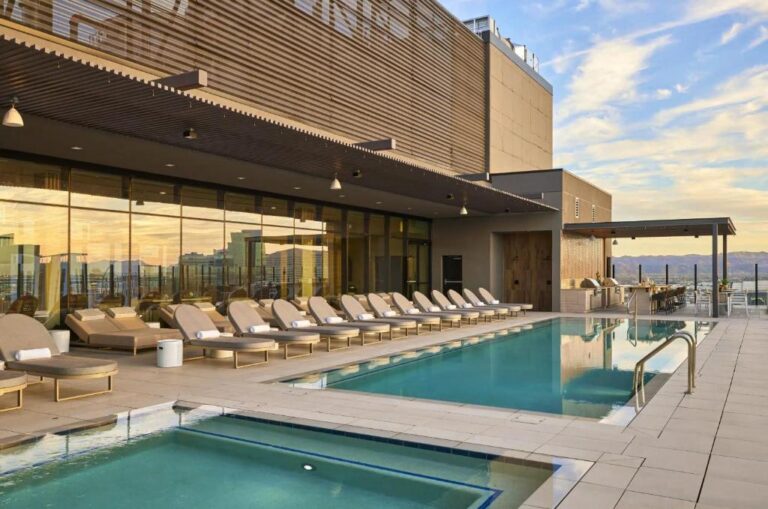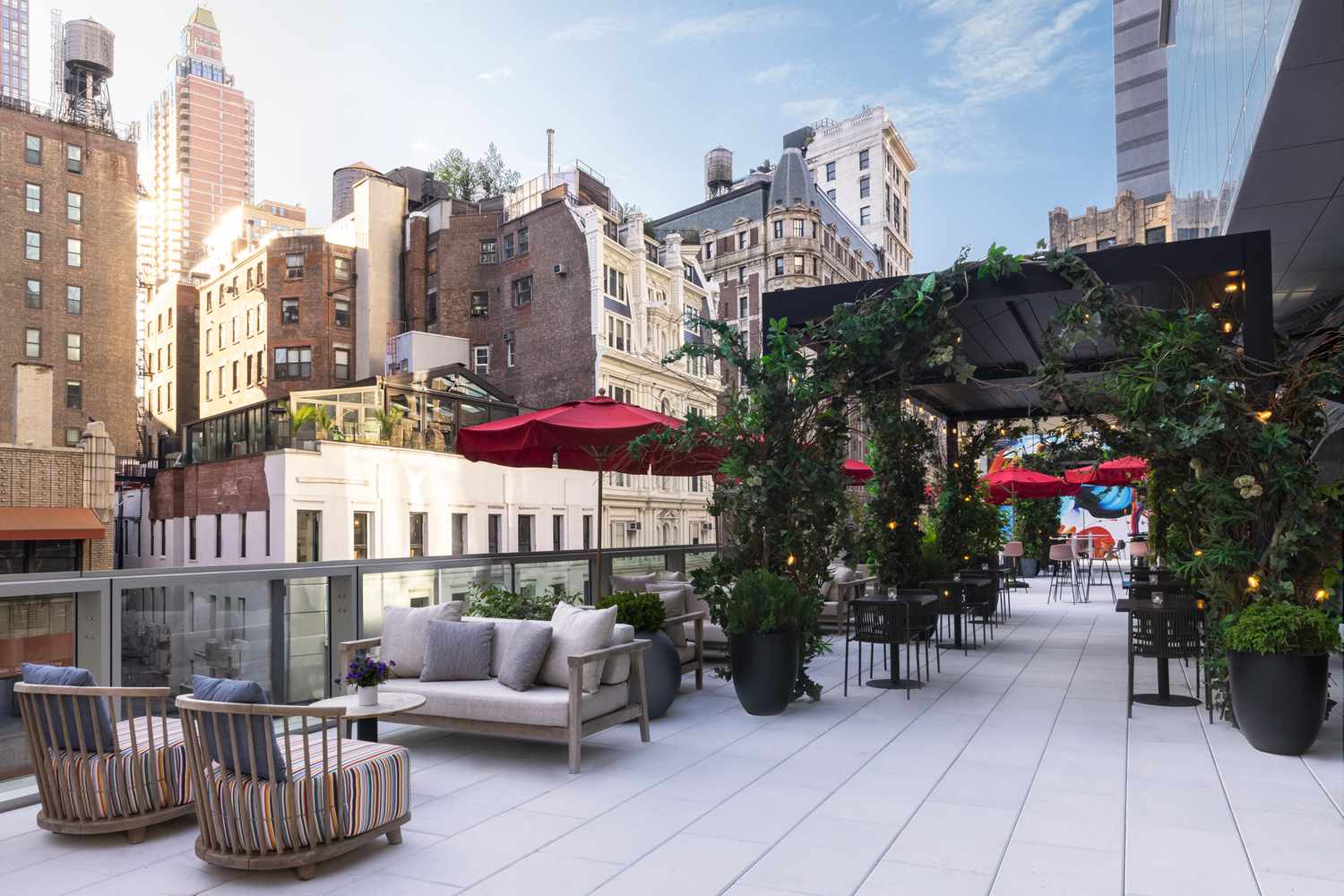
Best Rooftop Hotels in the US: A Definitive Guide to High-Altitude Hospitality
The American hospitality sector has undergone a vertical metamorphosis over the last two decades. The rooftop is no longer an ancillary amenity; it is the physical manifestation of a hotel’s identity, offering a detached perspective on the urban grid. This transition reflects a broader shift in guest psychology—a move away from the insular luxury of the marble lobby toward the expansive, experiential luxury of the open sky.
Defining the superior tier of these properties requires an analytical lens that extends beyond the quality of the view. The geographical diversity of the United States further complicates this evaluation, as the operational requirements for a rooftop in the humid heat of Miami differ fundamentally from those of a wind-swept skyscraper in Chicago or a desert-adjacent terrace in Scottsdale.
This analysis dissects the systemic factors that contribute to the prestige of the domestic rooftop market. We examine the evolution of building codes that allowed for this expansion, the psychological frameworks that drive demand for elevated spaces, and the economic realities of maintaining a revenue-generating environment in a semi-exposed industrial zone. This is a study of how high-altitude hospitality balances the ephemeral appeal of the vista with the rigid demands of architectural safety and operational efficiency.
Understanding “best rooftop hotels in the us”
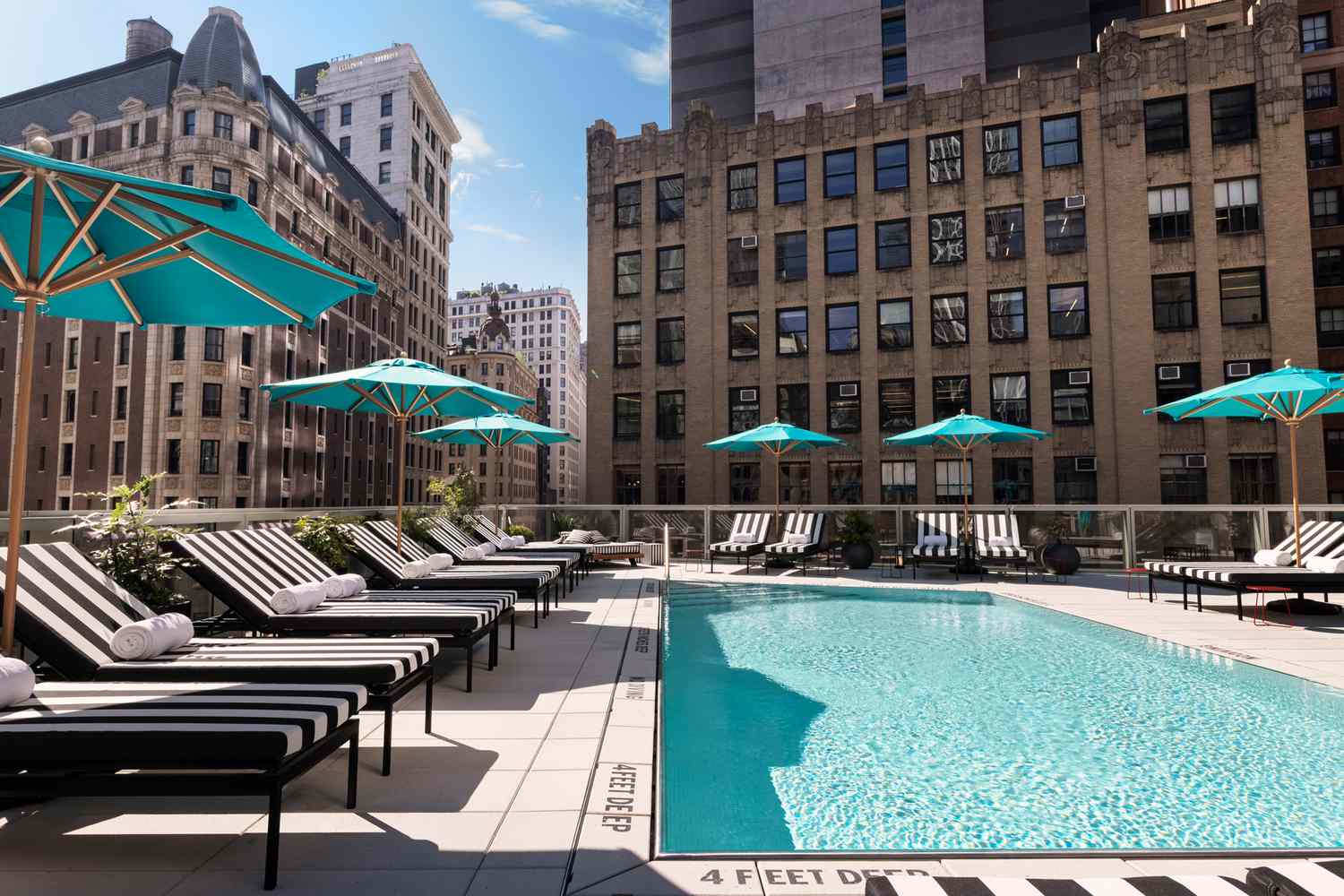
To identify the best rooftop hotels in the us, one must first decouple the concept of a “good hotel” from a “good rooftop.” A common misunderstanding in the industry is the assumption that a high-floor location automatically translates to a premium experience.
The oversimplification risk here lies in the “view-centric” bias. Many travelers and critics prioritize the visual payout above all else, ignoring the functional failures that often plague rooftop spaces: inadequate wind shielding, excessive solar gain that makes the space unusable during daylight, or acoustic bleed that disturbs guests in the suites directly below. The best properties are those that have solved the “Summit Paradox”—the need to feel exposed to the elements while remaining physically comfortable.
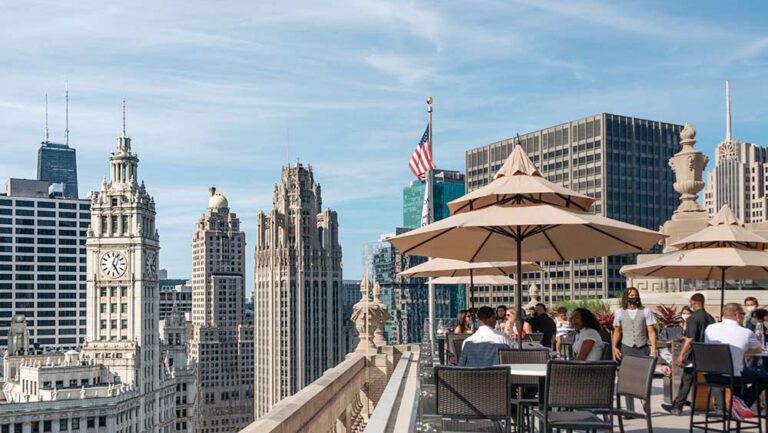
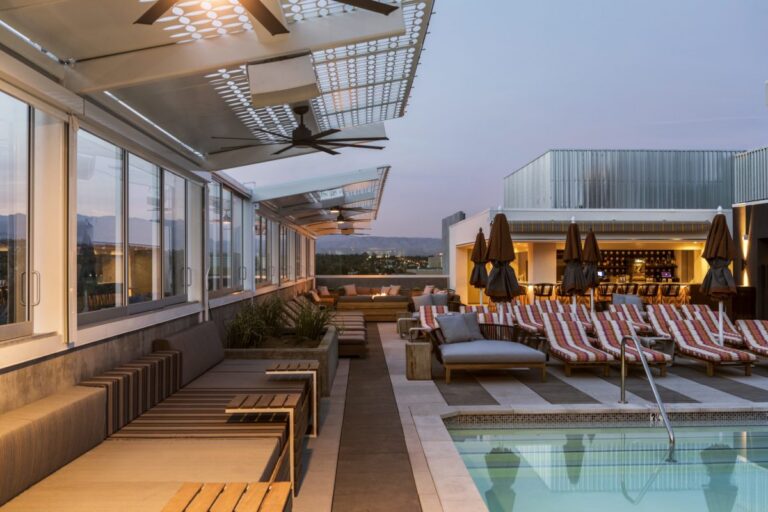
A “best” designation in Southern California implies a year-round, open-air environment with sophisticated fire-mitigation systems. In New York, it implies a hybrid structure with retractable glass that can pivot from a summer sun-trap to a winter observatory. Evaluation must therefore be relative to the environmental constraints of the city in question, rather than a monolithic set of national criteria.
Deep Contextual Background: The High-Altitude Evolution
The history of the American hotel roof is a story of technological liberation. In the early 20th century, the “Roof Garden” was a seasonal novelty, popularized by properties like New York’s Waldorf Astoria or Chicago’s Palmer House. However, these were largely utilitarian spaces. The modern rooftop boom was enabled by three primary systemic shifts: the invention of high-velocity elevators, the perfection of advanced waterproofing membranes, and the modernization of urban fire codes.
Hotels became insular boxes. It wasn’t until the boutique hotel movement of the 1990s—pioneered by the likes of Ian Schrager and André Balazs—that the roof was reimagined as a “social observatory.” This period saw the roof transition from a mechanical necessity to a revenue-generating asset, often outperforming the rooms themselves in terms of profit-per-square-foot through food and beverage sales.
Today, the “Integrated High-Performance Roof” represents the current state of the art. These designs treat the roof as a holistic ecosystem, incorporating green-roof technologies for thermal management, high-impact glass for wind mitigation, and specialized logistics for food service. The “best” hotels in the current domestic landscape are those that have successfully navigated this transition from the decorative to the functional.
Conceptual Frameworks for Evaluating Rooftop Assets
To standardize the evaluation of these diverse properties, we utilize specific mental models that prioritize longevity and guest experience over surface-level aesthetics.
The “Contextual Horizon” Model This framework evaluates the roof’s position relative to the local architectural context. It asks: Does the view provide a sense of place? A rooftop in Los Angeles should offer a view of the Hollywood Hills or the Pacific, not just the tops of other buildings. The best hotels use their elevation to ground the guest in the specific geography of the city.
The “Climate Buffer” Mental Model A rooftop is a building’s most vulnerable surface. The “Climate Buffer” framework measures how well the hotel protects the guest from the “Aggression of the Elements.” This includes evaluating the efficacy of windbreaks, the shading coefficient of overhead structures, and the presence of radiant heating for cooler evenings.
The “Logistical Flux” Framework This operational model assesses the efficiency of moving goods and people to the summit. A rooftop venue that shares an elevator with housekeeping or check-in is fundamentally compromised. The elite tier of rooftop hotels maintains a “Service Segregation” that ensures the luxury experience isn’t interrupted by the utilitarian needs of the hotel.
Key Categories and Regional Variations
The domestic market for rooftop hotels is categorized by urban typology and climate. The trade-offs in each category are distinct.
| Category | Primary Benefit | Trade-off | Example Region |
| High-Rise Skyscraper | Maximum elevation; city-wide views | Wind intensity; elevator wait times | New York, Chicago |
| Historic Low-Rise | Contextual intimacy; neighborhood feel | Structural weight limits; aging infra | Charleston, Savannah |
| Resort/Leisure Roof | Large pool decks; daytime focus | High water usage; extreme sun exposure | Miami, Las Vegas |
| Arid/Mountain High-Floor | Outdoor fire pits; stargazing | Cold nights; low oxygen levels | Denver, Phoenix |
Decision Logic: The Height vs. Intimacy Pivot For the traveler or developer, the primary decision point is between “Macro Views” (the city as a map) and “Micro Views” (the city as a community). Skyscraper hotels offer the former, providing a sense of god-like detachment. Historic boutique hotels offer the latter, allowing guests to feel connected to the street-level life while remaining physically removed from it.
Detailed Real-World Scenarios: Logistics and Implementation
Scenario 1: The Wind-Tunnel Effect in a Coastal High-Rise A luxury property in Miami installs a stunning infinity pool on the 45th floor. However, they fail to account for the “Venturi Effect”—wind accelerating between the building and a neighboring tower.
-
The Problem: Guest towels and light furniture become projectiles.
-
The Mitigation: Installation of high-impact, staggered glass panels that break the wind without obscuring the sunset view. The best hotels perform wind-tunnel testing before a single tile is laid.
Scenario 2: The “Service Bottleneck” in New York City A popular rooftop bar in Manhattan becomes so successful that the three main elevators cannot handle the volume of outside guests and overnight residents.
-
The Failure: Overnight guests, paying $800 a night, are forced to wait 15 minutes to reach their rooms because the elevators are full of bar-goers.
-
The Success: The best properties implement “RFID Priority Access,” ensuring residents have dedicated lifts that bypass the bar floors during peak hours.
Planning, Cost, and Resource Dynamics
The “Summit Premium” is the economic reality of the rooftop hotel. Constructing and maintaining these spaces costs significantly more than ground-level equivalents.
| Resource Type | Upfront CapEx | Recurring OpEx | Variability |
| Waterproofing | High | Low | Moderate (Weather-dependent) |
| Vertical Transport | Massive | High (Energy) | Constant |
| Wind Mitigation | Moderate | Low | High (Seasonal) |
| Pool Maintenance | High | Moderate | Climate-dependent |
The opportunity cost of a rooftop asset is often the “Loss of Mechanical Space.” By moving the lounge to the roof, the hotel must find other locations for HVAC units, often requiring more expensive, decentralized systems or losing valuable ground-floor retail space.
Tools, Strategies, and Support Systems
-
Sonic Anemometers: Real-time wind sensors that automatically trigger retractable awnings or notify staff to secure loose assets.
-
Electronic Leak Detection (ELD): Integrated wire-mesh systems beneath the roof membrane that pinpoint moisture before it causes structural damage.
-
Variable Refrigerant Flow (VRF): Modern HVAC systems that allow for localized cooling on the top floors without the massive ductwork of traditional systems.
-
Directional Sound Arrays: Speakers that use phase-cancellation to keep music within the venue boundaries, preventing noise complaints from neighbors.
-
Pedestal Paver Systems: Modular floor tiles that allow for a level surface while hiding the slope of the structural roof for drainage.
Risk Landscape and Failure Modes
The primary risk in the rooftop hospitality sector is “Structural Loading.” Over time, the addition of planters, furniture, and crowds can exceed the original slab’s capacity.
-
Compounding Risks: A minor waterproofing breach (System A) that remains undetected leads to the corrosion of the structural steel (System B), which is then exacerbated by the weight of a new pool installation (System C).
-
Behavioral Failure: The “Edge Attraction” where guests attempt to sit on railings or parapets, necessitating secondary barriers that are often added as unappealing retrofits.
Governance, Maintenance, and Long-Term Adaptation
Effective management of a rooftop asset requires a “Vertical Governance” strategy—a specialized maintenance schedule that recognizes the roof as a high-wear environment.
Layered Maintenance Checklist:
-
Daily: Clear drain covers of organic debris; verify sonic sensor calibration.
-
Weekly: Inspect glass railing hardware for “wind vibration” loosening.
-
Quarterly: Thermal imaging scan of the membrane to check for trapped moisture.
-
Annually: Structural load audit to ensure no “creep” has occurred in the concrete slab.
Measurement, Tracking, and Evaluation
How do we quantify the “best” in this category? We use a mix of leading and lagging indicators.
Leading Indicators (Predictive):
-
View-to-Obstruction Ratio: Percentage of the horizon visible from the primary guest zones.
-
Thermal Comfort Score: The variance between ambient temperature and the “felt” temperature at the guest level.
Lagging Indicators (Historical):
-
Revenue-per-Square-Foot (RPSF): Comparing rooftop F&B revenue to the lobby bar.
-
Incident Rate: Slip-and-fall or wind-related damage reports.
Documentation Examples:
-
The “Wind Log”: Tracking when the roof was closed due to weather to justify future investments in glass enclosures.
-
The “Vibration Audit”: Measuring sub-floor noise levels during peak bar hours.
Common Misconceptions and Oversimplifications
-
Myth: “The tallest hotel always has the best view.”
-
Correction: In many cities, being too high means seeing only the “tops” of things. The “Sweet Spot” is often 10-15 stories up, where you are still part of the city’s architectural texture.
-
-
Myth: “Green roofs are purely for aesthetics.”
-
Correction: They are critical for “Evapotranspiration,” which can lower the building’s cooling costs by 15% during summer months.
-
-
Myth: “All rooftop pools are heated.”
-
Correction: Heating a pool at altitude in a windy city like Chicago is an immense energy drain; the best hotels use “Pool Blankets” and geothermal heat exchangers.
-
Ethical and Practical Considerations
The “Privatization of the View” is a significant ethical consideration. Many rooftop hotels have replaced public observation decks, restricting the city’s best vistas to those who can afford a $500 room or a $30 cocktail. The most responsible hotels maintain a “Public Access” window or community-centric events to mitigate this urban exclusion.
Practically, “Light Pollution” is an overlooked factor. Excessive upward-facing lighting on a hotel roof can disrupt local avian migratory patterns and degrade the “Dark Sky” quality of the city. The best properties use downward-directed, low-Kelvin lighting that provides safety without contributing to skyglow.
Synthesis and Strategic Judgment
The designation of the best rooftop hotels in the us is ultimately a judgment of resilience. The truly elite properties are those that have anticipated the friction of the vertical environment.
Strategic success in this sector belongs to the hotels that view the roof as a “living asset.” By prioritizing structural safety, logistical separation, and climate mitigation, these properties ensure that the guest experience remains as soaring as the architecture itself. The rooftop is the final frontier of urban hospitality, and the hotels that master it are those that treat the summit not as a destination, but as a discipline.