Top Rooftop Hotel Packages: The Definitive Guide to High-Altitude Hospitality
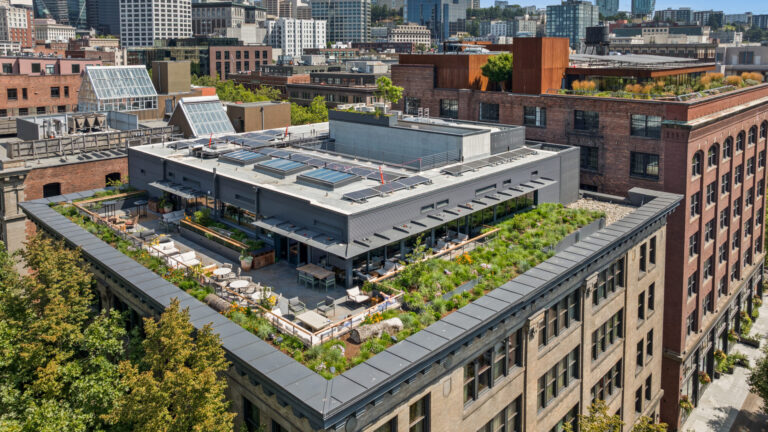
The American hospitality landscape has undergone a vertical revolution over the last decade. As urban density increases and travelers seek refuge from the congestion of the street, the “fifth facade”—the building’s roof—has evolved from a mechanical wasteland into the most valuable real estate in the industry. This shift toward the sky is not merely an aesthetic choice; it is a response to a psychological desire for perspective, air, and a curated detachment from the urban grid.
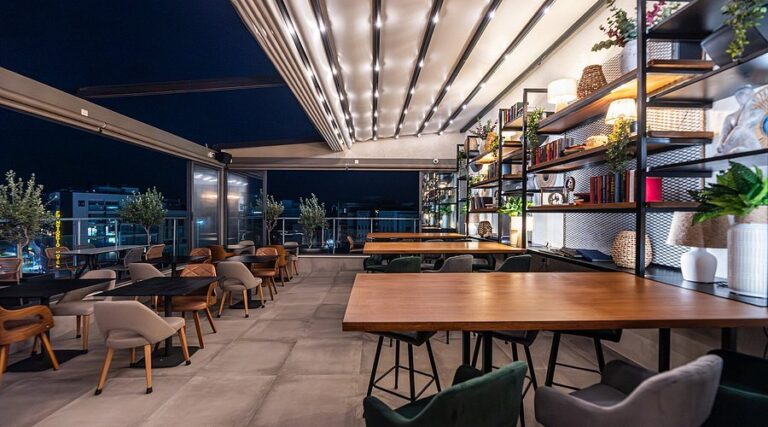
A premier rooftop experience is an engineering marvel disguised as a social sanctuary. It requires the seamless integration of wind-mitigation technology, acoustic decoupling, and complex vertical logistics, all while maintaining the illusion of effortless leisure.
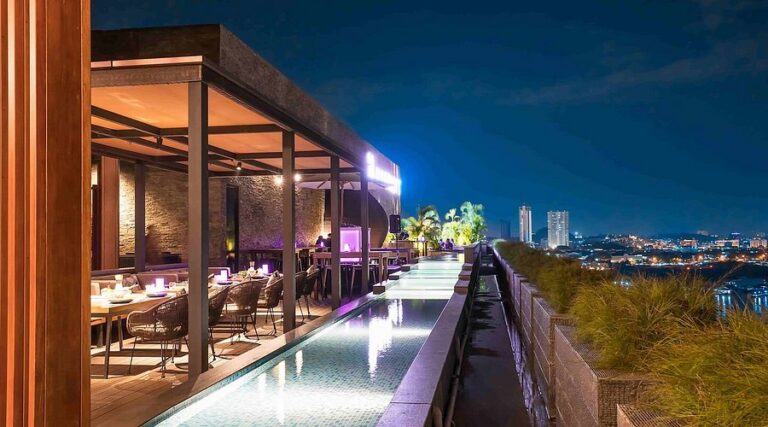
As we examine the current landscape of the top rooftop hotel packages, we find a sector bifurcated by regional climate and municipal regulation. From the “winter gardens” of Chicago that defy sub-zero temperatures to the hurricane-impact infinity decks of Miami, the American roof has become a crucible for architectural innovation.
Understanding “top rooftop hotel packages”
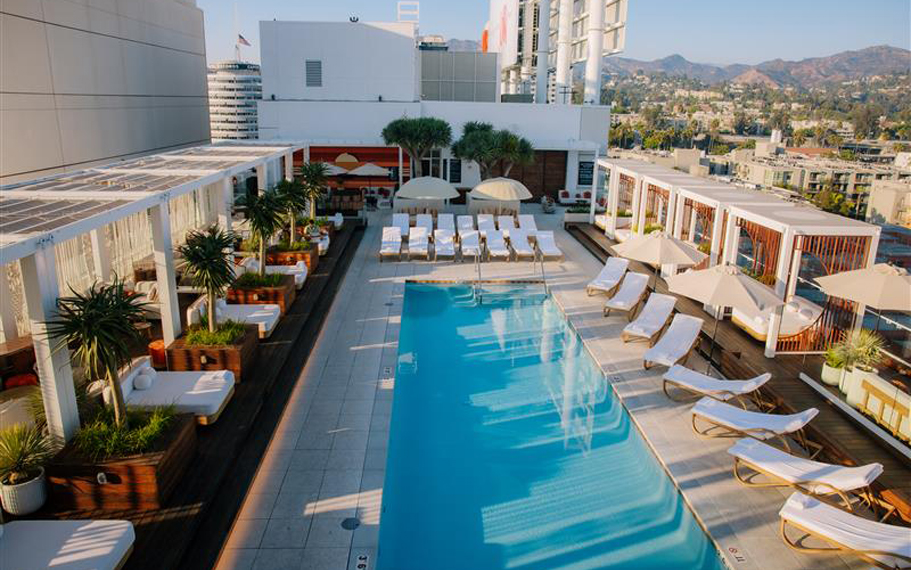
The phrase top rooftop hotel packages is frequently employed as a marketing superlative, yet its technical definition is rooted in “Contextual Superiority.” A common misunderstanding among developers and consumers alike is the assumption that raw altitude is the primary metric of quality. In reality, a venue’s prestige is often inversely proportional to its height if that elevation compromises guest comfort.
Oversimplification risks emerge when evaluating these assets solely on social media visibility. While “Instagrammability” is a modern KPI, it often masks systemic operational failures: inadequate wind shielding that renders a terrace unusable thirty percent of the year, or poor acoustic decoupling that allows the “thump” of a rooftop lounge to disturb guests in the high-rev suites directly below. The elite tier of rooftop packages prioritizes the “Environmental Buffer”—the invisible layer of protection that allows a guest to feel as comfortable at 500 feet as they do at street level.
Furthermore, the domestic market is segmented by “Micro-Climatic Logic.” What constitutes a premium package in a coastal high-rise—a focus on salt-air resilience and hurricane-rated infrastructure—is fundamentally different from the requirements in the high desert, where the focus must be on thermal intensity and evaporation management. To evaluate these experiences accurately, one must assess how well the architecture adapts to its specific geographical constraints rather than adhering to a generic national standard of luxury.
Deep Contextual Background: The Industrial-to-Social Evolution
Historically, the American roof was a dead zone. In the early 20th century, the “Roof Garden” was a seasonal novelty, found in Gilded Age hotels like the Bellevue-Stratford in Philadelphia or the Waldorf Astoria in New York. However, these were largely flat, paved surfaces with minimal infrastructure. The post-war era saw roofs disappear entirely into mechanical service, as central air conditioning required massive cooling towers and vents that occupied the building’s crown.
The contemporary renaissance began in the 1990s and accelerated through the 2020s, driven by three technological catalysts: high-velocity elevator systems, advanced lightweight structural materials, and the perfection of the “Retractable Envelope.” These innovations allowed developers to move beyond the “seasonal bar” and create permanent, year-round destinations.
This evolution has also been influenced by the “Urban Density Paradox.” As street-level real estate in cities like Seattle, Austin, and San Francisco became prohibitively expensive and visually congested, the roof became the only viable frontier for expansion. This shift has turned the “fifth facade” into a property’s most profitable surface, often generating higher revenue-per-square-foot than the guest rooms themselves. In 2026, the top rooftop hotel packages are those that treat the roof as an integrated social ecosystem rather than a peripheral amenity.
Conceptual Frameworks for High-Altitude Hospitality
To manage the complexities of these spaces, senior editors and architects apply specific mental models that go beyond traditional hospitality logic.
The “Kinetic Envelope” Model
This model treats the rooftop not as a static room, but as a kinetic machine. Every element—from retractable glass walls to modular furniture—must be capable of rapid adaptation. The “failure” in this model occurs when a venue is “static,” meaning it cannot respond to a sudden shift in wind or temperature, resulting in lost revenue and guest dissatisfaction.
The “Vertical Friction” Framework
Luxury is the absence of effort. On a rooftop, “Friction” is the distance and time required to transport resources (ice, glass, labor) from the basement to the summit. The most successful packages are those that have eliminated vertical friction through dedicated service lifts and decentralized satellite storage, ensuring that high-altitude service feels as seamless as a lobby bar.
The “Horizon Psychology” Framework
This evaluates the guest’s sense of safety versus their sense of exposure. A rooftop that feels too enclosed loses its purpose; a rooftop that feels too exposed triggers a primal “edge anxiety.” The best designs use “tiered elevations” and greenery to create a psychological safety buffer, allowing guests to enjoy the view without the physiological stress of height.
Key Categories and Regional Trade-offs
Each category presents a unique set of strategic trade-offs.
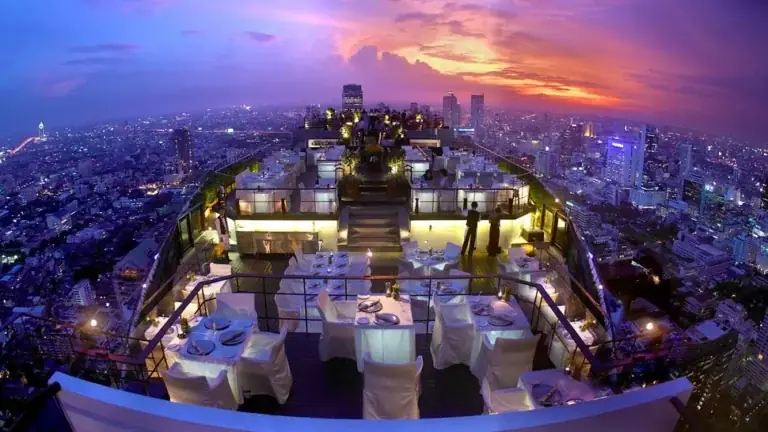
Decision Logic: The Height vs. Connection Pivot When selecting or developing a rooftop asset, the primary decision point is the “Gaze Direction.” Skyscraper rooftops provide a “Macro-Gaze” (seeing the city as a map), which creates a sense of power and detachment. Low-rise rooftops provide a “Micro-Gaze” (seeing the city as a community), which fosters a sense of belonging. The top rooftop hotel packages are those that choose a direction and optimize for it, rather than trying to be both.
Detailed Real-World Scenarios: Logistics and Failure Modes
Scenario 1: The Wind-Tunnel Effect in Coastal High-Rises
A luxury hotel in Miami installs an infinity pool on the 50th floor.
-
The Problem: The building’s shape creates a “Venturi Effect,” accelerating wind across the pool deck. Guests find it impossible to keep towels on chairs, and the water surface becomes choppy.
-
The Solution: Installation of staggered glass “wind-walls” that break the airflow without creating a solid barrier that would catch the wind like a sail.
-
Failure Mode: Using standard outdoor furniture that has a high “uplift coefficient,” leading to projectiles during a storm.
Scenario 2: The “Acoustic Leak” in Boutique Developments
A historic building in New Orleans converts its roof into a high-end jazz lounge.
-
The Problem: The building’s original timber frame lacks the density to absorb low-frequency sound. Guests in the “Presidential Suite” directly below the bar cannot sleep due to the “thump” of the bass.
-
The Mitigation: Implementing a “Floating Floor” system where the lounge floor is physically decoupled from the building’s structure using spring isolators.
-
Second-Order Effect: The weight of the acoustic insulation exceeds the floor’s load-bearing capacity, requiring secondary steel reinforcement from the basement up.
Planning, Cost, and Resource Dynamics
The “Summit Tax” is the inescapable reality of operating at height. Costs do not scale linearly; they scale exponentially as elevation increases.
The Opportunity Cost of “Mechanical Migration” To create a rooftop experience, developers must move HVAC chillers and water heaters to lower floors or the basement.
Tools, Strategies, and Support Systems
To maintain a position among the top rooftop hotel packages, operators must employ specific technical strategies:
-
Sonic Anemometers: Real-time wind sensors that automatically trigger the retraction of umbrellas or awnings before a gust can cause damage.
-
Pedestal Paver Systems: Modular floor tiles that sit on “stilts,” allowing water to drain beneath the guest’s feet while providing easy access to the waterproofing membrane for repairs.
-
Variable Refrigerant Flow (VRF): Localized cooling systems that allow for precise climate control in glass-enclosed “pods” without massive ducting.
-
Greywater Reclamation: Using the condensate from the building’s AC units to irrigate rooftop gardens, reducing the water-weight load.
-
Directional Audio Arrays: Speakers that use “phase cancellation” to keep music within the venue boundaries, preventing noise pollution in the neighborhood.
-
Electronic Leak Detection (ELD): An integrated wire mesh that can pinpoint a roof leak within inches, preventing the need to rip up the entire floor to find a puncture.
Risk Landscape: The Vulnerability of Height
The risk taxonomy for high-altitude hospitality is divided into “Immediate” and “Creeping” risks.
Immediate Risks:
-
Wind Uplift: The sudden transformation of furniture into projectiles.
-
Lightning Strike: High-altitude terraces act as natural lightning rods, requiring sophisticated grounding systems that must be inspected monthly.
Creeping Risks:
-
UV Degradation: High-altitude solar radiation is significantly more intense. Fabrics and polymers that last five years at street level may fail in eighteen months on a roof.
-
Thermal Expansion: The “Daily Cycle” of extreme heat and night-time cooling causes building materials to expand and contract at different rates, eventually stressing the waterproof seams.
-
Load Cluster: The unintended concentration of weight (e.g., a crowd gathering on one side of a deck to see a firework display) can exceed the structural “point load” limits of the slab.
Governance, Maintenance, and Long-Term Adaptation
Operating a high-altitude asset requires a specialized “Governance Layer” that is distinct from standard hotel management. Because the environment is so aggressive, maintenance must be predictive, not reactive.
The Maintenance Layer Checklist
-
Daily: Inspect “Scupper” drains for debris (leaves, plastic); check wind-speed logs.
-
Monthly: Test all motorized retractable systems; calibrate sonic anemometers.
-
Quarterly: Structural inspection of glass-railing anchor points (vibration from wind can loosen bolts over time).
-
Bi-Annually: Infrared “Moisture Scan” of the roof membrane to identify hidden leaks before they reach the ceiling below.
Measurement, Tracking, and Evaluation of Asset Health
The health of a rooftop package is measured through a blend of qualitative and quantitative signals.
Leading Indicators (Predictive):
-
Mean Time Between Failure (MTBF): Tracking the frequency of “Mechanical Downtime” for retractable roofs or elevators.
-
Utility Variance: Sudden spikes in water bills often indicate a leak in the irrigation system or the pool’s “Auto-Fill” valve.
Lagging Indicators (Historical):
-
RevPASH (Revenue Per Available Seat Hour): Comparing rooftop performance against indoor outlets.
-
Asset Lifecycle Cost: The total spend on furniture and finish replacement over a five-year cycle.
Documentation Examples:
-
The “Slab Map”: A digital record showing exactly where weight is distributed to prevent structural fatigue.
-
The “Wind Log”: A record of every instance where the roof was cleared due to weather, used to justify investments in more robust wind shielding.
Common Misconceptions and Oversimplifications
-
Myth: “Artificial turf is the perfect low-maintenance rooftop solution.”
-
Correction: Artificial turf can reach temperatures of 160°F in direct sun and traps odors (from spills or pets) if not professionally sanitized weekly.
-
-
Myth: “The tallest building in the city has the best rooftop experience.”
-
Correction: In many cities, being too high places the guest above the “Architectural Interest Zone,” where they see only clouds or flat rooftops. The “Best” altitude is often between floors 15 and 30.
-
-
Myth: “Retractable roofs make a space truly ‘all-weather’.”
-
Correction: Most retractable roofs cannot be safely operated during high winds, meaning the space may still be closed during the very storms guests are trying to avoid.
-
Ethical and Practical Considerations in Elevated Design
The proliferation of high-altitude hospitality raises the question of “Skyline Equity.” Forward-thinking municipalities are beginning to require a “Public Observation Access” component in exchange for the zoning rights to build luxury rooftops.
Practically, sustainability is the primary ethical hurdle. Heating a rooftop pool in a cold climate or cooling a glass-enclosed “Sky Bar” in a desert consumes vast amounts of energy. The next generation of top rooftop hotel packages is moving toward “Passive Design”—using natural airflow, solar-glass tiles, and thermal mass to reduce the carbon footprint of the summit.
Conclusion: Synthesis and Strategic Judgment
The ascent of the American rooftop from a mechanical wasteland to a pinnacle of social experience is a testament to architectural ingenuity. However, the endurance of these assets depends on a shift from “Aesthetic Thinking” to “Systemic Thinking.”
To maintain a position among the top rooftop hotel packages, operators must remain adaptable. As climate patterns become more volatile and guest expectations for sustainable spaces grow, the rooftop must evolve. It is no longer enough to offer a view; one must offer a sanctuary.