Best Rooftop Hotels for Nightlife: The Definitive Vertical Hospitality Guide
The contemporary skyline is more than a silhouette of commerce; it is the primary theater of the modern nocturnal economy. The best rooftop hotels for nightlife are those that operate as high-altitude ecosystems, balancing the aggressive physics of the summit with the nuanced choreography of luxury hospitality.
In 2026, the distinction of “best” has shifted away from raw altitude toward “Atmospheric Integrity.” A venue is no longer judged solely by how high it sits, but by how effectively it mitigates the environmental friction of the heights. This transition involves a complex intersection of acoustic engineering, vertical logistics, and micro-climate management. To truly understand these spaces, one must look past the neon and the views to the invisible infrastructure that allows a thousand-person social event to thrive forty stories above a city’s quietest guest suites.
This editorial explores the systemic drivers, architectural hurdles, and economic trade-offs that define the premier tier of rooftop nightlife. We move beyond surface-level travel rankings to dissect the “Vertical Friction” of these assets—examining how the most successful properties have turned the “fifth facade” into a high-revenue social observatory while navigating the unyielding laws of urban zoning and structural load.
Understanding “best rooftop hotels for nightlife”
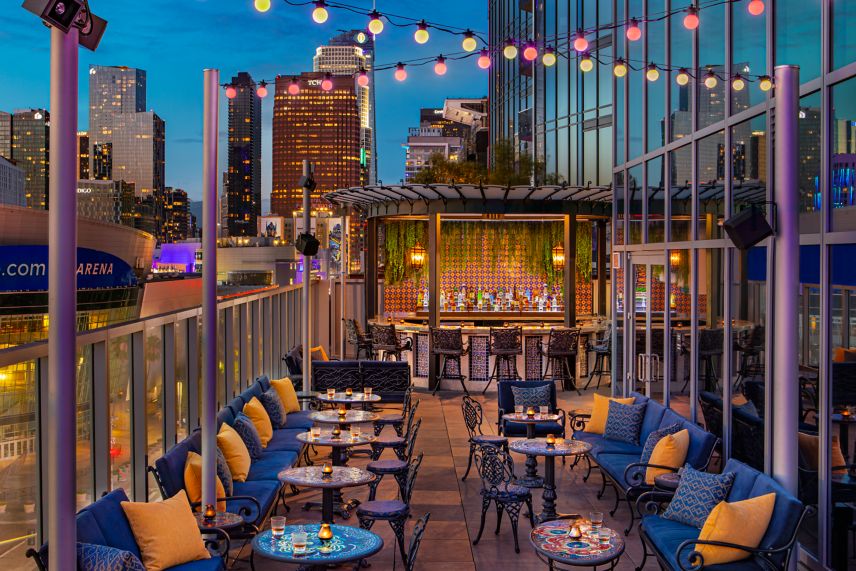
The phrase best rooftop hotels for nightlife is often utilized as a marketing superlative, but in professional editorial and architectural circles, it represents a state of “Logistical Harmony.” A common misunderstanding among consumers is that a great view is the sole prerequisite for a great rooftop destination.
Oversimplification in this sector often ignores “Environmental Aggression.” A rooftop at 500 feet is a different climatic zone than the lobby. Wind speeds are magnified by the Venturi effect between buildings, and UV radiation is significantly more intense.
Furthermore, these destinations are segmented by “Zoning Logic.” What is possible in Miami—a city that often prioritizes outdoor vitality and allows for higher noise thresholds—is fundamentally different from the constraints of a Chicago rooftop, which must transition from an open-air summer lounge to a thermally efficient “Winter Garden.” To evaluate these venues accurately, one must assess how they bridge the gap between their atmospheric reality and their social intent.
Deep Contextual Background: The Industrial-to-Social Evolution
Historically, the American hotel roof was a “Mechanical Dead Zone.” In the early 20th century, the roof was the exclusive domain of the boiler, the water tank, and the elevator overrun. While “Roof Gardens” appeared in Gilded Age hotels, they were largely flat, paved areas for walking.
The true renaissance of rooftop nightlife began in the 1990s and accelerated through the 2020s, as urban density made street-level real estate prohibitively expensive and visually congested. The roof became the only viable frontier for expansion. This shift turned the “fifth facade” into a property’s most profitable surface, often generating higher revenue-per-square-foot than the guest rooms themselves.
By 2026, the evolution has moved into “Integrated Vertical Urbanism.” Today’s premier nightlife destinations are no longer just bars; they are multifunctional observatories integrated with the building’s life-support systems. Some of the best rooftop hotels for nightlife now use “Transparent Solar Panels” for furniture surfaces and “Greywater Recovery” to maintain lush, vertical jungles that act as natural sound insulators for the floors below.
Conceptual Frameworks and Mental Models
To manage the complexity of high-altitude nightlife, senior operators apply specific mental models that prioritize resilience over aesthetics.
The “Kinetic Envelope” Model
This model treats the rooftop as a responsive machine rather than a static room. Every element—retractable glass walls, modular furniture, and automated shading—must respond to real-time weather data. If a venue is “static,” it is vulnerable, leading to lost revenue during sudden summer storms or high-wind events.
The “Acoustic Decoupling” Framework
Luxury is defined by the absence of unwanted noise. This framework focuses on “Structural Isolation.” The best venues use “Floating Floor” technology, where the nightclub’s deck is physically separated from the building’s concrete slab by spring isolators. This prevents the “thump” of the bass from vibrating through the steel frame into a guest’s pillow ten floors down.
The “Service Flux” Framework
This measures the “Vertical Friction” of resources. A rooftop destination is an island. This model prioritizes decentralized storage—having ice, glass, and liquor hubs at the summit—to ensure that service is internal to the roof rather than dependent on a forty-story elevator ride for every refill.
Key Categories and Regional Trade-offs
The landscape of rooftop nightlife is divided by architectural intent and geographical necessity. Each category presents a unique set of strategic trade-offs that determine its longevity in the market.
| Category | Primary Benefit | Operational Trade-off | Regional Hubs |
| High-Rise Skyscraper | Macro-perspective | Extreme wind; elevator lag | NYC, Chicago |
| Boutique Low-Rise | Neighborhood intimacy | Strict noise ordinances | Charleston, Nashville |
| Resort Pool Deck | All-day-to-night revenue | High UV damage; evaporation | Miami, Las Vegas |
| Hybrid Winter Garden | 365-day utility | High energy/HVAC costs | Boston, Seattle |
Decision Logic: The Altitude Pivot
When evaluating the best rooftop hotels for nightlife, the primary decision point is the “Gaze Direction.” Skyscraper rooftops provide a “Macro-Gaze” (seeing the city as a map), which creates a sense of power and detachment. Low-rise rooftops provide a “Micro-Gaze” (seeing the city as a community), which fosters a sense of belonging. Properties must choose one and optimize for it, as hybrid models often fail to deliver a cohesive “vibe.”
Detailed Real-World Scenarios: Logistics and Failure Modes
Scenario 1: The “Wind-Tunnel” Effect in Coastal Towers
A luxury hotel in Miami installs a lounge on the 55th floor.
-
The Problem: The building’s shape creates a “Venturi Effect,” accelerating wind across the deck.
-
Failure Mode: Napkins, lightweight menus, and eventually unweighted furniture become projectiles.
-
The Solution: The best venues use “Perforated Glass Wind-Breakers” that break the wind’s force without creating a solid “sail” that could stress the structural anchors.
Scenario 2: The “Acoustic Leak” in Historic Retrofits
A historic 1920s hotel in New York converts its roof into a high-energy bar.
-
The Problem: The original slab lacks the density to absorb low-frequency vibration.
-
The Failure: Bass frequencies travel through the columns, resulting in “night-of” refunds for rooms directly below the bar.
-
The Second-Order Effect: The hotel loses $50,000 per month in room revenue to support $40,000 per month in bar profit. The project is an “Economic Failure” despite the bar being packed.
Planning, Cost, and Resource Dynamics
The “Summit Tax” is the economic reality of operating at height. Costs scale exponentially, not linearly, with elevation. This variability must be accounted for in the initial capitalization of the asset.
| Cost Driver | Baseline (Ground Floor) | Skyline (High Altitude) | Delta |
| Waterproofing (per sq ft) | $15 | $65 | ~330% |
| Labor Productivity | 100% | 60% (Transit lag) | -40% |
| Furniture (Wind-Rated) | Standard | Weighted/Tethered | 2.5x Cost |
| HVAC Load | Baseline | +50% (Solar Gain) | +50% |
Opportunity Cost of Mechanical Migration
To create one of the best rooftop hotels for nightlife, the building’s chillers must be moved. Moving a 20-ton chiller from the roof to the basement consumes valuable parking or retail space. The rooftop must generate a massive “Premium” to offset the loss of this ground-floor footprint.
Tools, Strategies, and Support Systems
To sustain a premier status, operators must leverage engineering tools that bridge hospitality and physics.
-
Sonic Anemometers: Real-time wind sensors that automatically trigger retractable shutters or umbrella retraction.
-
Pedestal Paver Systems: Modular floor tiles that “float” above the waterproofing, allowing for rapid drainage and easy maintenance access.
-
Greywater Condensate Recovery: Using moisture from the building’s AC units to cool the rooftop deck through localized misting.
-
Directional Audio Arrays: Speakers that use “Phase Cancellation” to keep music within the bar’s boundaries, preventing neighborhood friction.
-
Electronic Leak Detection (ELD): An integrated wire mesh that pinpoints a roof membrane leak within inches, preventing total deck teardowns.
-
Transparent Solar Glass: Utilizing perimeter railings as energy generators for auxiliary lighting.
-
Variable Refrigerant Flow (VRF) HVAC: Allows for precise climate zones in glass-enclosed “pods” without massive ducting.
-
Vertical Transit Logic (VTL): Elevator software that prioritizes rooftop guests during peak social hours while bypassing “ghost” calls from empty floors.
Risk Landscape: The Vulnerability of Height
The “Taxonomy of Height” involves risks that are invisible to the guest but critical to the operator. These risks compound over time if not monitored through a rigid governance framework.
-
UV Burn-Rate: High-altitude solar radiation degrades fabrics and furniture finishes three times faster than at street level.
-
Point-Load Clusters: A crowd gathering on one side of a deck to see fireworks can exceed the structural limit of the slab if not accounted for in the initial engineering.
-
Lightning Strike: High-altitude terraces are natural rods, requiring grounding systems that must be inspected and certified after every major storm.
-
Elevator Dependency: A single mechanical failure in the lift effectively “closes” the destination; guests will not walk up 40 flights, leading to immediate revenue death.
Governance, Maintenance, and Long-Term Adaptation
Operating an elite rooftop venue requires “Predictive Maintenance.” The environment is too aggressive for “Reactive” fixes. A failure at the summit is often catastrophic to the brand.
The Maintenance Checklist Layer
-
Daily: Inspect “Scupper” drains for debris (leaves, plastic); check “Wind-Speed Log” to recalibrate automated safety thresholds.
-
Monthly: Lubricate retractable wall tracks; check glass-railing anchor points for vibration-induced loosening.
-
Quarterly: Structural audit of “Point-Load” zones for signs of tile shifting or slab stress.
-
Annually: Infrared “Moisture Scan” of the roof membrane to identify hidden dampness before it reaches the ceiling of the luxury suites below.
Measurement, Tracking, and Evaluation of Asset Health
The health of best rooftop hotels for nightlife is measured through a blend of “Vibe” metrics and “Engineering” signals.
Leading Indicators (Predictive):
-
Mean Time Between Failure (MTBF): How often do the retractable mechanicals or the dedicated service lifts jam?
-
Asset Decay Rate: The speed at which outdoor furniture finishes degrade under high-UV exposure.
Lagging Indicators (Historical):
-
RevPASH (Revenue Per Available Seat Hour): Comparing rooftop performance against indoor outlets to justify the “Summit Tax.”
-
Noise Complaint Frequency: A direct metric of the health of the acoustic isolation systems.
Documentation Examples:
-
The “Wind-Event Archive”: A record of closures used to refine future architectural shielding and staff scheduling.
-
The “Slab Stress Map”: A digital twin showing cumulative weight distribution over the life of the asset.
Common Misconceptions and Oversimplifications
-
Myth: “Artificial turf is the perfect low-maintenance rooftop solution.”
-
Correction: In direct sun, turf can reach 160°F and traps odors from spills or pets; it requires professional sanitization weekly to avoid becoming a liability.
-
-
Myth: “The tallest building in the city always has the best nightlife.”
-
Correction: Extreme height often leads to “Elevator Frustration” and “Edge Anxiety,” reducing the duration of guest stays compared to mid-rise venues.
-
-
Myth: “Retractable roofs make a space truly all-weather.”
-
Correction: They cannot safely operate during the high winds of a storm, meaning the space may still be closed when guests need shelter most.
-
Ethical and Practical Considerations in Elevated Design
As the skyline becomes privatized, cities face “Skyline Equity” issues. If the best views are only accessible via high-priced nightlife venues, the city loses its shared human experience. Forward-thinking cities are now requiring “Public Observation Windows” or community-access hours in exchange for the zoning rights to build these profitable summits. Practically, we must also consider the “Carbon Cost of Altitude”—the massive energy required to pump water and cool air hundreds of feet upward against gravity and solar gain.
Conclusion: Synthesis and Strategic Judgment
The rise of the hotel rooftop as the center of urban nightlife is a testament to the human drive for perspective. However, the endurance of these venues depends on shifting from “Aesthetic” thinking to “Systemic” thinking. The vista is the hook, but the engineering is the anchor.
A successful destination at the summit is not merely a place to see; it is a place that feels safe, intimate, and resilient. As urban density pushes us upward, the ability to curate the skyline will become the defining skill of the next generation of hospitality leaders. The future belongs to those who can master the friction of the heights to create the tranquility of the summit, ensuring that the best rooftop hotels for nightlife remain both profitable and iconic for decades to come.