Best Modern Rooftop Hotels United States: An Editorial Framework
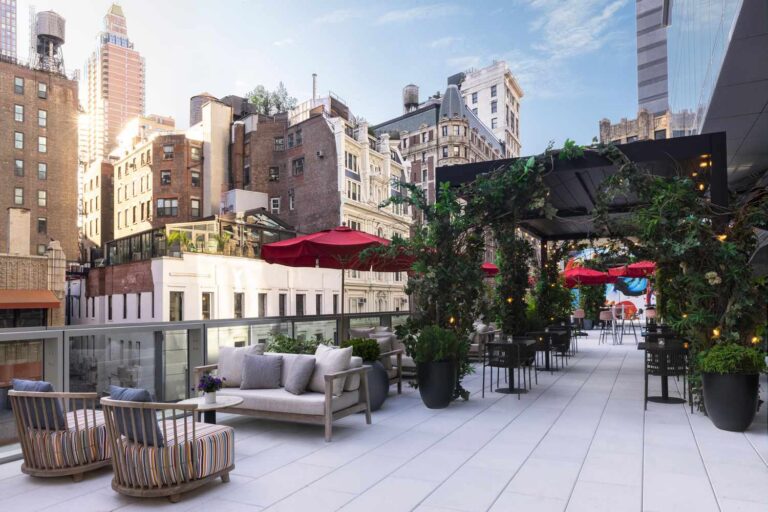
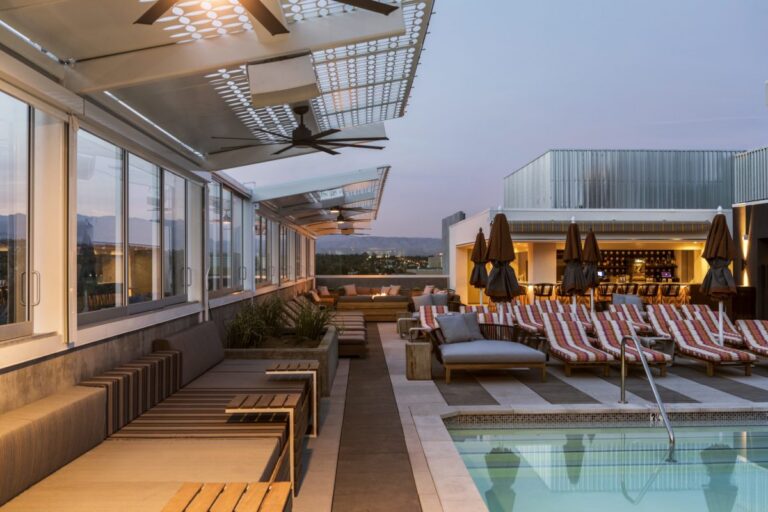
The American skyline has traditionally been a monument to corporate density and residential privacy, yet a fundamental shift in urban planning and consumer psychology has reclaimed the “fifth facade.” The rooftop, once the exclusive domain of cooling towers and elevator overruns, has evolved into the primary theater of the modern hotel experience. This vertical migration is not merely a design trend but a strategic response to the diminishing availability of ground-level public space in high-density American corridors.
As travelers increasingly prioritize atmospheric engagement over traditional room-bound amenities, the rooftop hotel has become an environmental interface. It is a space where the rigidity of urban life meets the fluidity of the horizon. This reorientation requires a sophisticated understanding of structural engineering, climate mitigation, and social curation. To understand the current landscape of vertical leisure is to recognize that the modern rooftop is a building’s most public statement and its most complex operational challenge.
This analysis provides a rigorous editorial framework for evaluating the best modern rooftop hotels united states. By moving beyond the ephemeral nature of “top-ten” lists, we investigate the underlying systems—from the physics of wind-shedding to the economics of vertical supply chains—that define true authority in the sector. We examine how these properties negotiate the tension between being a private sanctuary for guests and a high-volume public destination for the city at large.
Understanding “best modern rooftop hotels united states”
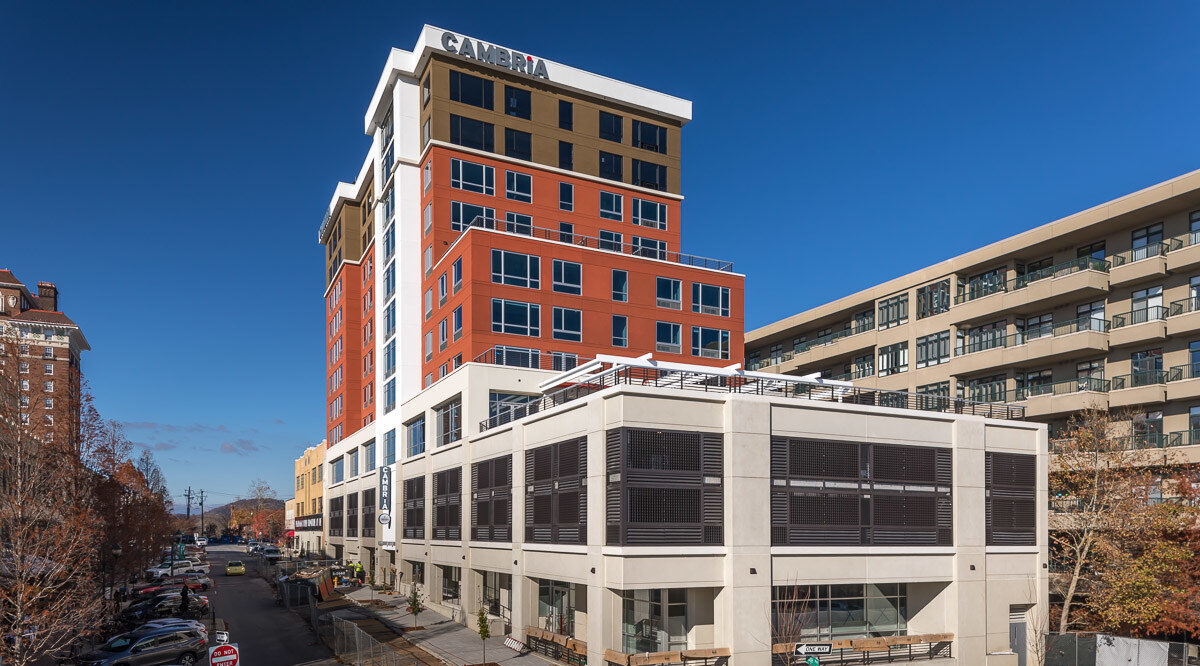
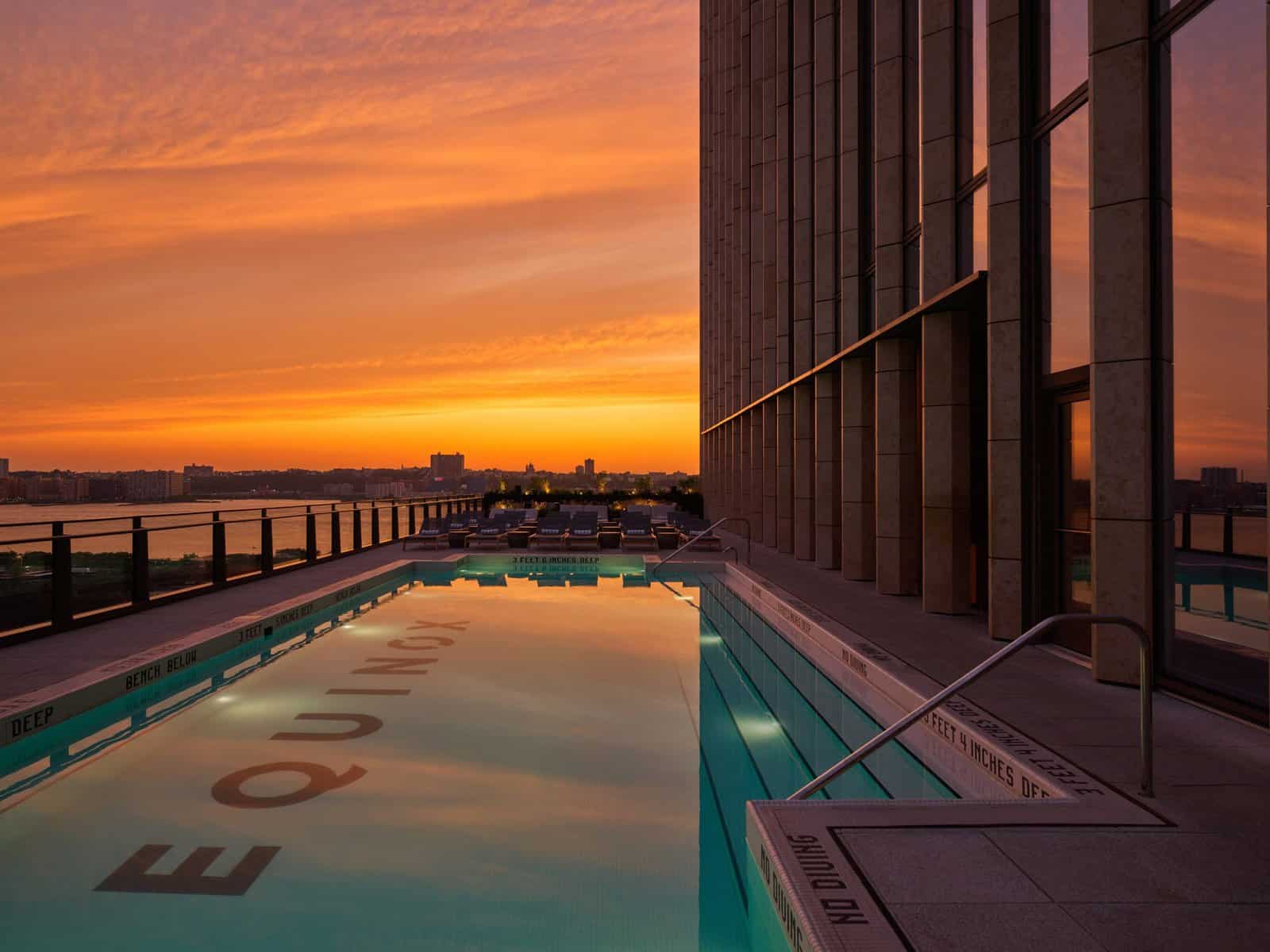
To rigorously define the best modern rooftop hotels united states, one must look past the initial visual impact of an infinity pool or a glass-walled bar. A common misunderstanding in both hospitality criticism and consumer perception is that “modern” simply refers to an aesthetic style—minimalism, steel, and glass. In reality, modernism in this context is a functional achievement: the ability of a building to sustain a comfortable, high-end social environment hundreds of feet in the air despite the inherent hostility of the elements.
Oversimplification occurs when properties are ranked solely by the “prestige” of their view. While a clear line of sight to a landmark is valuable, it is a static asset. The superior properties are those that solve the “Atmospheric Paradox”—providing an open-air sensation while simultaneously shielding guests from the relentless noise of offshore winds, urban traffic, and the mechanical hum of high-capacity HVAC systems. A hotel that fails to decouple the vibration of its rooftop sound system from the guest rooms below cannot be considered among the best, regardless of its architectural pedigree.
Furthermore, the “United States” context introduces a unique layer of regulatory and climatic diversity. A “modern” rooftop in the seismic zones of California must navigate entirely different structural constraints than a rooftop in the hurricane-prone humidity of Florida or the sub-zero winters of Chicago. Authority in this domain belongs to the properties that have been engineered specifically for their unique latitude and longitude, utilizing technology to extend their “operational season” far beyond the limits of natural weather.
The Historical Transition from Utility to Amenity
The American hotel roof has moved through three distinct eras. In the late 19th and early 20th centuries, “Roof Gardens” were seasonal necessities—the only way for the urban elite to escape the stagnant heat of un-air-conditioned cities. These were often sprawling, heavy structures with potted palms and masonry walls. The mid-century era saw the “Great Retreat,” as central air conditioning and the “sealed-box” philosophy moved leisure indoors to controlled environments, leaving the roof to rot as a site for mechanical equipment.
The current era, which began in the early 2000s, is the “Technological Renaissance.” Advances in high-strength, low-iron glazing and lightweight composite materials allowed architects to replace heavy masonry with transparent barriers. This period saw the roof transition from a hidden utility to the “Brand Beacon.” Today, the rooftop is the primary revenue driver, often outperforming the hotel’s signature restaurant or banquet hall on a per-square-foot basis.
Conceptual Frameworks for Vertical Hospitality
Systemic evaluation of these hotels requires applying specific mental models to the environment.
The “Wind-Shedding” Framework
This model evaluates how the building’s shape and its “fifth facade” partitions mitigate the Venturi effect—where wind accelerates as it passes between structures. The best hotels use “setbacks” and transparent baffles to create pockets of still air, allowing for a comfortable experience even on high-altitude terraces.
The “Vertical Supply Chain” Model
This framework assesses the logistical viability of the roof. Every item consumed on a 40th-floor rooftop—from a lemon wedge to a replacement sofa—must travel through a vertical bottleneck (the elevator). A property with a “fragile” supply chain will inevitably suffer from service delays during peak hours.
The “Acoustic Separation” Protocol
This focuses on the physical decoupling of social and residential zones. True modern luxury requires the use of “floating slabs” and spring-mounted subwoofers to ensure that the energy of the rooftop bar does not manifest as a low-frequency hum in the luxury suites directly beneath it.
Taxonomy of Modern Rooftop Experiences and Trade-offs
Modernity in the US rooftop market is segmented by regional archetypes and operational goals.
| Category | Primary Strategic Goal | Primary Trade-off / Limit |
| The Urban Observatory | Panoramic, multi-landmark views. | High wind exposure; often feels “detached” from the city. |
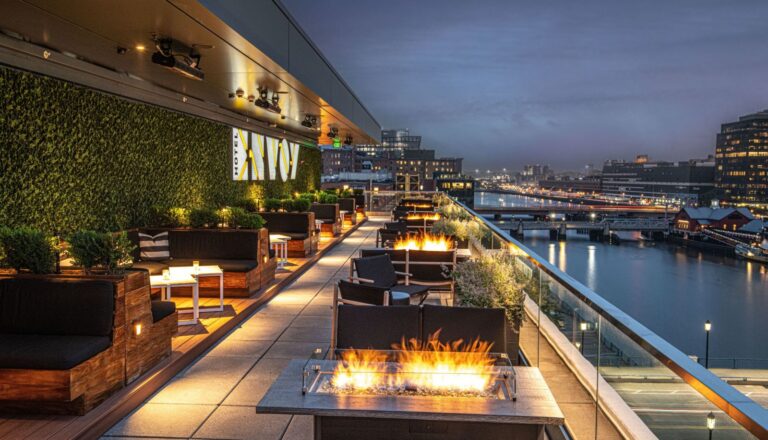
| The Biophilic Oasis | Integrating greenery and natural textures. | High maintenance cost; attracts insects/debris at height. |
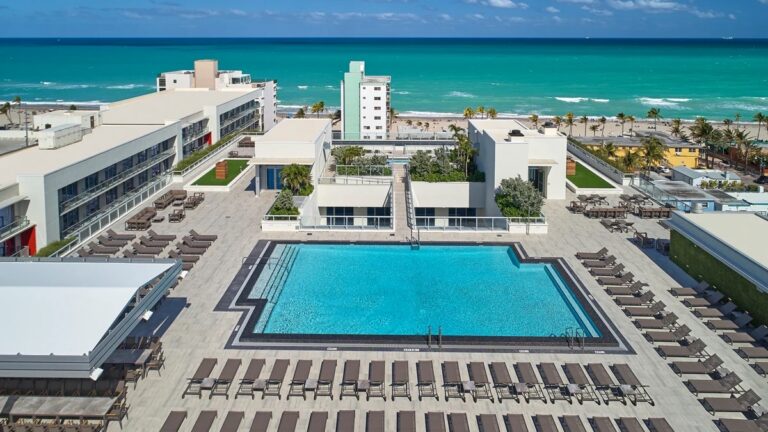
| The Wellness Deck | Focus on pools, spas, and yoga. | UV over-exposure; high humidity impact on materials. |
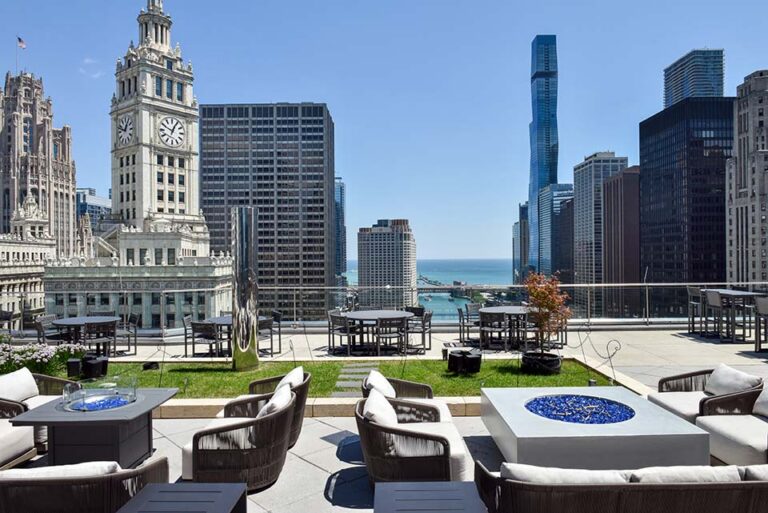
| The Historic Hybrid | Modern glass added to pre-war masonry. | Structural load limits; restricted floor plans. |
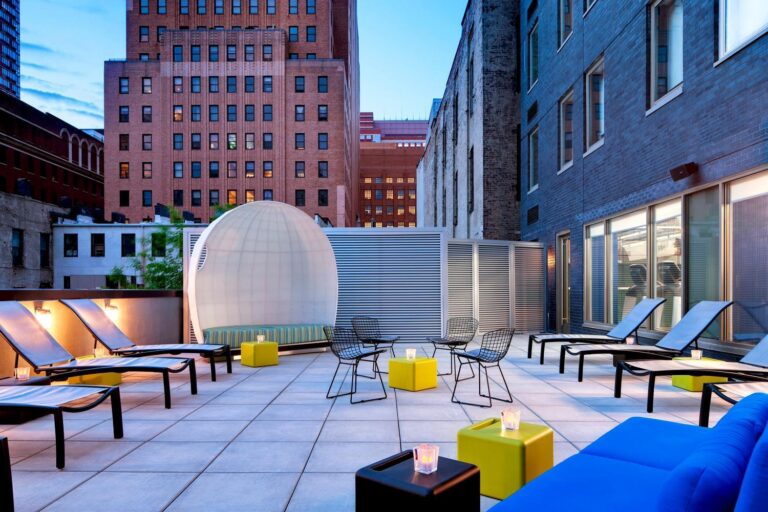
| The Social Podium | Lower-level roof (floors 5–10) with large scale. | Subject to street-level noise and “shadowing” from taller towers. |
Selecting the right property involves a trade-off between “Height Prestige” and “Sensory Proximity.” A 60th-floor view is dramatic but silent; a 10th-floor view keeps the guest connected to the “pulse” of the city.
Detailed Real-World Scenarios in Elevated Operations
Consider the “Friday Night Saturation” in a Los Angeles high-rise. The rooftop pool is at capacity, and the elevator bank is under heavy load from both guests and public visitors.
-
Failure Mode: If the hotel lacks “dedicated service cars,” the cleaning and restocking of the rooftop stall out, leading to visible debris and slow drink service.
-
Success Mode: Properties with “Elevator Logic” that prioritizes guest key-cards over public floor requests ensure that residents don’t feel “stranded” in their own hotel.
Another scenario involves a “Sudden Squall” in a Chicago rooftop conservatory.
-
Decision Point: Does the hotel rely on manual canvas covers (failure mode) or automated, high-speed retractable glass (success mode)?
-
Second-Order Effect: A hotel that can “seal” its roof in 90 seconds maintains its revenue flow during a storm, whereas a manual system loses the entire evening’s profit.
Planning, Cost, and Resource Dynamics
The economic reality of the rooftop lifestyle involves premiums that are often “invisible” to the casual observer.
| Resource Category | Direct Cost Factor | Opportunity Cost |
| Vertical Access | Elevator maintenance and energy. | Long wait times during check-in/out. |
| Climate Mitigation | Misting systems and radiant heat. | High energy load/carbon footprint. |
| The “View” Surcharge | 30% – 100% markup on F&B. | Higher expectations for service speed. |
| Glass Maintenance | Weekly professional washing. | Views are obscured if neglected for even 10 days. |
For the guest, the “cost” is not just the room rate, but the “Time Tax”—the minutes lost navigating vertical transit.
Strategies and Support Systems for Property Evaluation
-
Shadow Mapping: Use satellite imagery to determine if neighboring buildings block the sun on the rooftop pool during “prime hours” (11 AM – 3 PM).
-
Elevator Dispatch Analysis: Check reviews specifically for “wait times.” A hotel with a popular rooftop but only three elevators is a logistical trap.
-
Sound Buffer Inquiry: Ask the front desk: “Is the rooftop bar on a separate structural slab from the guest rooms?”
-
Wind-Break Verification: Look for properties that use “floor-to-ceiling” glass railings, which provide views without the disruptive wind-chill.
The Risk Landscape: Compounding Failure Modes
-
The “Corrosion Creep”: Salt air (coastal) or urban pollutants (inland) compromise the electronics of retractable roofs or sound systems, leading to “glitchy” operation.
-
Solar Saturation: Without “passive cooling” (like greenery or strategic shade), a rooftop becomes an oven between 12 PM and 3 PM, rendering the primary asset unusable.
-
Security Leakage: When public rooftop visitors find ways into residential hallways, compromising the safety and exclusivity of the guest experience.
Governance, Maintenance, and Long-Term Adaptation
A premier rooftop property requires a “Maintenance Checklist” that functions on a much tighter cycle than the rest of the building:
-
Daily: Saline/Pollutant rinse of all glass surfaces.
-
Weekly: Calibration of misting and heating systems.
-
Monthly: Structural check of railing mounts and wind-breaks.
-
Seasonal: Review of “Sound Maps” to ensure music levels haven’t drifted into prohibited decibel ranges for guest floors.
Measurement, Tracking, and Evaluation
How to track the success of a vertical hospitality asset:
-
Leading Indicators: Elevator cycle times; “Social Mention” density; misting system uptime.
-
Lagging Indicators: Negative reviews regarding noise; glass replacement frequency; guest-return rates for top-floor suites.
-
Documentation: Maintain a “Wind Log”—tracking when the roof must be closed due to wind-speed, which informs future structural upgrades.
Common Misconceptions and Strategic Oversights
-
“Higher is always better”: Heights above 40 floors often lose the architectural detail of the city, looking like a “map” rather than a vista.
-
“The view is the product”: The view is the hook; the comfort (wind-breaks, heat, seating) is the product.
-
“Infinity pools are always heated”: In many US cities, rooftop pools are unheated and are purely aesthetic for 8 months of the year.
-
“Retractable roofs solve everything”: Retractable roofs can create a “greenhouse effect” if not accompanied by high-capacity ventilation.
-
“Glass walls stop the wind”: Wind can “whip” over the top of a 6-foot glass wall, creating more noise than a completely open terrace.
-
“The rooftop is private”: In almost every major US hotel, the rooftop is a public-access bar; “exclusive” usually just means there is a cover charge.
Synthesis and Editorial Judgment
The search for the best modern rooftop hotels united states is a search for balance. The roof is the one place where a hotel cannot hide its operational or architectural flaws; the elements are too unforgiving. A truly great property is not defined by its décor, but by its ability to curate the chaotic energy of the sky into a controlled, high-altitude sanctuary. Silence, thermal comfort, and logistical seamlessness are the invisible hallmarks of vertical quality. For the guest, the reward is a perspective that is both expansive and intimate—a way to witness the edge of the world from a position of absolute tranquility.