Best Lakeside Rooftop Hotels in the US: A Definitive Editorial Guide
The American hospitality landscape has long been dominated by the coastal duopoly of the Atlantic and Pacific, yet a fundamental shift in travel psychology has redirected the national gaze inward. The Great Lakes, the Finger Lakes, and the alpine basins of the West are no longer merely seasonal retreats but the primary theaters for a new breed of vertical luxury.
This reorientation is a strategic response to “shoreline saturation.” In high-density lakeside corridors, ground-level views are increasingly occluded by legacy infrastructure and private developments. The rooftop provides a necessary psychological and visual release, allowing the guest to possess the lake through sight without being consumed by the congestion of the shore. To understand the current state of high-altitude lakeside hospitality is to recognize that the view is no longer a passive amenity; it is a meticulously engineered environment.
This analysis provides a rigorous editorial framework for evaluating the best lakeside rooftop hotels in the us. By moving beyond the ephemeral nature of “top-ten” lists, we investigate the underlying systems—from the physics of “lake-effect” wind-shear to the economics of vertical logistics—that define true authority in this sector. We examine how these properties navigate the tension between being a public destination for the city and a private sanctuary for the guest, all while battling the unique environmental volatility of the American interior.
Understanding “best lakeside rooftop hotels in the us”
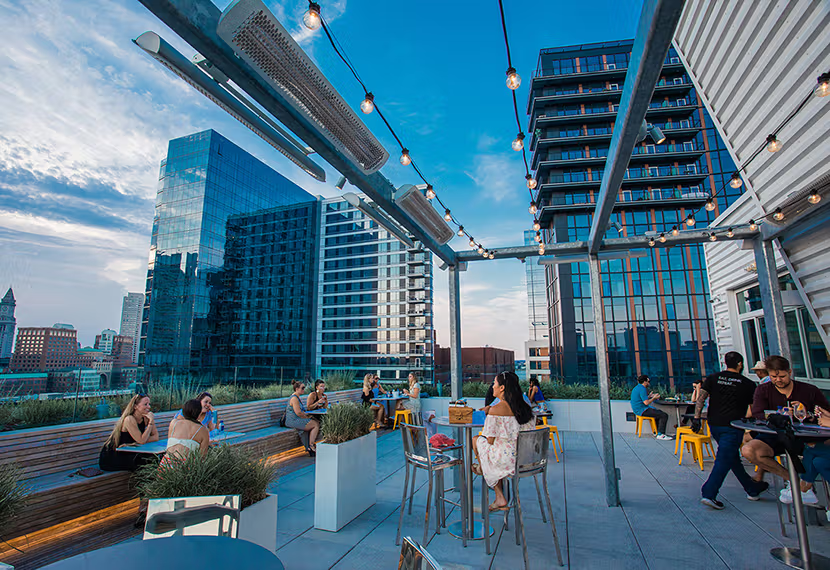
To rigorously define the best lakeside rooftop hotels in the us, one must look past the initial aesthetic impact of an infinity pool or a fire pit. A common misunderstanding in both hospitality criticism and consumer perception is that “best” is a direct proxy for height. In reality, the most successful lakeside rooftops are those that manage the “Thermal-Acoustic Paradox.” This is the ability of a building to sustain a comfortable, high-end social environment despite the inherent hostility of lakefront weather—where humidity, rapid temperature drops, and gale-force winds are constant variables.
Oversimplification occurs when a property is ranked solely by the “prestige” of its lake view. While a clear line of sight to Lake Michigan or Lake Tahoe is valuable, it is a static asset. The superior properties are those that solve the problem of “Atmospheric Detachment.” A rooftop that feels like a sealed glass box may offer a view, but it severs the guest’s sensory connection to the water.
Furthermore, the “United States” context introduces a unique layer of regulatory and climatic diversity. A “best” rooftop in the seismic, high-altitude environment of Lake Tahoe must navigate entirely different structural constraints than a rooftop in the humid, hurricane-prone basin of Lake Pontchartrain or the sub-zero winters of the Chicago lakefront.
The Historical Transition: From Utility to Atmospheric Amenity
The American lakeside hotel has moved through three distinct eras. In the late 19th century, the “Grand Hotel” era focused on sprawling ground-level verandas. The roof was strictly for utility—smoke stacks and servants’ quarters. By the mid-20th century, the rise of the “Motor Hotel” moved leisure to the parking lot and the pool deck, leaving the roof as a site for neon signage and mechanical equipment.
The current era, which began in the early 2010s, is the “Vertical Reclamation.” Advances in high-strength, low-iron glazing and lightweight composite materials allowed architects to replace heavy masonry with transparent barriers. This period saw the lakeside roof transition from a hidden utility to the “Brand Beacon.” Today, the rooftop is the primary revenue driver, often outperforming the hotel’s signature restaurant or banquet hall on a per-square-foot basis, precisely because it offers the one thing ground-level dining cannot: an unobstructed relationship with the horizon.
Conceptual Frameworks for Elevated Lakeside Hospitality
Systemic evaluation of these hotels requires applying specific mental models to the environment.
The “Wind-Shedding” Framework
This model evaluates how the building’s shape mitigates the Venturi effect—where wind accelerates as it passes between structures or over water. The best lakeside hotels use “curvilinear” glass and recessed terraces to create pockets of still air, allowing for a comfortable experience even when the lake surface is white-capped.
The “Vertical Supply Chain” Model
Every item consumed on a rooftop—from a cocktail garnish to a replacement lounge chair—must travel through a vertical bottleneck (the elevator). A property with a “fragile” supply chain will inevitably suffer from service delays during peak sunset hours. The best hotels incorporate dedicated service lifts and “rooftop-adjacent” prep kitchens.
The “Blue-Space Psychology” Model
This framework assesses how the design leverages the “Blue Mind” effect—the meditative state humans enter when near water. A rooftop that uses blue-tinted glass or distracting neon lighting may inadvertently negate the natural tranquility of the lake view. The best designs prioritize “chromatic neutrality,” using natural stone and clear glass to let the lake’s color palette dominate.
Taxonomy of Rooftop Experiences and Trade-offs
Lakeside rooftops in the US are segmented by their architectural intent and geographic necessity.
Selecting the right property involves a trade-off between “Atmospheric Drama” and “Sensory Comfort.” A 40th-floor view is dramatic but silent; a 5th-floor view keeps the guest connected to the “pulse” of the water.
Detailed Real-World Scenarios in Vertical Operations
Consider the “Sunset Saturation” at a high-rise hotel on the shores of Lake Michigan.
-
Failure Mode: If the hotel lacks “Elevator Logic” that prioritizes guest key-cards, the rooftop bar becomes a public thoroughfare, and overnight guests feel like intruders in their own hotel.
-
Success Mode: Properties with “Bypass Elevators” that go directly from the lobby to the roof—without stopping at guest floors—maintain security while maximizing public revenue.
Another scenario involves a “Micro-Burst” storm on a lakeside terrace.
-
Decision Point: Does the hotel rely on manual umbrella-folding (failure mode) or automated, wind-sensor-triggered retractable awnings (success mode)?
-
Second-Order Effect: A hotel that can “seal” its roof in 60 seconds maintains its revenue flow during a summer squall, whereas a manual system loses the entire evening’s profit to soaked furniture.
Planning, Cost, and Resource Dynamics
The economic reality of the lakeside rooftop lifestyle involves premiums that are often “invisible” to the guest.
For the guest, the “cost” is not just the room rate, but the “Time Tax”—the minutes lost navigating vertical transit during peak occupancy.
Strategies and Support Systems for Property Evaluation
-
Shadow Mapping: Use satellite imagery to determine if neighboring buildings block the sun on the rooftop pool during “prime hours” (11 AM – 3 PM).
-
Acoustic Buffer Inquiry: Ask the front desk: “Is the rooftop bar on a separate structural slab from the guest rooms?” This prevents the “bass-thumping” from vibrating through the floor.
-
Wind-Break Verification: Look for properties that use “floor-to-ceiling” glass railings, which provide views without the disruptive wind-chill.
-
Operational Seasonality: Confirm if the “rooftop” is actually a year-round conservatory or just a seasonal deck that closes in October.
The Risk Landscape: Compounding Failure Modes
-
The “Corrosion Creep”: Freshwater humidity, while less corrosive than salt air, still causes “biological fouling” and rust on retractable roof gears if not treated weekly.
-
The “Glass-Box Greenhouse”: Without specialized “Low-E” coatings, a glass-enclosed rooftop becomes an oven in the summer, forcing the HVAC system to work at 120% capacity.
-
Security Leakage: When public rooftop visitors find ways into residential hallways, compromising the safety and exclusivity of the guest experience.
Governance, Maintenance, and Long-Term Adaptation
A premier lakeside property requires a “Maintenance Checklist” that functions on a much tighter cycle than the rest of the building:
-
Daily: Pollen and insect rinse of all primary glass surfaces.
-
Weekly: Calibration of automated wind-sensors and misting nozzles.
-
Monthly: Structural check of railing mounts and floor drains (critical for lake-effect rain).
-
Seasonal: Review of “Sound Maps” to ensure music levels haven’t drifted into prohibited decibel ranges for the suites below.
Common Misconceptions and Strategic Oversights
-
“Higher is always better”: Above 20 floors, you lose the ability to see the “texture” of the water. Mid-rise rooftops often provide a more “visceral” connection to the lake.
-
“The view is the product”: The view is the hook; the comfort (wind-breaks, heat, seating) is the product.
-
“Infinity pools are always heated”: In many Northern US cities, rooftop pools are unheated and are purely aesthetic for 8 months of the year.
-
“The rooftop is private”: In almost every major hotel, the rooftop is a public-access bar; “exclusive” usually just means there is a cover charge for non-guests.
-
“Glass walls stop the wind”: Wind can “whip” over the top of a 6-foot glass wall, creating a “turbulence pocket” that is more annoying than a steady breeze.
Synthesis and Editorial Judgment
The search for the best lakeside rooftop hotels in the us is a search for balance. The roof is the one place where a hotel cannot hide its operational or architectural flaws; the elements are too unforgiving. Silence, thermal comfort, and logistical seamlessness are the invisible hallmarks of vertical quality. For the guest, the reward is a perspective that is both expansive and intimate—a way to witness the edge of the world from a position of absolute tranquility.