Common Rooftop Hotel Dress Code Mistakes: An Editorial Guide
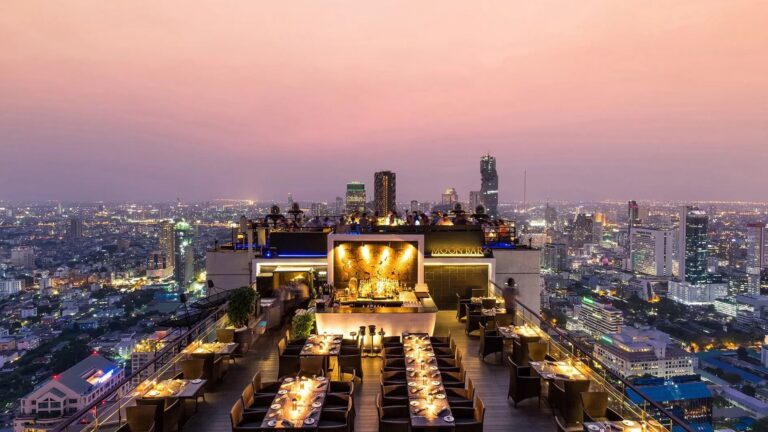
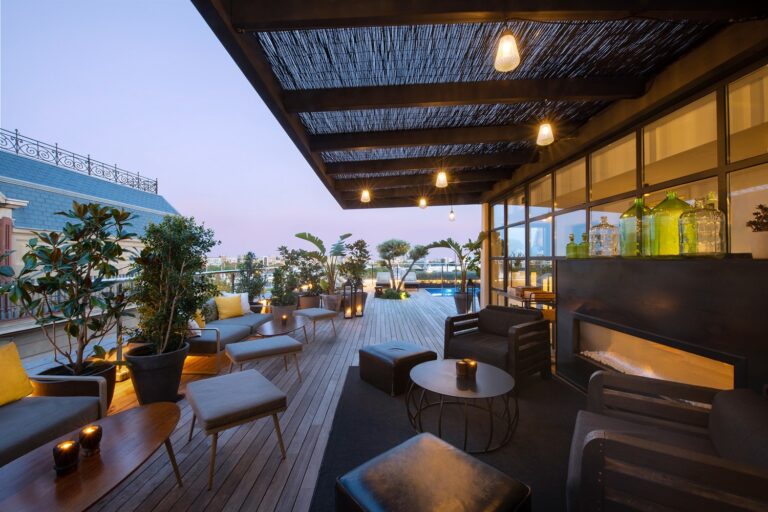
The ascent from a hotel lobby to its rooftop lounge is more than a vertical transition; it is a crossing of a social threshold that carries its own distinct, often unwritten, sartorial expectations. In the modern urban landscape, the rooftop has become a theater of curated identity. Unlike the ground-floor restaurant, which may cater to the transient passerby, the rooftop is a destination asset. It is a controlled environment where the “view” is the primary product, and the patrons themselves are considered essential components of the “ambience.” Consequently, the dress code is not merely a set of rules but a tool for brand preservation.
However, the rapid diversification of hospitality—ranging from wellness-focused “pool clubs” to high-finance “cigar lounges”—has blurred the traditional lines of etiquette. What constitutes appropriate attire at a poolside terrace in Miami would be a profound breach of protocol at a historic sky-bar in London or Tokyo. This ambiguity creates a high-friction environment for the guest, where a lack of contextual awareness can lead to the social friction of being turned away or, perhaps worse, the internal discomfort of being “conspicuously misaligned” with the room’s energy.
Understanding the nuance of these spaces requires looking past the superficiality of fashion to examine the functional and psychological demands of the rooftop environment. Factors such as high-altitude wind, rapid temperature drops after sunset, and the specific lighting design of the venue all dictate what is practical and what is performative. This analysis serves as a definitive reference for navigating these complexities, ensuring that one’s presence enhances, rather than disrupts, the curated vertical experience.
Understanding “common rooftop hotel dress code mistakes”
To rigorously define common rooftop hotel dress code mistakes, one must move beyond the basic rejection at the door to address the more subtle “Conceptual Misalignments.” A common misunderstanding in contemporary travel is the belief that “expensive” is a universal substitute for “appropriate.” A guest may wear a high-fashion tracksuit that costs several thousand dollars, yet find themselves barred from a venue that requires “smart casual” attire. The mistake here is a failure to recognize the venue’s “Sartorial Intent”—the specific social atmosphere the hotel is attempting to manufacture.
Oversimplification frequently occurs when guests rely on the broad terminology of “Business Casual” without considering the “Rooftop Modifier.” On a roof, the environment is inherently more theatrical and less corporate than a lobby bar. A traditional navy blazer and khakis—while technically correct for business—might feel “dry” and out of place in a venue that favors “Elevated Nightlife.” Avoiding these risks requires a shift in perspective: seeing your attire not as a personal preference, but as a contribution to the venue’s collective visual texture.
The risk management landscape of the rooftop is also complicated by the “Atmospheric Paradox.” Roofs are exposed to the elements, yet they demand a level of formality usually reserved for climate-controlled interiors. A frequent mistake is prioritizing aesthetics so heavily that the guest becomes physically uncomfortable due to wind or cold, leading to an early departure. Identifying the definitive methods for avoidance involves assessing the “Utility-to-Style Ratio” of every garment chosen.
The Systemic Evolution of Elevated Attire
Historically, rooftop access was restricted to the social elite, and the dress code was a rigid extension of evening wear. In the mid-20th century, the “Starlight Roof” era mandated tuxedos and evening gowns, reflecting the rooftop’s status as the ultimate romantic destination. This was a period of high sartorial homogeneity; there was no ambiguity because the social class of the guest dictated the uniform.
The late 1990s and early 2000s saw the “Boutique Explosion,” which introduced the “Industrial-Chic” and “Global-Nomad” aesthetics. This era decentralized the dress code, replacing the tuxedo with the “Designer Jean” and the “Structured Tee.” Today, we are in the era of “Hybridization.” A single hotel may host a yoga session on the roof at 8:00 AM, a corporate lunch at 1:00 PM, and a high-energy DJ set at 10:00 PM. This “Fluidity of Function” is the primary driver of modern dress code errors, as guests often fail to adjust their attire to the specific “Time-Block” they are attending.
Conceptual Frameworks for Sartorial Alignment
To analyze dress code success with editorial depth, we apply three primary mental models.
The “Contextual Anchor” Framework
This model posits that every rooftop has an “Anchor” (e.g., the pool, the bar, the view). If the anchor is the pool, the dress code is “Leisure-Forward.” If the anchor is a Michelin-starred restaurant, it is “Formal-Forward.” Mistakes happen when a guest anchors their outfit to the wrong element—for example, wearing swim trunks to a poolside bar that has shifted to its evening “Cocktail” protocol.
The “Three-Layer Transition” Model
Because rooftop temperatures are volatile, the most successful guests utilize a three-layer approach: a breathable base, a structural mid-layer (blazer or knit), and a wind-resistant outer layer. Avoiding common rooftop hotel dress code mistakes often involves the absence of that third layer, leading to the “Shivering Guest” syndrome which breaks the social illusion of comfort.
The “Signaling vs. Utility” Matrix
This framework evaluates whether a garment is for “Signaling” (status, wealth, style) or “Utility” (comfort, protection from sun/wind). A successful outfit balances both. An oversight in utility—such as wearing high heels on a roof with “Gap-Plank” wooden decking—is a functional failure that no amount of signaling can overcome.
Taxonomy of Dress Code Categories and Strategic Trade-offs
Evaluating the sartorial landscape requires a categorization based on the venue’s “Energy Profile.”
Realistic decision logic involves assessing the “Aggregator Effect”—how your outfit will look when standing next to fifty other guests under low-temperature LED lighting.
Detailed Real-World Scenarios in Dress Code Navigation
Scenario A: The “Transition Hour” Trap
In many urban rooftops, the transition from “Afternoon Lounge” to “Evening Club” happens at exactly 7:00 PM.
-
The Mistake: A guest arrives at 6:30 PM in shorts and a polo, perfectly acceptable for the sun-drenched terrace. By 7:30 PM, the music has changed, the lights have dimmed, and the “Short-Pants” guest now feels like an intruder in a room of tailored black.
-
The Strategy: Always dress for the end of your visit, not the beginning.
Scenario B: The “Technical Fabric” Failure
Rooftops are often illuminated by blue or purple accent lighting.
-
The Mistake: Wearing synthetic, high-sheen fabrics (like certain polyesters or cheap satins). Under the specific wavelength of LED rooftop lights, these fabrics can look “plastic” or “fluorescent,” undermining a high-end look.
-
The Strategy: Favor matte, natural fibers (wool, cotton, silk, linen) which absorb and reflect architectural lighting more gracefully.
Planning, Cost, and Resource Dynamics
Navigating the dress code is a matter of “Sartorial Resource Allocation.”
The “Opportunity Cost” of a dress code mistake is the evening itself. If you spend $200 on transit and a pre-paid reservation but are rejected for wearing athletic sneakers, the financial loss is compounded by the loss of the experience.
Tools, Strategies, and Support Systems
To ensure compliance and comfort, use these “Sartorial Levers”:
-
The “Instagram Recents” Audit: Check the “Recents” tab for the venue’s location tag. This provides a real-time “Visual Baseline” of what people are actually wearing, which often differs from the hotel’s official website photos.
-
The “Emergency Knit” Strategy: Carrying a high-quality, thin cashmere sweater or wrap in a small bag. It is the ultimate “Utility-Style” hybrid for when the wind picks up.
-
The “Structured Shoe” Rule: When in doubt, avoid anything that could be worn to a gym. Even the most expensive “Luxury Sneakers” are a risk in traditional venues.
-
The “Matte Finish” Principle: Ensure that makeup and hair products are “High-Hold” and “Matte.” Rooftop humidity and wind will turn a “Glowy” look into an “Oily” look within thirty minutes.
-
The “Secure Accessory” Check: Avoid loose scarves or wide-brimmed hats that aren’t secured. On a 40th-floor roof, a sudden gust can turn an accessory into a projectile.
Risk Landscape and Failure Modes
-
“The Gatekeeper Friction”: This is the most common failure mode, where a guest argues with security. This is a tactical error; once a dress code “Violation” is called, it is rarely rescinded.
-
“The Thermal Collapse”: The guest looks perfect but is shivering. This leads to poor posture, irritability, and an inability to enjoy the conversation—a social failure.
-
“The Fabric Snag”: Rooftop furniture is often made of teak, wicker, or textured metal. Delicate fabrics like thin silk or loose knits are at high risk of snagging on the “Industrial” elements of the roof.
Governance, Maintenance, and Long-Term Adaptation
A “Sartorial System” should be adaptable. Review the “Sartorial Policy” of your destination cities. For example, the “Smart Casual” of Dubai is significantly more “Bling-Forward” than the “Smart Casual” of Copenhagen. Adapting involves maintaining a “Travel Capsule” that can be modularly adjusted.
Common Misconceptions and Strategic Oversights
-
“They won’t see my shoes at a table”: Security sees your shoes before you ever reach the table. Footwear is the primary “Threshold Filter.”
-
“Expensive means acceptable”: A $1,200 hoodie is still a hoodie. In many venues, “Form over Price” is the ruling logic.
-
“It’s summer, so shorts are fine”: Many world-class rooftops have a “No Shorts After 6 PM” rule regardless of the temperature.
-
“I’m a hotel guest, so I have immunity”: Rooftops are often managed by third-party hospitality groups who enforce rules independently of the hotel’s front desk.
-
“The website says ‘Casual'”: In hospitality-speak, “Casual” usually means “Not a Suit,” but it still excludes beachwear and gym wear.
-
“Darkness hides everything”: Rooftops are designed with “Strategic Lighting” to highlight the patrons. Your outfit is often more visible than in a standard restaurant.
Conclusion
The avoidance of common rooftop hotel dress code mistakes is ultimately an exercise in “Contextual Intelligence.” It is the ability to read a room—even when that room has no ceiling. By treating your attire as a functional tool and a social contribution, you transform from a mere “visitor” into a “stakeholder” in the rooftop’s atmosphere. The skyline is a demanding backdrop; it requires a presence that is as considered and resilient as the architecture itself. Success is not found in the most expensive garment, but in the most appropriate one—the one that allows you to stand at the edge of the world, perfectly comfortable and entirely in place.