How to Plan Rooftop Hotel Sightseeing on a Budget: The Editorial Guide
he modern skyline is no longer a private view reserved exclusively for the inhabitants of penthouses or the patrons of ultra-luxury suites. Over the last decade, the global hospitality industry has undergone a vertical expansion, transforming rooftops into social hubs that serve as the “third space” of the urban landscape. However, this architectural ascent has created a high-barrier financial ecosystem. The “skyline tax”—manifested through cover charges, inflated beverage pricing, and mandatory minimum spends—often makes elevated sightseeing feel like a prohibitive luxury.
To navigate this landscape with financial discipline, one must look past the marketing allure of the “infinity pool” and the “sunset cocktail.” Effective urban exploration at height requires a fundamental understanding of hospitality P&L (Profit and Loss) cycles. Hotels utilize their rooftops as high-margin assets to offset the lower margins of room operations; consequently, the pricing is designed to capture maximum value from impulsive or uninformed visitors.
Navigating the vertical economy demands a shift from a “consumer” mindset to a “logistical” mindset. This involves identifying the specific hours of the day, days of the week, and types of properties where the physical view remains static but the price of admission is elastic. This analysis provides a definitive framework for those seeking to experience the architectural grandeur of the world’s great cities from above without succumbing to the predatory pricing models often associated with “premium” elevation.
Understanding “how to plan rooftop hotel sightseeing on a budget”
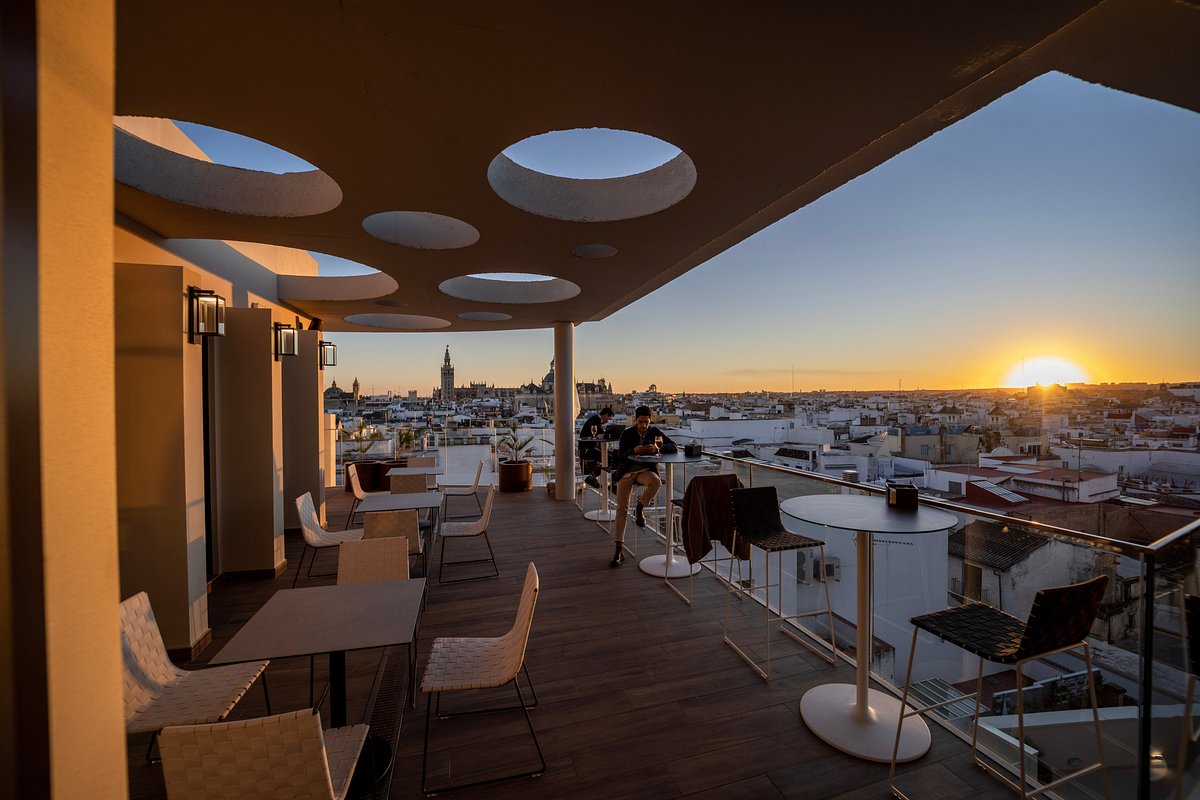
To rigorously define how to plan rooftop hotel sightseeing on a budget, one must first dismantle the myth that “budget” implies a lower-quality experience. In the professional editorial context, budget sightseeing is an exercise in “Value Optimization.” It is the art of separating the view (the primary asset) from the vibe (the secondary, manufactured atmosphere) and the service (the tertiary labor cost). Many travelers overpay because they bundle these three elements together, paying for a premium cocktail they don’t want simply to see a sunset they could have accessed via a different logistical entry point.
A common misunderstanding is that budget planning only involves finding “cheap” rooftops. In reality, the most effective strategies involve “Spend Displacement.” For example, a traveler might choose a hotel that offers “guest-only” rooftop access. While the room rate may be slightly higher than a budget hostel, the “unlimited” access to the view—which might otherwise cost $50 per visit in a public lounge—effectively reduces the net cost of the trip. This is a multi-perspective approach that considers the total trip ledger rather than isolated transactions.
Oversimplification risks in this domain often lead to “Economic Friction.” If an explorer attempts to bypass the financial rules of a venue without understanding the operational logic (e.g., trying to “sneak” onto a restricted terrace), they face social and legal risks that far outweigh the monetary savings. True mastery involves identifying the “Legitimate Gaps”—windows of time or specific service tiers where the hotel’s objective is simply to fill seats or maintain a baseline level of activity, rather than to maximize per-guest revenue.
The Systemic Evolution of Elevated Hospitality
Historically, hotel rooftops were purely functional. They housed HVAC systems, water tanks, and laundry drying lines. The transition from “mechanical deck” to “sightseeing destination” began in mid-century New York and Paris but accelerated exponentially in the early 2000s with the rise of boutique hospitality. As urban land became more expensive, developers realized that the “top of the stack” was their most underutilized financial asset.
Today, we are in the era of “Programmed Altitudes.” Modern rooftops are designed by specialized consultants who curate everything from the wind-screen heights to the “golden hour” lighting. This evolution has made budget sightseeing more difficult because hotels have become better at “monetizing the gaze.” However, the saturation of the market has also created “Tier 2” and “Tier 3” properties—hotels that offer spectacular views but lack the “celebrity” status of flagship lounges. These properties represent the primary frontier for the budget-conscious explorer.
Conceptual Frameworks for Spend Arbitrage
Applying mental models to vertical sightseeing allows the explorer to predict price fluctuations and identify opportunities.
The “Yield Management” Reflection
Just as airlines change ticket prices based on demand, rooftops change their “effective entry price.” The cost of the view is highest during “High-Visibility Windows” (sunset, fireworks, weekend nights). To optimize a budget, one must target “Low-Visibility/High-Value Windows,” such as late breakfast hours or mid-afternoon “dead time” when staff are present but the minimum spend is waived.
The “Periphery Perspective” Model
This framework posits that the best view of a famous landmark is rarely from the landmark itself, nor from the most famous hotel neighboring it. By moving one or two blocks into the “periphery,” you find “Service Hotels” or “Business Hotels” that share the same skyline coordinates but offer significantly lower price points for their food and beverage programs.
The “Amenity Bundling” Theory
This assesses whether a rooftop is an “Amenity” (intended for guests) or a “Profit Center” (intended for the public). The budget explorer targets the “Amenity” rooftops, where the barrier to entry is a room key or a simple breakfast order, rather than a “Profit Center” where the barrier is a $100 bottle service minimum.
Key Categories of Rooftop Access and Trade-offs
Navigating how to plan rooftop hotel sightseeing on a budget requires understanding the different “contracts” a venue offers the visitor.
Realistic decision logic involves assessing the “Time-to-Value Ratio.” If you spend three hours traveling to a “free” rooftop that has a mediocre view, you have wasted your most valuable resource. It is often more “budget-friendly” to pay $20 for a coffee at a world-class hotel rooftop than to spend $20 on transit and snacks for a substandard one.
Detailed Real-World Scenarios in Budget Sightseeing
Scenario A: The “Lobby-in-the-Sky” Pivot
In cities like Tokyo or Chicago, several luxury brands place their check-in desks on the 30th floor or higher.
-
The Strategy: The explorer walks into the elevator, ascends to the lobby, and enjoys the floor-to-ceiling windows under the guise of “evaluating the property for a future stay” or simply grabbing a standard-priced espresso in the lobby lounge.
-
Failure Mode: Attempting to sit for hours with no purchase. The “Unspoken Lease” of a lobby requires a minimal transaction to avoid being flagged by security.
Scenario B: The “Breakfast Arbitrage”
Many premium rooftops serve a standard breakfast to guests but allow outside walk-ins.
-
The Strategy: Instead of paying $35 for a sunset cocktail with a 2-hour wait, the explorer pays $25 for a high-quality breakfast at 8:00 AM. They get the same view, better light for photography (without the crowds), and a full meal.
-
Second-Order Effect: By visiting early, you establish a rapport with the morning staff, which can sometimes be leveraged for a “no-cover” return later that evening.
Scenario C: The “Shoulder Season” Strategy
In Mediterranean cities, rooftops are often “officially closed” for the winter but still accessible for guests.
-
The Strategy: Booking a low-cost winter stay at a hotel with a rooftop. Even if the bar is closed, the terrace is often open for sitting. The “cost” of the view drops to zero as it is bundled into a $60 winter room rate.
Planning, Cost, and Resource Dynamics
Budget planning for height is a matter of “Micromanaging the Transaction.” The following table illustrates the variance in a typical urban sightseeing session.
The “Opportunity Cost” of budget planning is time. A deeply researched plan saves money but requires hours of digital scouting—checking Instagram “Recent” tags to see current crowd levels or reading the “fine print” on hotel websites regarding guest access.
Tools, Strategies, and Support Systems
To maintain a budget while ascending, the explorer should utilize several systemic levers:
-
Digital “Social Proof” Scrutiny: Use Google Maps photos filtered by “Newest” to see if the “free” seating areas have been replaced by “VIP” tables.
-
Hotel Loyalty Portals: Even if not staying, “Member” status (often free to join) can sometimes unlock “Member-Only” happy hour tiers.
-
The “One-In, One-Out” Beverage Rule: If with a group, rotate who buys a round. Some venues allow “standing room” for those not consuming, provided some of the party is.
-
Local Office-District Scouting: Rooftops in financial districts often have massive discounts on Friday afternoons to attract the “After-Work” crowd, which is often cheaper than the “Tourist” crowd.
-
Concierge Relationship (The “Ask”): Walking to the desk and asking, “Is the rooftop open for a quick photo?” works 40% of the time in high-end hotels, provided you are dressed appropriately.
-
The “Mocktail” Pivot: In many high-end lounges, a “Virgin” drink is 50% cheaper but retains the “right to the seat.”
Risk Landscape and Failure Modes
Planning on a budget introduces specific “Systemic Fragilities.”
-
The “Private Event” Blackout: The greatest risk to a budget plan is the “Buyout.” Hotels often close rooftops for private parties. A budget explorer who hasn’t called ahead may spend money on transit only to be turned away.
-
The “Dress Code” Friction: Many rooftops use “Dress Code” as a proxy for “Financial Capability.” If you look like a budget traveler, you are more likely to be met with “Minimum Spend” requirements that aren’t applied to those in business attire.
-
The “Compounding Gratuity” Trap: In many cities, rooftop service automatically includes an “Administrative Fee” plus a “Large Party Fee” plus a “View Surcharge.” A $15 beer can quickly become a $25 transaction.
Governance, Maintenance, and Long-Term Adaptation
Maintaining a “Portfolio” of budget-friendly rooftops requires constant “Database Maintenance.”
-
Review Cycles: Every 6 months, a “Budget List” for a city like London or NYC will be 30% obsolete due to management changes or renovations.
-
Adjustment Triggers: If a formerly “free” lobby starts requiring a room key at the elevator, it must be removed from the strategy.
-
Layered Checklist:
-
Call venue: “Is there a cover charge today?”
-
Check weather: Is the “budget” outdoor section closed?
-
Verify transit: Is the cost of getting there higher than the “savings”?
-
Measurement, Tracking, and Evaluation
How do you know if your plan succeeded?
-
Leading Indicators: The number of “Verified $0 Entry” spots found during research; the ratio of “Member-only” vs “Public” spots in your itinerary.
-
Lagging Indicators: The “Cost Per View” (Total spend / Number of rooftops visited). A successful budget plan should keep this under $15 per location.
-
Qualitative Signals: Did you feel like a “trespasser” or a “patron”? True budget mastery allows you to feel like a patron despite the low spend.
Common Misconceptions and Oversimplifications
-
“Hostels have the best budget rooftops”: Often, hostel rooftops are overpriced for their quality. A 4-star “Business Hotel” frequently offers better value.
-
“Sunset is the only time to go”: The “Blue Hour” (after sunset) or “Sunrise” (if accessible) provides better photography and zero crowds.
-
“You have to stay at the hotel to use the roof”: Most “Guest Only” roofs have a “Day Guest” policy if you visit the spa or restaurant.
-
“Security is looking for intruders”: Security is looking for “disruptions.” If you are quiet, dressed well, and polite, you are rarely questioned.
-
“Happy Hour is always a deal”: In “Flagship” rooftops, Happy Hour prices are often higher than the standard prices at a “Tier 2” hotel rooftop.
Ethical, Practical, and Contextual Considerations
There is an ethical dimension to “Sightseeing on a Budget.” Rooftop lounges are businesses with high overhead. While it is strategic to find ways to visit affordably, “Ghosting” (taking a seat and ordering nothing) puts an unfair burden on the service staff who rely on tips. A sustainable budget strategy involves “Small-Scale Patronage”—paying for the cheapest item on the menu to justify the labor and space you are consuming.
Conclusion
The mastery of how to plan rooftop hotel sightseeing on a budget is found in the intersection of architectural appreciation and financial strategy. It is a rejection of the idea that height must equal high cost. By treating the city as a series of logistical puzzles—identifying the “Lobby-in-the-Sky,” leveraging “Breakfast Arbitrage,” and understanding “Yield Management”—the explorer can reclaim the urban summit. The view from the top is a public good, even when it is located on private property; the successful explorer simply learns the language of the gatekeepers to gain access to the sky without the premium price tag.