How to Plan Rooftop Hotel Parties on a Budget: An Editorial Guide
The rooftop venue has ascended to a position of unrivaled prestige within the urban event landscape, offering a sensory synthesis of architectural grandeur and atmospheric openness. For the host, the “skyline backdrop” acts as a silent co-producer, providing a level of visual production that would be cost-prohibitive to replicate in a traditional ballroom or subterranean lounge. However, this aesthetic elevation is historically associated with a “vertical premium”—a tiered pricing structure designed to recoup the hotel’s significant capital investment in structural reinforcement, high-altitude safety, and specialized weatherproofing.
Navigating this environment with fiscal restraint requires a fundamental shift in perspective. It is no longer a matter of simply cutting costs, but rather of understanding the operational pressures of the hospitality industry. A rooftop is a high-yield asset that hotels must maximize; therefore, the budget-conscious planner must position their event as a solution to the hotel’s “dead zones” rather than a competitor for its peak revenue windows. Success lies in the intersection of logistical timing and the strategic deconstruction of the standard event package.
The following analysis dissects the systemic drivers of rooftop event costs and provides a rigorous framework for their mitigation. By moving beyond surface-level “hacks,” we explore the architectural, operational, and financial variables that dictate a venue’s flexibility. Mastering the nuances of how to plan rooftop hotel parties on a budget is an exercise in identifying where the hotel’s need for occupancy meets the host’s desire for prestige.
Understanding “how to plan rooftop hotel parties on a budget”
To effectively understand how to plan rooftop hotel parties on a budget, one must first dismantle the assumption that “budget” implies a compromise in quality. In the context of premium real estate, a budget is a tool for precision. It requires a multi-perspective view that considers the venue not as a static room, but as a dynamic ecosystem with fluctuating values. The most common misunderstanding in this domain is focusing on the “sticker price” of a rental fee while ignoring the “minimum spend” and “service premium” that often comprise the bulk of the expenditure.
Oversimplification occurs when planners attempt to apply traditional “ground-level” saving tactics to a vertical space. On a rooftop, the logistical costs—such as specialized security for open railings or the labor of transporting ice and inventory via dedicated service elevators—are fixed and non-negotiable. Consequently, fiscal management must focus on “opportunity arbitrage.” This involves identifying the specific hours or seasons when the hotel’s “carry cost” for the rooftop exceeds its projected revenue, allowing the planner to negotiate from a position of strength.
Furthermore, the “how” of budget planning is rooted in the “bundle.” Most hotels offer all-inclusive packages that price in a significant margin for convenience. Deconstructing this bundle—separating the space from the catering, or the lighting from the furniture—allows the planner to allocate funds only to the elements that the skyline cannot provide. True topical authority in this niche requires an understanding of how to leverage the venue’s existing assets to eliminate the need for external rentals.
The Historical Evolution of the High-Altitude Venue
Historically, hotel rooftops were utilitarian landscapes occupied by water tanks and elevator machinery. The shift toward the “social roof” began in the 1920s with the grand roof gardens of New York and London, which were largely reserved for the ultra-elite. These spaces were expensive because they were rare. As modern engineering simplified the “fifth facade,” rooftops became more common, but their pricing remained high due to their status as “scarcity-based luxury.”
In the 2010s, the “lifestyle hotel” movement commoditized the rooftop view, making it accessible to a broader demographic. This led to a bifurcated market: ultra-exclusive private lounges and high-volume public bars. The budget-conscious planner operates in the “grey space” between these two, seeking properties that have the architectural bones of a luxury venue but lack the aggressive branding of a global nightlife icon. Understanding this historical trajectory reveals that the best “deals” are often found in newly opened properties or boutique hotels that are still building their “visual authority.”
Conceptual Frameworks for Fiscal Event Planning
To systematically evaluate rooftop costs, we apply three primary mental models.
The Temporal Displacement Model: This framework suggests that the value of a rooftop is inversely proportional to the quality of the light. Sunset is the “Gold Standard” and carries the highest premium. By shifting an event to “Blue Hour” or utilizing “Mid-Day Clarity,” a planner can often secure the same space for a fraction of the evening rate.
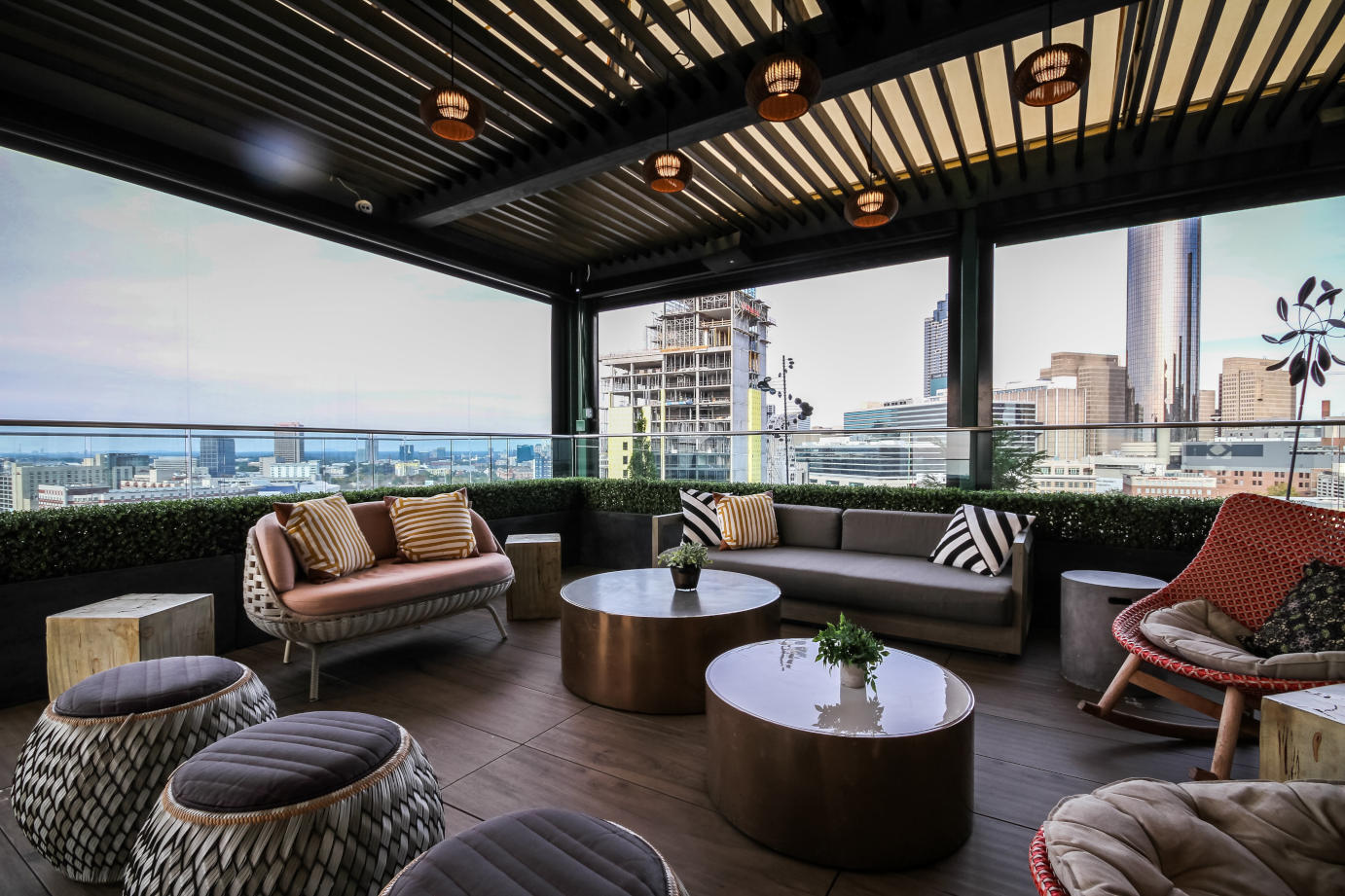
The “Passive Production” Theory: This model posits that the more architectural interest a rooftop has (built-in greenery, high-quality lighting, iconic views), the less the host needs to spend on decor. A “budget” event on a beautiful roof often looks more expensive than a high-budget event in a plain hall.
The Service-to-Space Ratio: This identifies the hidden cost of labor. A seated dinner on a roof requires a high staff-to-guest ratio due to vertical logistical hurdles. A “lounge-style” or “cocktail-focused” event reduces the labor footprint, significantly lowering the overall bill.
Taxonomy of Budget-Friendly Rooftop Variations
When considering the various types of rooftop venues, each offers a unique set of trade-offs for the budget-conscious planner.
| Venue Type | Budget Benefit | Trade-off |
| Boutique Hotel Terrace | Lower minimum spends; flexible catering. | Smaller capacity; less “brand” recognition. |
| Corporate Hotel (Weekend) | Heavy discounts during business “off-peaks.” | May feel sterile; stricter “corporate” rules. |
| Partial Buyout (Public Bar) | Zero rental fee (usually just a minimum spend). | No privacy; shared acoustics with the public. |
| Unactivated “Blank Canvas” | Lowest raw rental cost. | High cost for furniture/bar rentals and lighting. |
| Mid-Level “Podium” Roof | Great view-to-cost ratio. | Less “height” prestige; potential for street noise. |
The realistic decision logic here favors the “Partial Buyout” or the “Boutique Terrace.” These options leverage the hotel’s existing infrastructure, preventing the budget from being drained by basic necessities like chairs and glassware.
Real-World Scenarios and Decision Logic
In a city like Chicago or New York, the “Off-Peak” is the planner’s greatest asset. A rooftop that is unreachable on a Saturday in June becomes highly negotiable on a Tuesday in October.
Decision Point: A planner might choose a heated rooftop in a “shoulder season.” The hotel is eager to fill the space, and the presence of built-in fire pits or heaters provides a “luxury” feel without additional rental costs.
Another scenario involves the “Hybrid Buyout.” Rather than renting the entire roof, the planner rents a “VIP Nook” within a popular bar.
Failure Mode: Attempting this on a Friday night will result in high “bottle service” requirements.
Success Mode: Booking the same nook for a Sunday afternoon “Golden Hour” mixer, where the hotel is happy to have a guaranteed group spend during a slow period.
Resource Dynamics: Direct and Hidden Costs
Understanding the “total cost of attendance” is vital for fiscal integrity.
| Expense Item | Hidden Variable | Budget Impact |
| Venue Rental | Often waived if minimum spend is met. | High variability. |
| Service Charge | Usually 20-24%; non-negotiable. | Significant “bottom line” add. |
| AV/Lighting | Rooftops often have “preferred” (expensive) vendors. | Can double the production budget. |
| Security/Permits | Mandatory for high-occupancy roofs. | Fixed cost. |
Opportunity cost must also be considered. Choosing a cheaper venue that is difficult for guests to access (poor elevator capacity or remote location) may result in a lower “actual” guest count, diminishing the event’s impact.
Strategies and Support Systems for Cost Mitigation
-
The “Furniture-First” Selection: Choosing a venue with high-quality built-in seating to eliminate the $2,000–$5,000 cost of renting and transporting furniture to the roof.
-
Daytime “Visual Arbitrage”: Hosting a brunch or lunch party. The natural light provides the “production,” and the food costs are significantly lower than a four-course dinner.
-
The Beverage “Capsule”: Instead of a full open bar, offering a curated “signature drink” and beer/wine. On a roof, a sophisticated cocktail in a proper glass is all the “luxury” a guest needs.
Risk Landscape: The Compounding Cost of Failure
A budget-focused event has a narrower margin for error.
-
The Weather Trap: If a budget rooftop doesn’t have an indoor “shadow space,” a rainstorm can lead to a total loss of investment.
-
Sound Ordinance Liability: Many rooftops have strict decibel limits. Attempting to save money by bringing a “cheap” sound system that isn’t tuned for the space can result in the hotel shutting down the music entirely.
-
The “Minimum Spend” Gap: If the guest count is lower than expected, the host is still liable for the minimum spend. Budgeting for 80% attendance is a critical safeguard.
Governance and Long-Term Value Assessment
For the professional planner, every event is a data point. Long-term adaptation involves:
-
Vendor Benchmarking: Tracking which hotels are the most flexible with external catering (a major budget saver).
-
Relationship Governance: Developing a “preferred” status with a specific boutique brand, which can lead to waived rental fees for repeat bookings.
-
Audit Checklists: A 24-hour pre-event review of the “Weather Contingency Plan” to ensure no last-minute “emergency rentals” (like tents) are needed.
Common Misconceptions in Elevated Event Planning
-
“Sunday is always cheaper”: In “leisure” cities (like Las Vegas or Miami), Sunday is a peak day.
-
“We can just bring our own booze”: Almost no hotel will allow this due to liquor liability and revenue loss.
-
“The view makes up for bad food”: Guests will remember the view for ten minutes; they will remember being hungry for the rest of the night.
-
“Electronic invites save money”: While true, for a “prestige” rooftop event, a physical element (even a small one) anchors the value of the invitation.
Synthesis and Editorial Judgment
The successful execution of a rooftop party on a budget is a testament to tactical intelligence over raw spending. It requires the host to act as an editor—cutting away the superfluous and emphasizing the “hero” elements of the city and the sky. A rooftop is a rare spatial gift; by respecting the hotel’s operational needs and timing the market correctly, a planner can deliver an experience that feels like an indulgence, but functions like a masterclass in fiscal discipline. In the vertical economy, the most valuable currency is not the dollar, but the strategy.