How to Plan Rooftop Hotel Stays on a Budget: The Definitive Editorial Guide
The modern skyline has undergone a functional metamorphosis, transforming from a cluster of architectural silhouettes into a tiered marketplace of “elevated experiences.” For the traveler, the rooftop hotel stay represents the pinnacle of urban luxury—a literal and metaphorical escape from the street-level fray. However, the premium placed on these square feet is not arbitrary; it is the result of immense structural engineering costs, specialized insurance premiums, and the high-velocity demand for limited real-estate inventory. Understanding how to navigate this vertical economy requires more than a simple search for discounts; it demands an analytical approach to hotel operations and revenue management.
To engage with this sector effectively, one must recognize that “budget” is a relative term in the context of rooftop assets. A rooftop suite in a primary global hub like Singapore or New York operates under different fiscal laws than a mid-tier boutique in a secondary market. Yet, the underlying mechanics of price elasticity remain consistent. The challenge for the strategic planner is to decouple the “premium experience” from the “premium price tag” by identifying inefficiencies in how hotels distribute their high-altitude inventory.
The following exploration serves as a comprehensive framework for those seeking to maximize the value of their travel spend without sacrificing the specific allure of rooftop access. By examining the intersection of seasonal cycles, loyalty arbitrage, and the physical constraints of building design, we can establish a reliable methodology for accessing the summit. This is an exercise in tactical travel planning, designed for those who value depth of insight over surface-level promotions.
Understanding “how to plan rooftop hotel stays on a budget”
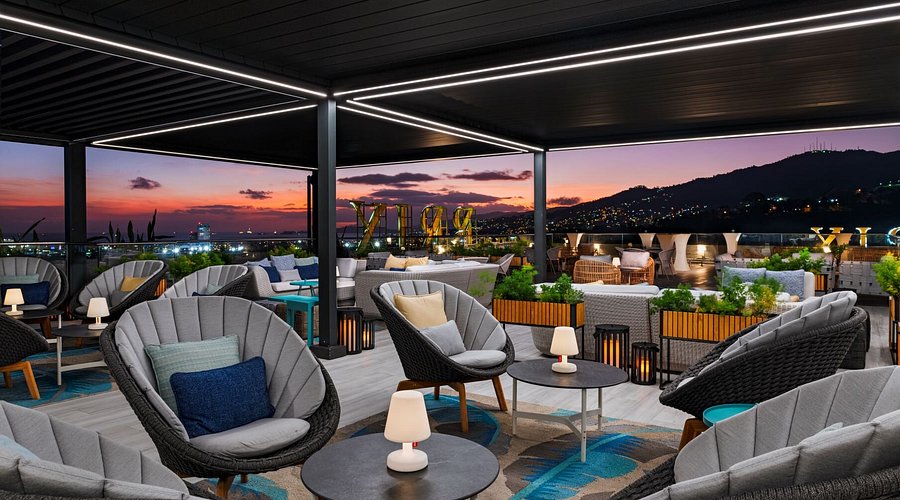
When approaching the question of how to plan rooftop hotel stays on a budget, it is essential to move past the misconception that “budget” implies a compromise in quality. In the hospitality industry, a budget-conscious strategy is often a matter of timing and inventory selection rather than settling for inferior facilities. The primary hurdle is the “Exclusivity Premium”—the extra amount guests pay simply because a room is on a higher floor or has a specific vantage point.
Common misunderstandings of this process often involve the “Last-Minute Fallacy.” Many believe that waiting until the final hour will force hotels to drop prices on their most prestigious rooftop suites. In reality, these suites are often the first to be booked by corporate clients or high-net-worth individuals who are price-insensitive. A successful budget plan focuses on “Shoulder Inventory”—rooms that provide rooftop lounge access but are not themselves “rooftop suites.” By separating the sleeping quarters from the social spaces, a planner can often reduce the nightly rate by 40% while maintaining the same level of access to the view.
Furthermore, oversimplification risks ignoring the hidden costs of “budget” bookings. A lower room rate at a hotel located far from the city center may be offset by the high cost of transportation to reach the “rooftop hubs” where the desired views are located. A sophisticated planner evaluates the total cost of the stay, including transit, food and beverage surcharges (which are notoriously higher on rooftops), and the opportunity cost of time. True success in this niche is found at the intersection of geographical arbitrage and loyalty program optimization.
Deep Contextual Background: The Evolution of the Roof as a Revenue Engine
Historically, the rooftop was a liability. Before the advent of modern waterproofing and climate control, the top floor of a hotel was the least desirable—subject to leaks, temperature extremes, and the noise of mechanical equipment. The shift toward the “lifestyle roof” began in the mid-20th century but accelerated dramatically with the “Instagrammable” architecture movement of the 2010s. Today, the roof is often the most profitable part of a hotel’s floor plan, sometimes generating more revenue per square foot through bar sales than the guest rooms generate through occupancy.
This shift has created a bifurcated market. On one side are the “Legacy Grand Hotels,” where rooftop access is a quiet, dignified perk for suite guests. On the other are the “Modern Lifestyle Hubs,” where the rooftop is a public-facing venue that just happens to have rooms underneath it. For the budget planner, the latter often provides more opportunities. Why? Because these hotels often use their rooms as a way to “fill the building,” while their primary profit comes from the F&B (Food and Beverage) operations on the roof. Understanding this revenue shift is key to finding deals; the room is the loss leader, and the roof is the product.
Conceptual Frameworks and Mental Models for Value Extraction
To navigate these pricing waters, we can apply several mental models borrowed from economics and urban planning.
The “Inverted Pyramid” of Value
In a standard hotel, value is distributed somewhat evenly. In a rooftop-centric hotel, the value is heavily weighted at the top. The “Inverted Pyramid” model suggests that the best value is found in the lowest-cost room that still grants “Resident Access” to the top floor. By booking a “Standard Interior” room in a hotel with a world-class rooftop pool, you are effectively buying a day-pass to a luxury club and getting a free room with it.
The Perishable Inventory Clock
Hospitality is the ultimate perishable commodity. Once a night passes, the revenue potential for that room is gone forever. However, rooftop venues have a different “decay rate” than rooms. A rooftop bar can be full while the rooms are empty. A budget planner looks for the “Desynchronized Gap”—times when the rooftop venue is closed for private events or cleaning, as hotels often drop room rates during these windows to compensate for the lack of amenity access.
Geographical Arbitrage
This model involves looking for the “Tallest Building in the Cheapest Neighborhood.” In many cities, the luxury district is crowded, and the views are obstructed by other skyscrapers. By finding a tall hotel in an up-and-coming or industrial area, you often get a superior, unobstructed view of the skyline for a fraction of the cost of being in the skyline.
Key Categories of Rooftop Inventory and Strategic Trade-offs
Selecting the right type of property is the most significant decision in the planning process. Each category offers a different path to the summit, with inherent trade-offs in service, privacy, and cost.
| Category | Primary Benefit | The Budget “Hook” | Significant Trade-off |
| Business-Central Skyscrapers | Consistent quality | Weekend rates are significantly lower | Sterile atmosphere; pool may be indoor |
| Boutique “Social” Hotels | Prime rooftop bars | High room turnover leads to flash sales | Loud noise levels from the roof music |
| Luxury Apartments/Condos | Private kitchen/space | Long-stay discounts (7+ days) | Minimal service; no “front desk” help |
| Satellite Hubs | Unobstructed views | Lower neighborhood-baseline pricing | High transit time to city attractions |
| Redeveloped Industrial | Unique architecture | “Pre-gentrification” pricing | Limited nearby amenities |
Decision Logic: Access vs. Ownership
The fundamental choice is whether you need a rooftop room or rooftop access. A rooftop room offers “ownership” of the view 24/7 but costs a premium. Rooftop access (via a common area) offers the same view for the price of a standard room. For the budget-conscious, the “Access Model” wins every time, provided the hotel doesn’t have a “pay-to-play” policy for guests at their own rooftop bar.
Detailed Real-World Scenarios: Arbitrage in Practice
Scenario 1: The Corporate/Leisure Inverse
A traveler wants a rooftop stay in London’s financial district. On a Tuesday, rooms are $450 due to banking demand. By shifting the stay to Friday and Saturday, the rate drops to $180 because the corporate “road warriors” have gone home.
-
Result: A 60% savings by simply understanding the guest demographics of the neighborhood.
Scenario 2: The “Soft Opening” Strategy
A new hotel with a stunning 40th-floor terrace is opening in a major city. To build buzz and test systems, they offer a 30% discount for the first two months.
-
Result: Access to a high-tier asset before it reaches its “market equilibrium” price.
-
Risk: Potential for construction noise or incomplete amenities.
Scenario 3: The Loyalty Point “Sweet Spot”
A major hotel chain categorizes all rooms in a property the same for point redemptions, regardless of floor height.
-
Result: Using points to book a room that would normally be $600/night in cash, effectively “buying” the rooftop experience for the cost of the points earned on much cheaper ground-level stays elsewhere.
Planning, Cost, and Resource Dynamics
The variability in rooftop pricing is driven by “Visibility Demand.” When the weather is perfect, prices rise. When the fog rolls in, they should—theoretically—fall, though most automated pricing systems are not yet that granular.
| Resource Type | Direct Cost | Opportunity Cost | Variability Factor |
| Seasonal Booking | $200 – $800+ | Weather-related closures | High (Weather/Events) |
| Off-Peak (Mid-week) | $120 – $350 | Limited networking/social vibe | Moderate |
| Point Redemption | “Free” (Opportunity cost of points) | Use of points elsewhere | Low |
| Bundle (Room + F&B) | $250 – $500 | Lack of local exploration | Moderate |
The true direct cost of a rooftop stay is often obscured by “resort fees” or “amenity fees.” A budget plan must account for these non-negotiable add-ons, which can sometimes add $50+ per night to a seemingly cheap room rate.
Tools, Strategies, and Support Systems
-
Meta-Search with Map Overlays: Using tools that allow you to filter by “Star Rating” and “Floor Count” simultaneously.
-
Verticality Maps: Checking satellite imagery to see if the “rooftop pool” is actually shadowed by a taller building for 20 hours a day.
-
Revenue Management “Leaks”: Monitoring sites that specialize in “opaque” bookings (where the hotel name is hidden until after purchase), often identifying the “rooftop” properties by their specific amenity descriptions.
-
Local “Day Pass” Platforms: Sometimes, the cheapest way to “stay” on a rooftop is to stay at a cheap Airbnb nearby and buy a $40 day-pass to the luxury hotel’s rooftop pool.
-
Direct Negotiation: Calling the “In-House Reservations” desk (not the central 800-number) and asking for an upgrade to a high floor at check-in. This is the single most effective way to get a rooftop-adjacent room for a ground-floor price.
Risk Landscape and Failure Modes of Discount Planning
The primary risk in budget planning for rooftops is the “Event Blackout.” You book a cheap room specifically for the rooftop bar, only to find the entire roof is closed for a private wedding or corporate launch.
-
Avoidance: Always call the hotel 48 hours prior to booking to check the “Events Calendar” for the rooftop.
Another failure mode is “Mechanical Noise.” The cheapest rooms on the top floor are often directly adjacent to the elevator motors or HVAC chillers.
-
Avoidance: Request a room “Two floors below the roof.” You get 98% of the view with 0% of the mechanical vibration and 100% of the elevator access.
Maintenance of the Plan: Long-Term Adaptation and Review
A travel strategy is not a static document; it must evolve with the market. As certain “hidden gem” neighborhoods become popular, the arbitrage opportunity disappears.
Review Cycle Checklist:
-
Quarterly: Review the “New Hotel Openings” list in target cities.
-
Bi-Annually: Re-evaluate loyalty program “Category Changes” (when hotels move from a Tier 4 to a Tier 5, for example).
-
Annually: Conduct a “Spend Audit” to see if the food/drink costs on the rooftop are negating the savings on the room rate.
Measurement and Evaluation of “Stay Value”
How do you quantify a “successful” budget stay? You must look at the “View-to-Dollar” ratio. If you spent $200 for a room with a 180-degree skyline view, your cost per degree is $1.11. If you spent $600 for a 360-degree suite, your cost per degree is $1.66.
Qualitative Signals:
-
The ability to enjoy the view without “crowd friction.”
-
The speed of the elevators (a major bottleneck in high-altitude stays).
-
The quality of the “Transition Spaces” (the lobby and hallways between the room and the roof).
Common Misconceptions and Oversimplifications
-
Myth: “The top floor is always the best.”
-
Correction: Often, the 10th floor of a 50-story building has a better “contextual” view of the architecture than the 50th floor, which only sees the tops of clouds or distant dots.
-
-
Myth: “Mobile-only deals are the cheapest.”
-
Correction: While common, they often exclude the “Resident-only” perks that come with booking directly through the hotel’s own site.
-
-
Myth: “The rooftop pool is always heated.”
-
Correction: Many “budget” rooftop assets save on energy by not heating pools, making them unusable for 6 months of the year despite the “amenity” being listed.
-
Ethical and Practical Considerations
There is a practical consideration regarding “Ghost Rooftops”—hotels that advertise a rooftop amenity that is perpetually “under renovation” or only open for very limited hours. Ethically, the traveler should support hotels that maintain their assets well. A “budget” stay at a crumbling property isn’t a deal; it’s a structural risk. Furthermore, consider the “Vertical Impact” on the neighborhood. High-altitude luxury can sometimes alienate the street-level community. Choosing hotels that allow public (not just guest) access to their rooftops at a fair price often results in a more vibrant, authentic social atmosphere.
Synthesis and Strategic Judgment
Mastering how to plan rooftop hotel stays on a budget is an exercise in intellectual honesty. It requires admitting that the “dream” is often a product of clever marketing, and the reality can be found at a much lower price point if one is willing to analyze the hotel’s operational needs.
The ultimate strategy is one of “High-Low” integration: spend the minimum on the space where you sleep (the room) to maximize the resources available for the space where you live (the roof). By utilizing the mental models of desynchronized gaps and the inverted pyramid of value, the traveler can consistently access the world’s most impressive skylines. Success is not found in the discount code, but in the structural understanding of the building itself. The view from the top is the same whether you paid $1,000 or $100—the only difference is the strategic foresight you brought to the lobby.