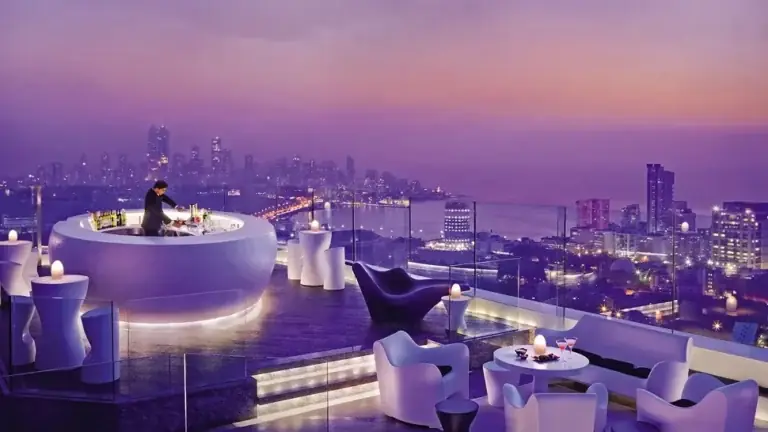
Best Rooftop Hotel Membership Plans: A Strategic Editorial Analysis
The concept of hospitality has undergone a significant vertical migration. In major American and European metropoles, the rooftop is no longer merely an architectural cap; it has become the primary site of social capital and revenue generation. For the frequent traveler or the urban resident, the ability to bypass the queue and access these elevated sanctuaries has birthed a complex market for subscription-based access. Identifying the best rooftop hotel membership plans requires looking past the surface level of “pool access” to understand the underlying economics of exclusivity, the mechanics of guest-to-member ratios, and the structural trade-offs of the modern vertical club.
This shift represents a transition from transactional hospitality—paying for a night’s stay—to a “membership-as-a-service” model. These plans function as a secondary layer of the urban grid, providing a managed environment that filters the noise and congestion of the street. To evaluate these programs with editorial rigor, one must analyze them as atmospheric assets: environments engineered for specific social and professional outcomes.
This editorial analysis provides a definitive framework for evaluating the landscape of rooftop memberships. We move beyond the glossy marketing of lifestyle clubs to investigate the systemic complexities that dictate the value of a membership. From the “Vertical Time-Tax” of high-rise transit to the “Acoustic-Atmospheric Shadow” of a well-designed terrace, we examine the variables that determine whether a membership plan is an authoritative asset or a bureaucratic burden.
Understanding “best rooftop hotel membership plans”

To rigorously define the best rooftop hotel membership plans, one must look past the “view” as a static asset. A common misunderstanding in the industry is that height is a direct proxy for value. In reality, the most functional plans are those that resolve the “Congestion Paradox”: a rooftop bar that is profitable for the hotel is often too crowded for the member. The best plans are those that utilize sophisticated yield management to ensure that members maintain “Spatial Sovereignty”—a guaranteed seat or lounger even during peak sunset hours.
Oversimplification occurs when a plan is judged solely by its price point. A lower-cost membership that offers no guest privileges or requires a 24-hour booking window for a pool bed can be more “expensive” in terms of lost utility than a premium plan. The risk for the consumer is entering a plan that functions more like a gym membership—sold on the aspiration of use but hindered by the friction of access. True authority in this domain belongs to programs that treat the member as a stakeholder in the building’s atmospheric ecosystem, rather than a subsidized customer.
The regional context of the United States further complicates this. A membership in the seasonal, high-wind environment of Chicago or Boston requires an entirely different set of operational protocols than a year-round, humidity-managed terrace in Miami or Los Angeles. Identifying the “best” plan involves assessing how the hotel manages its “Operational Elasticity”—its ability to maintain value when the weather turns or during major city events.
The Historical Evolution of Vertical Exclusivity
The rooftop club is the modern descendant of the mid-century “Roof Garden,” but its DNA has changed. In the early 20th century, these spaces were seasonal retreats for the wealthy to escape the stagnant air of the street. With the advent of central air conditioning, rooftops fell into a period of utilitarian decay, used mostly for HVAC and elevator machinery.
The “Boutique Revolution” of the 1990s and 2000s, pioneered by figures like Ian Schrager, rediscovered the roof as a site of social curation. This paved the way for the current “Club Era,” where the rise of remote work and the “Third Space” has turned the hotel rooftop into a surrogate office and social hearth. The evolution from a public bar to a subscription model is a response to the “Density Friction” of modern cities; it is an economic filter designed to preserve the tranquility that height initially promises but that popularity often destroys.
Conceptual Frameworks for Membership Evaluation
To analyze these plans with editorial depth, we apply three primary mental models. The first is the “Acoustic-Atmospheric Shadow.” This evaluates how well a plan protects the member from the “sensory spill” of the city. A rooftop membership is only valuable if the architecture (glass baffles, wind-breaks) and the operations (sound mapping) create a “shadow” of calm. If a member has to shout over a DJ or battle a 20-mph offshore breeze, the membership has failed its atmospheric duty.
The second is the “Vertical Supply Chain” Model. In high-rise hospitality, the elevator is the bottleneck. This framework assesses whether a membership includes “Priority Verticality”—the ability to bypass the public queue. Without this, the membership’s value is eroded by the “Time-Tax” of transit. Finally, we consider “Social Compounding” Theory. This assesses the value of the network. A rooftop membership is a “Club” only if the entry criteria ensure a community of interest. If the membership is purely transactional, it remains a “subscription bar,” lacking the long-term utility of a true social asset.
Key Categories and Regional Variations
Rooftop memberships are segmented by their operational intent and geographic necessity.
| Category | Primary Benefit | Primary Trade-off |
| The “All-House” Global Club | Access to 20+ cities (e.g., Soho House). | High “Member-to-Chair” ratio; difficulty booking. |
| The Local Artisan Pool | High-touch, local-only community. | Lack of variety; limited amenities outside the roof. |
| The Hotel-Loyalty Hybrid | Access via elite status (e.g., Hyatt/Marriott). | Inconsistent across properties; “Earned” not “Bought.” |
| The Wellness Rooftop | Focus on gym, spa, and morning lap-swimming. | Early closures; restricted “social” hours. |
| The “Podium” Workspace | Focus on connectivity and quiet daytime use. | Limited “drama” in height; usually 5–10 floors. |
Decision logic for the consumer involves weighing “Global Reach” against “Local Intimacy.”
Detailed Real-World Scenarios in Club Operations
Consider the “Sunset Saturation” in a West Hollywood rooftop club. If the club sells too many memberships, and members are forced to wait 45 minutes for a table during the 20-minute window of the “Golden Hour,” the failure mode is clear. Success mode involves utilizing “Dynamic Reservation Windows,” reserving 40% of the inventory exclusively for members until 15 minutes before sunset.
In another scenario, consider a New York rooftop during a “Spring Squall.” Success mode is found in memberships that include access to “Inner-Sanctum” lounges—glass-enclosed areas that maintain the view while excluding the rain. These provide year-round utility that open-air decks cannot match. Conversely, a failure mode occurs when a membership is “weather-contingent,” meaning the value of the dues disappears whenever the temperature drops below 60 degrees.
Planning, Cost, and Resource Dynamics
The economic reality of rooftop memberships involves significant entry barriers and ongoing maintenance of the social fabric.
| Expense Item | Typical Annual Range | Hidden Variable |
| Initiation Fee | $500 – $5,000 | Non-refundable; “Sunk-Cost” friction. |
| Annual Dues | $2,000 – $6,000 | Subject to “Inflation Adjustments” of 5-10%. |
| Food & Beverage Minimum | $100 – $500 / month | Often expires if not used; “Forced Spending.” |
| Guest Surcharges | $20 – $75 / guest | Limits the social utility for business hosting. |
Strategic planning requires evaluating the “Amortized Visit Cost.” If a membership costs $3,000 annually and the member visits twice a month, each “elevated moment” costs $125 before a single drink is ordered.
Tools, Strategies, and Support Systems
Effective evaluation of a plan requires an “Atmospheric Audit.” This starts with a Member App Logic Audit: verify if the booking app allows for “last-minute” loungers or if it is perpetually “Sold Out.” Secondly, perform a “Shadow” Map check; use satellite imagery to determine if neighboring towers block the sun on the pool deck during the hours you intend to use it.
Reciprocal Access Verification is also critical. If the plan is “Global,” check the “Blackout Dates” for the most popular cities (e.g., Cannes during the Film Festival). Sound Mapping Analysis is equally vital; determine if the “Social Hours” overlap with your intended “Deep Work” or relaxation hours. Finally, investigate the Staff-to-Member Ratio; the best rooftop hotel membership plans maintain a high density of staff to ensure that “table-side service” isn’t a 20-minute ordeal.
Risk Landscape and Failure Modes
The primary risk in vertical membership is “Status Dilution.” This occurs when a hotel opens the rooftop to public “Day-Pass” sales, effectively charging members for exclusivity that is being sold to the highest bidder on an hourly basis. A secondary risk is “Mechanical Atrophy.” When the hotel’s rooftop pool heater or retractable roof breaks and is not repaired for months, yet membership dues remain unchanged, the utility of the membership evaporates.
There is also the risk of “Social Migration.” When the “cool” factor of a property shifts to a newer hotel down the street, it leaves the member at a “legacy” property with declining service and a stagnant crowd. Finally, “Governance Drift” occurs when the management changes, and the entry criteria for new members are lowered to meet short-term revenue goals, permanently altering the atmospheric quality of the space.
Governance, Maintenance, and Long-Term Adaptation
A premier membership plan requires a governance structure that includes a “Member Committee” or regular feedback cycles. Maintenance is not just about the pool chemicals; it is about the “Social Maintenance”—curating the guest list and ensuring that the staff-to-member ratio stays high. Long-term adaptation involves “Atmospheric Upgrading”—periodically refreshing the furniture and technology to stay competitive in the “Vertical Arms Race.”
Monitoring includes leading indicators like “Wait-List Growth” and lagging indicators like “Retention Rate.” If a membership plan has a retention rate below 70%, it typically suggests a failure in the “Congestion Paradox” management. Documenting these signals through quarterly “State of the Club” reports allows management to trigger adjustments—such as capping new memberships or increasing guest fees—before the atmosphere is permanently degraded.
Common Misconceptions and Strategic Oversights
One common myth is that “the view is the product.” In reality, the view is a commodity. The access and the environment—wind-breaks, service speed, quietude—are the product. Another oversight is the belief that higher is always better. High-altitude roofs (40+ floors) often have unusable wind-chill. Mid-rise “Podium” roofs (8–15 floors) are often more comfortable and maintain a visual connection to the city’s energy.
In 2026, the most successful memberships are no longer just for “partiers” but for the “Daytime Elite”—those using the roof for networking and work. Finally, guest policies are almost never flexible; they are the most rigid part of the contract to prevent “Membership Sharing” which devalues the primary asset.
Synthesis and Editorial Judgment
The selection of the best rooftop hotel membership plans is ultimately an exercise in “Atmospheric Auditing.” A rooftop is a high-stakes environment where architectural flaws (wind, noise) and operational failures (overcrowding, slow elevators) are magnified. A truly authoritative membership plan is one that recognizes the roof as a “Fifth Facade”—a space that must be managed with more precision than the lobby. For the member, the value is not just in seeing the city, but in having a curated, elevated sanctuary where the city’s chaos is silenced, if only for the duration of a sunset. Success in this sector is defined by the ability to offer “Vertical Sanctuary”—a product that is as much about what is excluded as what is included.