ow to Avoid Rooftop Hotel Pool Risks: A Definitive Editorial Analysis
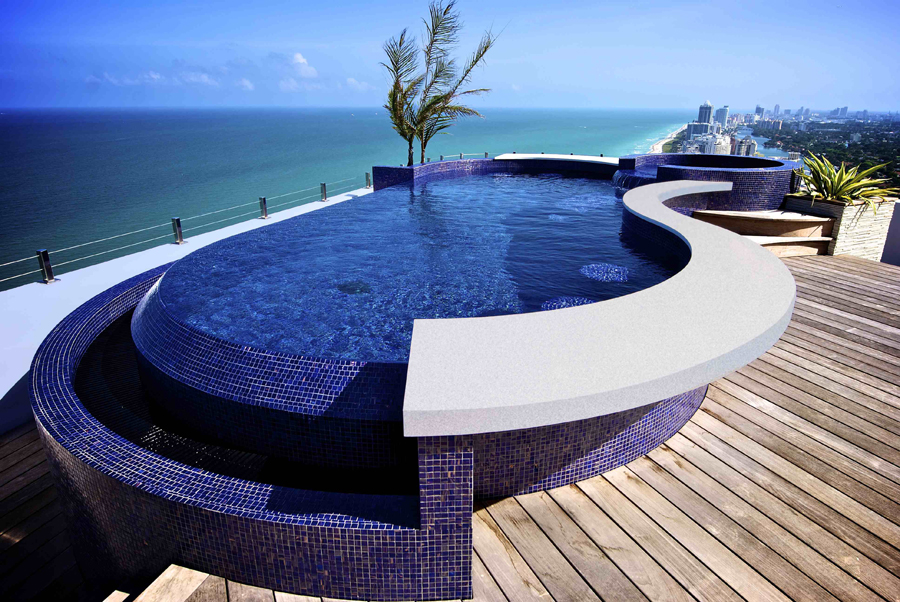
The architectural marriage of a swimming pool and a skyscraper’s summit represents one of the most complex engineering feats in modern hospitality. While the visual allure of a “vanishing edge” against an urban skyline is undeniable, the physical reality of suspending thousands of gallons of water hundreds of feet in the air introduces a unique set of systemic vulnerabilities. These are not merely standard pool safety concerns scaled upward; they are localized phenomena governed by structural physics, high-altitude meteorology, and specialized human psychology.
To engage with these spaces responsibly, one must recognize that a rooftop pool is a closed, high-pressure environment. The margin for error is significantly narrower than at a ground-level facility. A leak at grade level is a maintenance nuisance; a leak at the fortieth floor is a structural emergency. Similarly, the social dynamics of a rooftop—often involving the intersection of alcohol, intense UV exposure, and high-altitude wind—create a risk profile that requires a sophisticated, multi-layered approach to management.
This analysis serves as an editorial blueprint for understanding and mitigating the hazards inherent in elevated aquatic environments. We move past surface-level warnings to examine the “Deep Safety” protocols—from the chemical management of sun-exposed water to the structural monitoring of pool-shell vibrations. This is a study of how to balance the profound human desire for elevated immersion with the rigid demands of urban safety and structural integrity.
Understanding “how to avoid rooftop hotel pool risks”
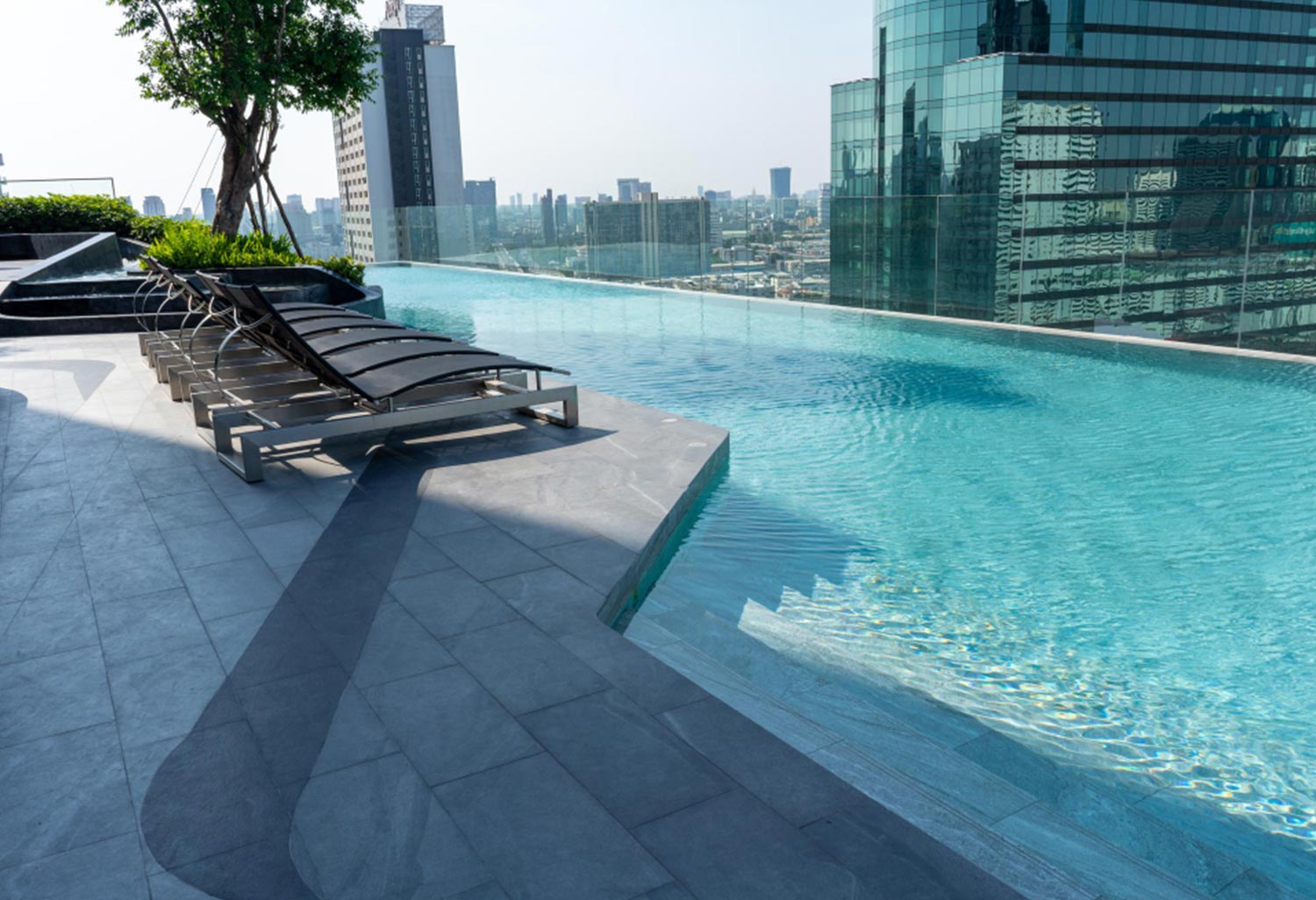
To rigorously define how to avoid rooftop hotel pool risks, one must move past the visible hazards of slips and falls to address the “Invisible Risks” of structural and environmental physics. A common misunderstanding in the industry is that “safety” is a checklist of physical barriers. In reality, safety in a rooftop context is a dynamic state of “Operational Readiness.” It involves understanding how the water mass interacts with the building’s “Harmonic Frequency”—the subtle swaying that occurs in all tall structures.
Oversimplification frequently occurs when guests or operators assume that standard aquatic protocols are sufficient for the sky. They are not. A rooftop pool faces “Atmospheric Turbulence” and “Thermal Siphoning”—where the high wind speed at the top of a building accelerates evaporation and heat loss, leading to chemical imbalances that can happen in hours rather than days. Avoiding these risks requires a shift in perspective: seeing the pool not as a static tank, but as a living, reacting organ of the building’s infrastructure.
The risk management landscape is further complicated by the “Spectacle Gap.” As hotels compete for more daring designs—such as glass-bottomed sections or cantilevered edges—the psychological pressure on the guest increases. This can lead to “Sensory Overload,” where a guest’s spatial awareness is compromised by the height, increasing the likelihood of accidents. Identifying the definitive methods for avoidance involves assessing how a property manages its “Safety Transparency”—the ability to communicate risk and enforce rules without breaking the spell of luxury.
The Structural and Systemic Evolution of Elevated Water
The rooftop pool has evolved from a mid-century luxury oddity to a contemporary architectural requirement for urban luxury brands. Historically, these pools were small, shallow “plunge” tanks located directly over the building’s primary structural core to minimize weight distribution issues. They were functional, but aesthetically constrained.
The 21st century saw the advent of “Post-Tensioned Concrete” and “Stainless Steel Shells,” which allowed for the massive, sprawling infinity pools seen in global hubs. This evolution has changed the risk profile from “Weight Capacity” to “Seismic and Wind Dynamics.” Today’s pools are often “Floating Shells,” disconnected from the building’s main frame by massive rubber isolators to prevent the sound of splashing and pump vibrations from traveling through the hotel’s structure. This technical evolution has created a safer environment, but one that requires much more specialized maintenance than the tiled concrete tanks of the past.
Conceptual Frameworks for High-Altitude Aquatic Safety
To analyze risk avoidance with editorial depth, we apply three primary mental models.
The “Dynamic Load” Framework
This model treats the pool water as a moving mass. In high winds, the “sloshing” of water creates a rhythmic force that can stress the pool’s waterproofing membranes. Risk avoidance involves using “Baffles”—structural underwater walls—to break up the wave action and protect the shell.
The “Atmospheric Exposure” Model
This framework assesses how the pool reacts to the “Micro-Climate” of the roof. Because roofs are often 10-15 degrees warmer (due to UV) yet feel colder (due to wind), water chemistry becomes volatile. Avoiding risks here involves “Proactive Dosing”—adjusting pH and chlorine levels based on weather forecasts rather than current readings.
The “Cognitive Anchor” Theory
In a space with a vanishing edge, the brain can lose its sense of horizon. This framework emphasizes the use of “Visual Cues”—subtle changes in tile color or lighting—that provide the swimmer with a constant sense of where the pool ends and the void begins.
Taxonomy of Risk Categories and Strategic Trade-offs
Evaluating how to avoid rooftop hotel pool risks requires a categorization based on the level of technical and human intervention required.
Detailed Real-World Scenarios in Risk Mitigation
Consider the “Lightning Pivot” required for a rooftop pool in a tropical city.
-
Success Mode: The hotel utilizes an “Earthing System” specifically for the pool water, combined with a “30-30 Rule” protocol. The staff uses an automated alert system to inform guests before the first drop of rain falls.
-
Failure Mode: The hotel relies on manual observation. A sudden strike occurs before the pool is fully cleared, and the “Vertical Bottleneck” of the single elevator prevents a rapid, orderly evacuation. Another scenario involves the “Vanishing Edge Illusion.”
-
Success Mode: The pool features a secondary “Catch Basin” or “Safety Gutter” that is invisible from the water but provides a physical three-foot barrier between the swimmer and the building edge.
-
Failure Mode: The design lacks a physical barrier, relying solely on a “No Sitting on the Edge” rule that is frequently ignored by guests seeking photographs.
Planning, Cost, and Resource Dynamics
The economic reality of avoiding elevated risk involves non-negotiable premiums that are often hidden from the guest.
To evaluate the safety authority of a venue, look for these hallmarks of excellence:
-
Ultrasonic Leak Detection: Sensors that detect the “sound” of escaping water before it manifests as a visible damp spot.
-
High-Altitude Wind Meters: Anemometers that automatically trigger “Pool Closure” protocols when gusts exceed 35 mph.
-
Non-Slip PVD Coatings: Specialized “Physical Vapor Deposition” on metal railings and steps to ensure grip even when wet and sun-heated.
-
Depth-Contrast Tiling: Using dark tiles at the bottom and light tiles on steps to ensure depth is “readable” through the water’s surface.
-
Dedicated Service Elevators: Ensuring that emergency medical personnel have a “Priority Override” path that isn’t blocked by standard guest traffic.
-
UV-Resistant Surface Materials: Using materials that don’t become brittle under the intense rooftop sun.
Risk Landscape and Failure Modes
-
“The Capillary Leak”: Water travels along electrical conduits or steel beams, appearing as a leak far from the actual pool shell, making it difficult to diagnose.
-
“The Atmospheric Trap”: In humid climates, the “Dew Point” on a rooftop can create a slippery film on marble or tile that is invisible to the eye but acts like ice.
-
“The Crowd Surge”: An event on the roof pushes too many people toward the pool edge, exceeding the localized “Point Load” of the floor plate.
Governance, Maintenance, and Long-Term Adaptation
A premier rooftop pool requires a “Layered Maintenance” strategy. Daily tasks include chemical balancing and skimmer clearing. Monthly tasks include “Expansion Joint Inspection”—checking the rubber seals where the pool meets the building. Annual tasks must include a “Structural Vibration Analysis.” Long-term adaptation involves “Digital Twin” monitoring—creating a computer model of the pool that uses real-time sensor data to predict when the waterproofing membrane will reach the end of its life. This allows for a “Planned Replacement” rather than a “Reactive Repair.”
Measurement, Tracking, and Evaluation
To maintain authority over aquatic safety, a hotel must track more than just chlorine levels.
-
Leading Indicators: Structural deflection measurements (how much the building sways) during high-wind events and “Evaporation Variance” (tracking if water loss exceeds what weather should allow).
-
Lagging Indicators: Minor injury reports (slips) and chemical “Recovery Time” after high-use events like pool parties.
-
Documentation: Digital logs of automated sensor alerts, detailed photos of “Expansion Joint” conditions, and maintenance certificates for vertical life-safety systems.
Common Misconceptions and Strategic Oversights
-
“The Glass is Fragile”: Modern acrylic pool walls are often 12 inches thick and stronger than the concrete they replace.
-
“Sunlight Disinfects”: While UV kills some bacteria, it rapidly destroys chlorine, making sun-exposed pools more prone to algae than indoor ones.
-
“It’s Just a Normal Pool on a Roof”: From a plumbing perspective, a rooftop pool is a “Pressure Vessel” and requires entirely different pumps and valves.
-
“Wind is Just an Annoyance”: High wind can cause “Evaporative Cooling” so severe it can give a swimmer hypothermia even in 80-degree air.
-
“Rails Ruin the View”: Modern “Recessed Railings” provide safety without appearing in the guest’s line of sight.
Conclusion
The pursuit of how to avoid rooftop hotel pool risks is a balance of “Engineering Honesty” and “Aesthetic Ambition.” A rooftop pool is a marvel of the modern age, but it is one that exists in a state of constant tension with the elements. The most authoritative properties are those that do not hide their safety features, but integrate them into the design. They recognize that true luxury is not just the view, but the profound, quiet confidence that the thousands of tons of water beneath the guest’s feet are governed by an unbreakable system of checks and balances. The goal is to create an environment where the “Risk of Elevation” is entirely neutralized by the “Science of Immersion.”