How to Avoid Rooftop Hotel Risks: A Comprehensive Guide to Asset Safety
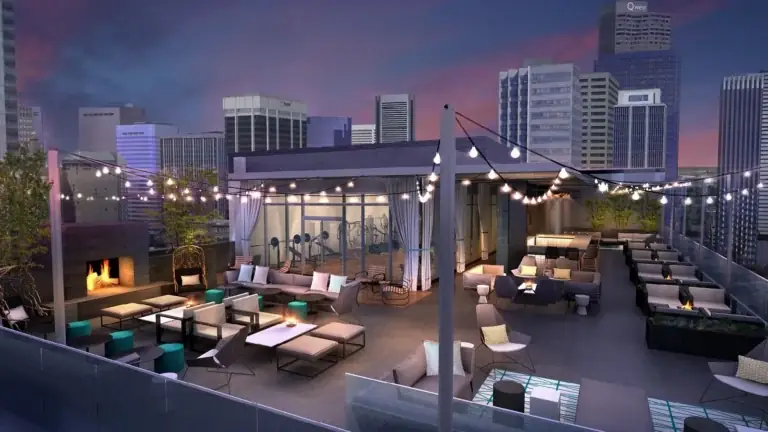
The ascension of the rooftop from a utilitarian mechanical zone to a premier revenue-generating asset has fundamentally altered the risk profile of modern hospitality. While the allure of panoramic views provides a significant competitive advantage, it introduces a layer of structural, legal, and environmental complexity that ground-level operations rarely encounter. Managing these spaces is not merely an exercise in aesthetic curation; it is a rigorous discipline of risk engineering that must account for variables ranging from extreme wind shear to the high-velocity movement of guests in semi-exposed environments.
Designing and operating these elevated spaces requires an understanding that a rooftop is, by definition, a building’s most vulnerable surface. It is the primary interface between the built environment and the elements. The challenge for operators lies in maintaining the “lifestyle” appeal of a sky-bar or infinity pool without compromising the rigorous safety protocols required at height.
This analysis serves as a definitive reference for stakeholders looking to insulate their assets from the compounding hazards of high-altitude hospitality. By moving beyond surface-level safety checklists, we explore the systemic interdependencies that define modern rooftop operations. To understand the total landscape of liability is to appreciate that safety in this domain is not a static achievement but a continuous state of high-precision adaptation.
Understanding “how to avoid rooftop hotel risks”
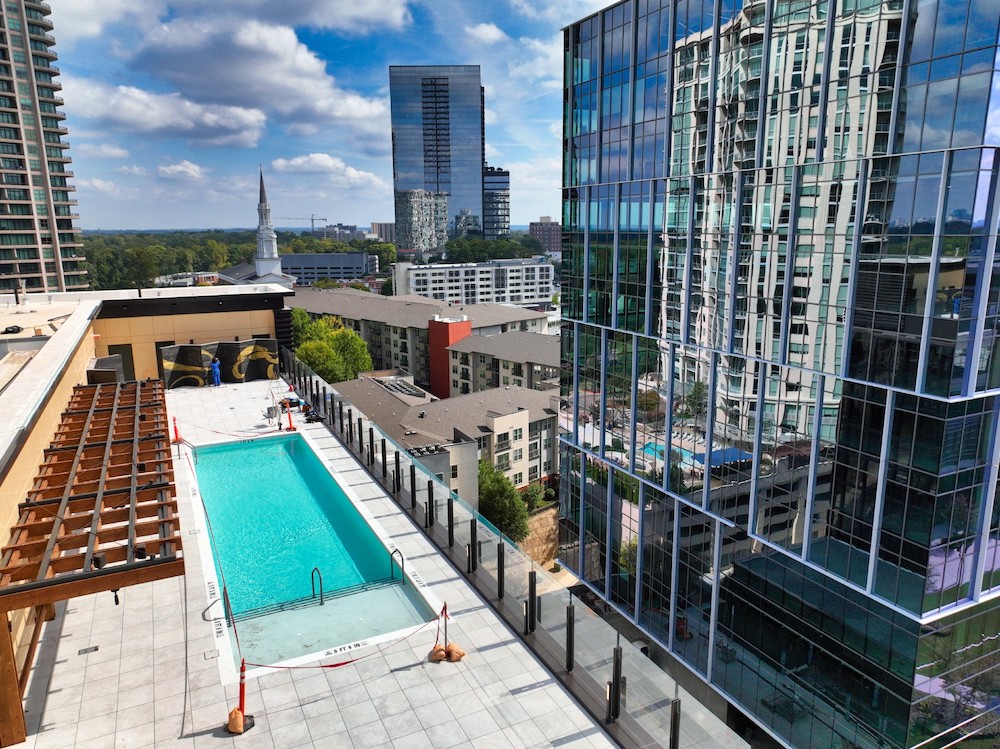
The phrase how to avoid rooftop hotel risks is often misinterpreted as a simple matter of installing taller railings or hiring more security. In reality, avoiding risk at height is a multi-dimensional engineering and psychological challenge. It begins with the realization that “risk” in this context is rarely a single event, but a cascade of failures. For example, a minor drainage clog can lead to standing water, which increases structural load, which then creates a slip-and-fall hazard, and eventually results in a waterproofing breach that damages the high-value suites below.
Effective risk avoidance requires a shift from reactive management to “anticipatory engineering.” This involves looking at the rooftop not as a static floor, but as a dynamic machine. The physical risks—such as wind uplift and seismic vibration—must be balanced against the behavioral risks of guests who may be impaired by alcohol or distracted by the vista. Oversimplifying this balance often leads to “security theater,” where visible measures are prioritized over the invisible, structural safeguards that actually prevent catastrophic loss.
Furthermore, the legal landscape for rooftop hospitality is increasingly scrutinized. Jurisdictions often apply different standards to “outdoor decks” versus “occupied roofs.” Understanding these nuances is critical for insurance underwriting and long-term asset protection.
Deep Contextual Background: The High-Altitude Liability Shift
Historically, the rooftop was the exclusive domain of cooling towers, elevator penthouses, and laundry vents. The mid-century “tiki bar” era began the shift, but it wasn’t until the global luxury boom of the early 2000s that the “rooftop experience” became a mandatory brand pillar for urban hotels. This transition moved thousands of untrained civilians into high-risk industrial zones, fundamentally changing the hotelier’s duty of care.
This evolution coincided with more volatile weather patterns. Urban heat islands and intensified storm surges have made the roof a more hostile environment. As buildings have grown taller and more slender, the “sway” and wind pressure at the summit have increased, making traditional construction methods insufficient for hospitality use. Today’s rooftop must be a hybrid of a luxury lounge and a fortified bunker, capable of sheltering guests from 80-mph gusts while providing a seamless, five-star service experience.
Conceptual Frameworks and Mental Models for Risk Mitigation
To manage these complexities, senior editors and developers utilize specific mental models that prioritize structural and operational resilience.
The Swiss Cheese Model of Failure
This model posits that every safety system has “holes” or weaknesses. Risk occurs when the holes in the structural, mechanical, and human layers align perfectly. To avoid risk, one must ensure that the holes in the “railing layer” do not line up with the holes in the “security staffing layer” or the “lighting layer.” Redundancy is the goal—if one layer fails, the next catches the error.
The Kinetic Energy Threshold
On a rooftop, everything has the potential to become a projectile. This framework evaluates every object—from a cocktail glass to a patio chair—based on its mass and its potential to be moved by wind or human force. Strategic avoidance of risk involves keeping all movable objects below a specific “uplift threshold” or ensuring they are tethered to the building’s primary structure.
The Thermal Stress Buffer
Rooftops undergo the most extreme thermal expansion and contraction of any building part. This mental model treats the roof surface as a “living skin.” Managing risk here means ensuring the joints and membranes can “breathe” without cracking. A failure to account for this leads to the most common rooftop risk: the slow, invisible leak that compromises the building’s skeletal integrity.
Key Categories of Rooftop Hazards and Strategic Trade-offs
Managing an elevated asset involves choosing between competing priorities. Every safety measure carries a cost or an aesthetic trade-off.
| Hazard Category | Primary Threat | Defensive Strategy | Strategic Trade-off |
| Structural Load | Weight of pools/people | Reinforced slab/Lightweight fill | Increased CapEx vs. Floor capacity |
| Wind & Uplift | Projectiles/Structural damage | Wind-tunnel testing/Tethering | View obstruction vs. Occupant safety |
| Water Ingress | Membrane puncture/Drainage | Multi-layer waterproofing | Access for repairs vs. Surface beauty |
| Guest Fall/Jump | Fatalities/Liability | High-impact glass/Netting | “Caged” feel vs. Maximum security |
| Fire Safety | Evacuation bottlenecks | Redundant stairwells/Fire curtains | Revenue square footage vs. Life safety |
Decision Logic: The Height vs. Barrier Ratio
A common dilemma is the height of perimeter glass. Higher glass reduces wind and increases safety but can create a “greenhouse effect” and obscure the view. The optimized path often involves a staggered barrier system: a primary structural railing at 42 inches, followed by an offset secondary wind screen that allows airflow while preventing any objects from being passed over the edge.
Detailed Real-World Scenarios: From Wind to Weight
Scenario 1: The “Micro-Burst” Furniture Launch
During a sudden summer squall, a rooftop bar’s high-end wicker chairs are picked up by a localized downdraft. One chair is thrown into a neighboring glass facade.
-
Failure Mode: Underestimating wind uplift on “heavy” furniture.
-
Risk Avoidance: Implementation of weighted steel-core furniture or “storm-tether” systems that allow staff to clip furniture to floor anchors in under five minutes.
Scenario 2: The Pool Deck Membrane Breach
A luxury hotel installs a pool on the 15th floor. A guest drops a sharp metal object, which eventually works its way through the protective pavers and punctures the waterproofing.
-
Second-Order Effect: Water leaks into the server room directly below, causing a total building IT blackout.
-
Risk Avoidance: Using “redundant-membrane” systems with integrated leak-detection sensors that pinpoint the moisture location before it penetrates the structural slab.
Planning, Cost, and Resource Dynamics of Safety
The financial commitment to how to avoid rooftop hotel risks is often front-loaded. Attempting to “retrofit” safety into an existing roof is significantly more expensive than integrating it into the initial design.
| Safety Investment | Est. Cost Impact | ROI Metric | Risk Mitigated |
| Wind Tunnel Study | Moderate | Insurance Premium Reduction | Property Damage/Liability |
| Reinforced Railings | High | Longevity/Compliance | Fatalities/Civil Suits |
| Automated Awnings | Moderate | Increased Operating Hours | Guest Comfort/UV Damage |
| Dedicated Security | Recurring OpEx | Incident Rate | Behavioral Liability |
The opportunity cost of not investing in these areas is the potential for a “black swan” event—a low-probability, high-impact disaster that can end a brand’s reputation overnight.
Tools, Strategies, and Support Systems
-
Sonic Anemometers: Real-time wind speed sensors linked to an alarm system that notifies staff when it is time to clear the deck or retract umbrellas.
-
Electronic Leak Detection (ELD): A system that uses a low-voltage current to scan the waterproofing membrane for breaches without removing the surface finishes.
-
Non-Slip Coefficient Testing: Rigorous “pendulum tests” for all wet-area flooring to ensure traction even when the surface is contaminated with pool water or spilled drinks.
-
Self-Closing Life Safety Gates: Ensuring that maintenance-only areas (like HVAC zones) are impossible to leave open by accident.
-
Tempered, Laminated Heat-Soaked Glass: The highest standard for railings, ensuring that if the glass breaks, it remains in the frame as a single sheet rather than falling to the street below.
Risk Landscape and Failure Modes
The “Compounding Risk” is the most dangerous landscape for a hotelier. This occurs when an environmental factor (rain) triggers a behavioral response (crowding toward the exit), which then exceeds the physical capacity of the infrastructure (bottlenecked stairwells).
A primary failure mode is “Maintenance Blindness.” Because rooftops are “out of sight,” small issues like a rusting bolt on a railing or a hairline crack in a glass panel are often ignored until they reach a point of critical failure. In a high-salt or high-pollution urban environment, metal fatigue happens 300% faster on a roof than at street level.
Governance, Maintenance, and Long-Term Adaptation
To effectively avoid risk, the property must move to a “Governance of the Summit.” This means the rooftop has its own dedicated maintenance and safety manual, separate from the rest of the hotel.
Layered Safety Checklist
-
Pre-Shift: Inspect all perimeter glass for chips; verify all movable furniture is locked or weighted.
-
Weekly: Test the emergency “Panic Bar” on all exit doors; clear drainage grates of organic debris.
-
Quarterly: Professional inspection of all anchor points and tethers; verify sensor calibration for wind and fire.
-
Annually: Structural engineer’s “walk-through” to look for slab deflection or membrane wear.
Measurement, Tracking, and Evaluation
Evaluation of safety performance must look beyond the absence of accidents. The goal is to track the “Near-Miss” rate—instances where a risk was present but was caught by a safety layer before an incident occurred.
Documentation Examples:
-
The Wind Log: Data showing how often the roof was cleared due to weather, helping to justify future investments in permanent windbreaks.
-
The Traction Audit: Semi-annual records of floor slipperiness to defend against slip-and-fall litigation.
-
The Membrane Health Map: A digital record of all ELD scans to track the degradation of waterproofing over 20 years.
Common Misconceptions and Oversimplifications
-
Myth: “Standard building code railings are enough for a bar.”
-
Correction: Building codes are a minimum for residential safety, not for high-traffic commercial hospitality where alcohol and crowds are factors.
-
-
Myth: “The roof is waterproof because it hasn’t leaked yet.”
-
Correction: Water often travels horizontally through a slab before appearing as a leak. By the time you see it, the damage is already structural.
-
-
Myth: “Plants and planters act as natural windbreaks.”
-
Correction: Large planters can become “sails” in high winds. If not bolted down, they are a major projectile risk.
-
Ethical and Practical Considerations
There is an ethical dimension to rooftop safety—the balance between privacy and surveillance. Furthermore, the “accessibility” of the roof is a social imperative. Ensuring that guests with mobility challenges can evacuate as safely as any other guest is not just a legal requirement under the ADA; it is a fundamental component of modern hospitality ethics.
Synthesis and Strategic Judgment
Mastering how to avoid rooftop hotel risks requires a holistic view of the building as a vertical ecosystem. It is an ongoing commitment to precision, from the chemical composition of the glass railings to the training of the security staff who monitor the edge.
Ultimately, a safe rooftop is one where the “invisible hand” of engineering does the heavy lifting. When the guest feels the breeze but is shielded from the gust, and when they enjoy the water without seeing the complex drainage beneath their feet, the hotel has succeeded. Risk avoidance in this sphere is the ultimate luxury: it is the peace of mind that allows the “sky-high” experience to remain an asset, rather than a liability.